
A proper exterior detail prepares a car for a coating or film by stripping away bonded contaminants, oils, and microscopic imperfections so the protective layer can form a permanent bond with the clear coat. Without this careful preparation stage, any ceramic coating or paint protection film applied afterward will simply trap grime and fail prematurely. Bringing your vehicle to our shop at 3433 SW Multnomah Blvd in Portland, OR 97219 means your car goes through a rigorous cleansing process before a single sheet of film or drop of coating touches the paint.
Drivers in the Pacific Northwest face unique environmental challenges every single day. Vehicles collecting grime on I-5, I-205, and US-26 accumulate a heavy mix of industrial fallout, tree sap, and road tar. When you add in the constant Willamette Valley rain and winter road grit, ordinary washing is never enough to get paint truly bare. Paint protection film needs a chemically clean surface to achieve proper initial tack and long-term adhesion. Similarly, Feynlab ceramic coatings require completely naked clear coat pores to cross-link and cure correctly. Skipping the exterior detail ruins the entire investment.
Understanding the preparation phase helps car owners appreciate the labor involved in professional protection work. People often wonder why installation takes days instead of hours. The answer lies entirely in the prep work. Every speck of bonded contamination ruins the optical clarity of Global Films self healing TPU paint protection film and creates high spots in ceramic coatings. We approach every vehicle with an uncompromising focus on chemical decontamination, mechanical claying, and paint leveling before any protective product touches the body panels.
The Initial Wash and Chemical Decontamination Stage
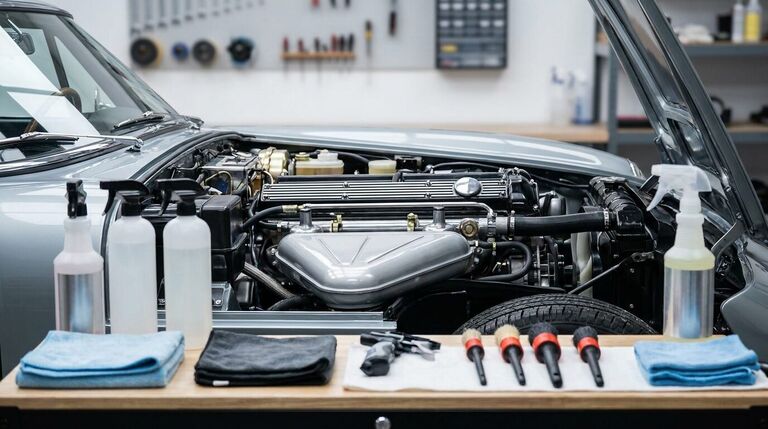
The preparation process begins with a thorough multi-step wash to remove loose surface dirt and grit without inducing swirl marks. We use specialized citrus pre-wash solutions to break down traffic film and heavy road soils gathered from daily driving around Portland. Every panel, wheel well, and jamb gets flushed out completely. This initial step prevents larger particles from scratching the clear coat during the contact wash phase. Professional installers never skip the basics, because rushing the wash leaves abrasive dirt on the car.
After the safe contact wash, the vehicle undergoes chemical decontamination to dissolve microscopic iron particles and embedded fallout. According to the Specialty Equipment Market Association, environmental fallout bonds aggressively to modern automotive paints over time. We apply a dedicated iron remover that reacts with ferrous metallic particles, turning them purple as it safely lifts them from the clear coat. This chemical step also includes tar removers and sap dissolvers. If left untouched, these hidden deposits will telegraph right through transparent paint protection film or cause a ceramic coating to fail prematurely.
Rinsing and drying follow the chemical treatments, but drying is done with extreme care using filtered air and plush microfiber towels. We inspect the paint under specialized lighting to map out remaining defects and contamination zones. Any moisture left in panel gaps or trim seams can compromise the next steps, so we use compressed air to purge every crevice. This rigorous attention to detail ensures that when the car moves into the correction bay, the surface is truly ready for mechanical treatment.
Mechanical Clay Bar Treatment and Surface Smoothing
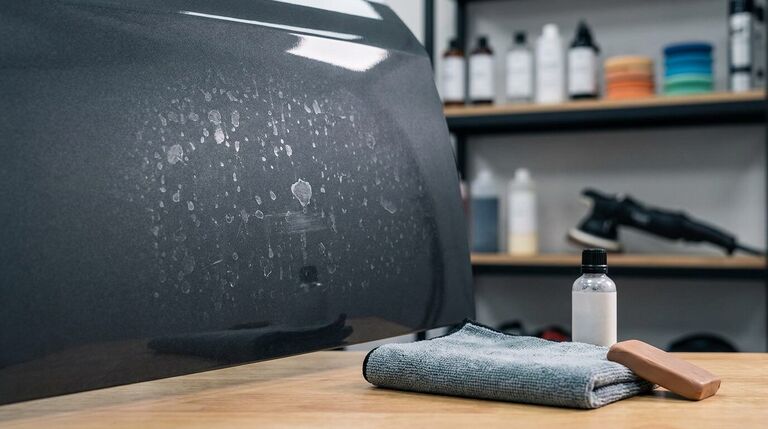
Once chemical decontamination removes what it can, the car moves on to mechanical claying to pull out deeply embedded particulate matter. Even after washing, your paint feels gritty if you run a bare hand across it. We use a synthetic clay mitt or fine grade detailing clay alongside a specialized lubricant to glide across the panels. The clay catches and lifts bonded industrial pollution, overspray, and rail dust that regular washing leaves behind. This process restores a completely smooth glass-like feel to the exterior finish.
Doing this step correctly requires a light touch and plenty of lubrication to avoid marring the clear coat. If the clay runs dry, it can leave fine scuffs that require extra polishing time to fix. Installers must read the paint feedback through the clay material, adjusting pressure based on how soft or hard the clear coat is. Vehicles subjected to heavy industrial fallout or urban parking conditions often require multiple passes with different grades of clay. Skipping this leaves a bumpy foundation that ruins the smooth look of a glossy film installation.
The tactile feedback from a clay bar tells an experienced detailer a lot about the history of the vehicle. You can feel texture differences near the rocker panels and hood where debris impacts are heaviest. After the entire car is clayed, we perform another thorough rinse and dry cycle to eliminate any residual clay lubricant. This careful preparation guarantees that when the Global Films protection product or Feynlab coating goes on, the bonding surface is completely uniform and chemically inert.
Paint Correction and Defect Removal
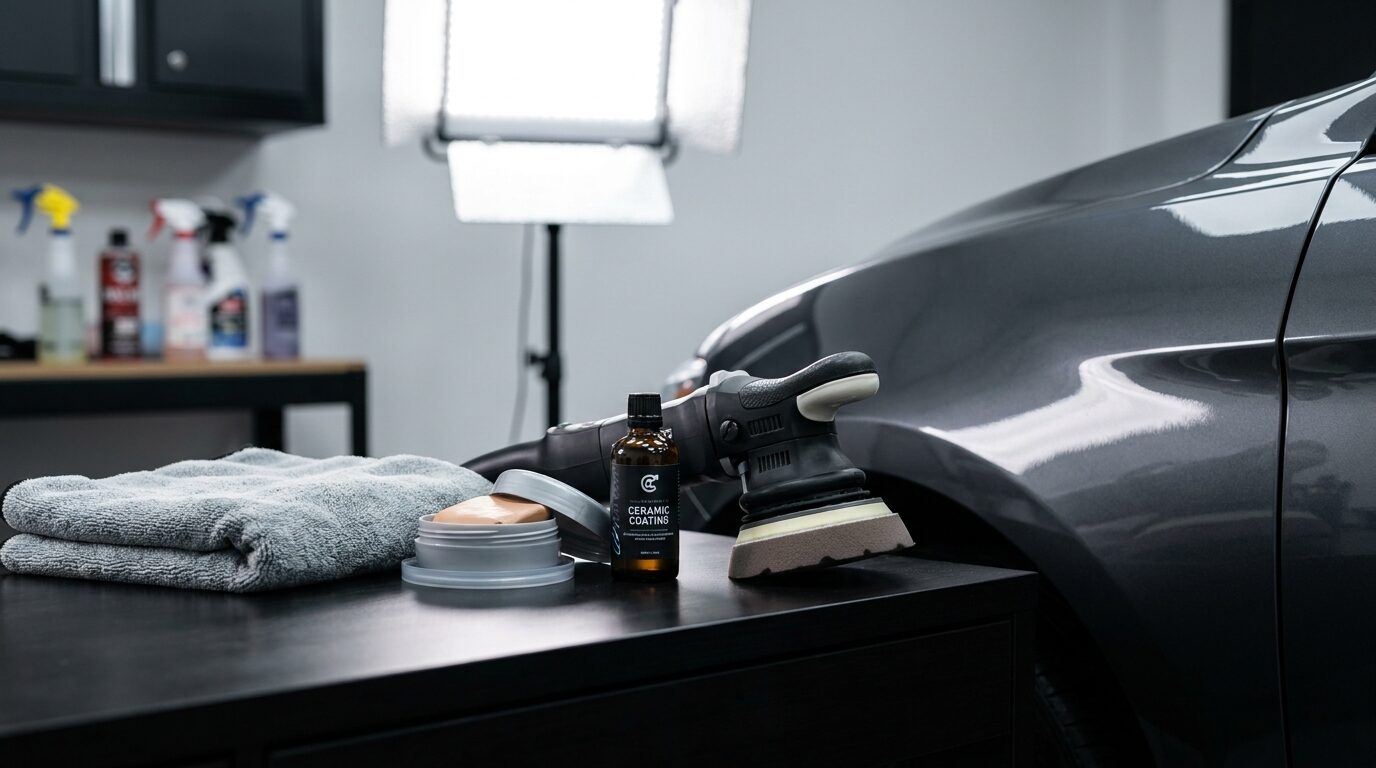
Paint correction is often the most time-consuming part of the preparation process, requiring rotary or dual-action polishers to level the clear coat. Scratches, swirl marks, and etching from bird droppings sit within the clear coat layer. If you apply a 10-year warranty paint protection film or a multi-year Feynlab ceramic coating over scratched paint, those flaws will be locked in permanently. For clear film, scratches underneath can distort the light and remain visible. For coatings, optical clarity depends entirely on flat, polished paint underneath.
We use various pad and compound combinations to gently level the microscopic peaks and valleys of the clear coat. Depending on the paint hardness, this might involve a heavy cutting step followed by a fine finishing polish. The goal is not just making the car shiny, but creating an optically clear, flat plane. This level of precision requires patience and precise machine control around sensitive edges and body lines. Working on modern thin clear coats demands expertise to avoid burning through the paint edge.
The automotive industry constantly evolves with new clear coat formulations, and abrasive and pad manufacturers keep releasing new compounds to tackle these challenges. We test different combinations on a small test spot before committing to a full-panel polish. This ensures we achieve maximum defect removal while preserving as much clear coat thickness as possible. Once the paint correction phase is complete, the car looks incredible, but the job is still not finished yet.
Panel Wipe Down and Final Inspection
After polishing, the vehicle is covered in microscopic polishing oils, residual compounds, and dust that will block a ceramic coating or film adhesive from bonding. We perform a careful panel wipe down using high-purity isopropyl alcohol or dedicated paint prep solvents. This chemical wipe strips away all polishing oils, exposing the bare, corrected clear coat underneath. If this step is rushed, the coating will bond to the residual oil instead of the paint, leading to premature peeling or failure.
Under specialized inspection lights, the vehicle is checked inch by inch for any missed spots, holograms, or lingering oils. This is the moment of truth for the preparation stage. If an installer spots a minor imperfection or a smear of polish residue, it gets corrected immediately. We also check door jambs, emblems, and glass to ensure no stray compound has dried in tight cracks. Taking the extra time here guarantees flawless results that stand the test of time.
At Custom Details, our standard Exterior Detail + Polish is priced at $499, which serves as a baseline for getting a car ready for further protection work. When clients opt for full paint protection film or Feynlab coatings, this foundational prep work ensures the final result looks seamless. We never rush the inspection phase because catching a flaw now is infinitely easier than removing a cured ceramic coating later. Every vehicle leaves our shop floor at 3433 SW Multnomah Blvd in Portland, OR 97219 with a clean, prepped surface ready for protection.
Why Skipping Prep Ruins Paint Protection Film
Attempting to install paint protection film over poorly prepped paint invites immediate failure and frustration. PPF relies on an acrylic adhesive backing that activates during installation. If that adhesive encounters wax, sealants, polishing oils, or lingering dirt, it cannot create a proper bond. Over time, this results in lifting edges, bubbling, and premature peeling around complex curves and bumper recesses. Global Films self-healing TPU film is engineered to last for years, but only when applied to a surgically clean surface.
Trapped debris under clear PPF creates unsightly dark spots that ruin the entire aesthetic of the wrap. Because the film is transparent, anything left on the paint acts like a permanent magnifying glass highlighting the flaw. Owners invest in protection to keep their cars looking new, so finding a piece of trapped dirt under a fresh film installation defeats the entire purpose. Proper washing, claying, and paint correction eliminate these hidden traps before the squeegee ever touches the film.
Edge sealing also depends heavily on clean paint. If the clear coat along a panel edge has wax residue or road grime, the film wrap will not wrap and stick securely around the return edge. This leads to edge lifting when the vehicle is washed or exposed to harsh weather. Taking the time to properly prep, clean, and wipe down every single edge ensures the film stays locked down securely for its entire lifespan.
Ensuring Optimal Bonding for Ceramic Coatings
Ceramic coatings like Feynlab V3 or Feynlab Plus form a semi-permanent or permanent covalent bond with the clear coat of your vehicle. This molecular bond is what gives coatings their incredible chemical resistance and hydrophobic properties. However, if any barrier exists between the coating and the paint, the chemical reaction cannot happen. Polishing oils, old wax, or traffic film act as a shield, preventing the coating from anchoring properly. Without proper exterior prep, the coating will wash away within a few months.
The preparation process also maximizes the gloss and reflection of the coating. A ceramic coating amplifies whatever is underneath it. If the paint is dull, swirled, or contaminated, the coating simply locks in that dullness and makes the flaws look glossy. By investing time in proper paint correction and surface prep during the exterior detail, the coating locks in a mirror-like finish. This is why professional ceramic coating services always include extensive preparation time in the overall package.
Proper curing conditions also tie into the prep stage. Once the Feynlab coating is applied to the carefully prepped surface, it requires specific environmental conditions to flash and cure correctly. Our shop provides a controlled indoor environment where temperature and humidity are managed carefully. Combining a thorough exterior detail with a controlled shop environment guarantees the coating performs at its absolute peak for years to come.
Before you book any coating or film, do one thing this week: after a wash, run your fingertips inside a thin plastic sandwich bag across the hood and the roof. If the surface feels gritty through the bag, the paint has bonded contamination that no amount of soap will lift, and a coating applied over it will fail early. That bag test is the same first check the technicians at Custom Details make when a car comes in for prep, and it decides how much decontamination and correction the car needs before anything protective goes on.
Frequently Asked Questions
Can I just wash my car at home before bringing it in for a coating or film?
A standard home wash removes loose dirt, but it leaves behind bonded iron, road tar, and microscopic oils that require professional decontamination and paint correction to clear.
Why is paint correction necessary if my car is brand new?
New cars often suffer from transit damage, rail dust contamination during shipping, and rough dealership washes that introduce swirl marks before the vehicle is even sold.
How long does the exterior preparation process take?
Thorough exterior detailing, claying, paint correction, and panel prep typically take a full day or more depending on the size and condition of the vehicle.
Related service: Learn more about car detailing in Portland, paint correction in Portland and paint protection film in Portland at Custom Details, installed in-house at 3433 SW Multnomah Blvd, or request a quote and call (971) 400-1406.