
Water Spots and Mineral Etching on Portland Cars
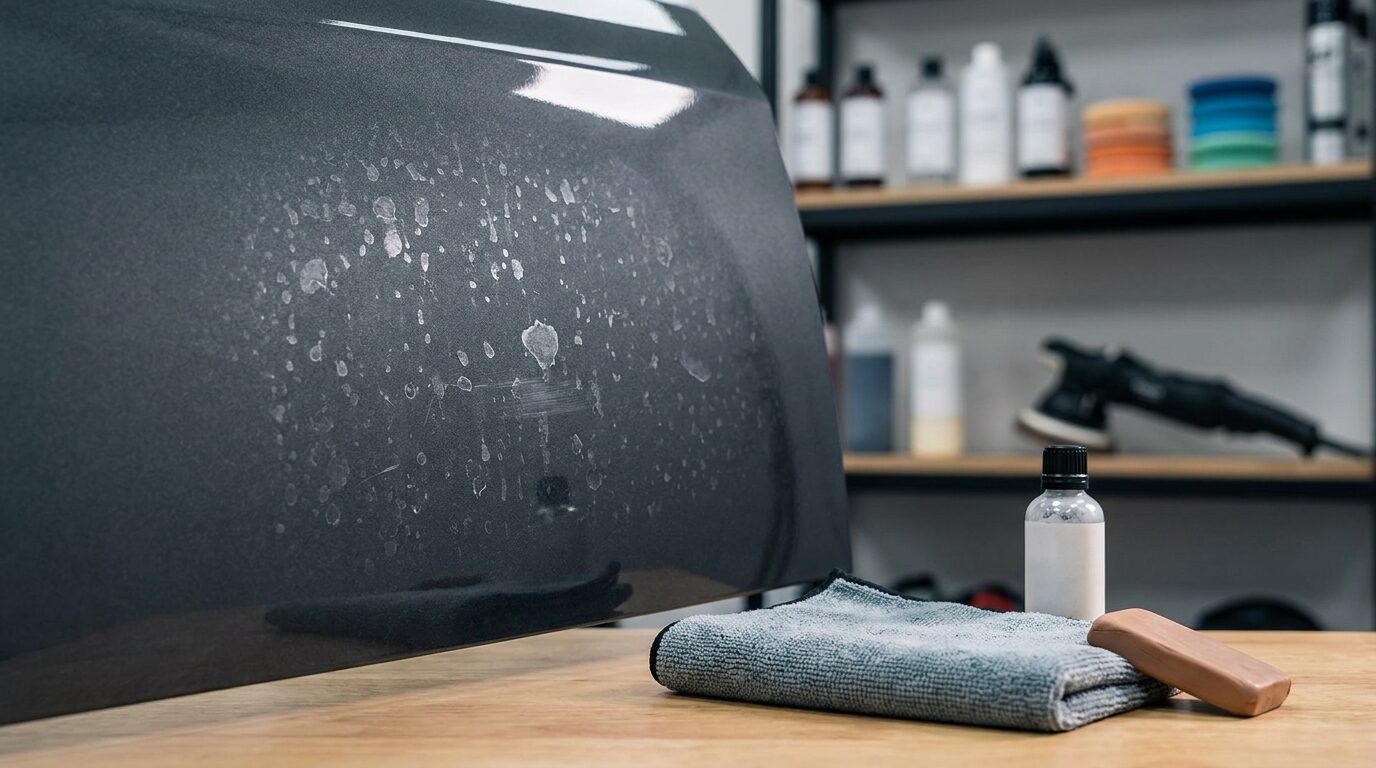
Water spots form on car paint when mineral-rich water evaporates and leaves behind solid deposits that bond to the clear coat. In Portland, vehicle owners face a constant battle against mineral fallout from our frequent rain showers and the hard water found in many local utility systems. When these droplets sit on a warm vehicle surface under the sun, the water evaporates quickly. The remaining minerals concentrate into a tight ring that bakes into the paint. If left alone too long, these minerals eat right through the clear coat and cause permanent etching that standard washing cannot remove.
Driving along local routes like I-5, I-205, and US-26 exposes your car to a mix of road grime, industrial fallout, and mineral deposits. When a passing rain shower hits a dusty car, it creates muddy droplets that dry into stubborn spots. Many drivers try to wipe these away with a dry towel, which only grinds the abrasive minerals into the clear coat and creates fine scratches. Understanding how these spots form is the first step in keeping your vehicle looking its best throughout the year without damaging the exterior finish.
Addressing water spots requires more than a standard weekend car wash because the minerals bond chemically to the automotive paint. A basic soap and water mixture will lift surface dust, but it will not dissolve the alkaline mineral deposits left behind by hard water. Ignoring these spots allows the minerals to etch deeper into the clear coat every time the sun heats up the metal panels. Professional shops handle this buildup by using specialized chemical neutralizers and mechanical removal techniques that strip away the minerals without thinning out your factory paint layer.
How Hard Water and Rain Create Paint Damage
Rainwater in the Pacific Northwest is generally soft, but once it hits dirty roads, roofs, and parking lots, it picks up calcium, magnesium, and other minerals. When that dirty water splashes onto your car and dries, those minerals stay behind on the paint surface. The shape of the water droplet acts like a tiny magnifying glass under sunlight, concentrating heat onto the center of the ring. This thermal reaction softens the clear coat slightly, allowing the sharp mineral crystals to dig downward into the porous surface of the paint.
As the minerals settle into the microscopic valleys of the clear coat, they create a physical bond that resists normal washing soaps. Type one water spots sit entirely on top of the paint and are relatively easy to clean off with a mild acidic rinse or a gentle chemical cleaner. Type two water spots, however, have already begun to etch into the clear coat. You can feel these with your fingertip as a slight depression or rough edge on an otherwise smooth panel. Once the damage reaches this stage, simple washing no longer works, and you need professional help to restore the finish.
Vehicle color also plays a role in how noticeable and damaging water spots can be on Portland roads. Darker paint colors absorb more solar heat, which accelerates the evaporation process and bakes the mineral rings into the clear coat much faster than on white or silver vehicles. Furthermore, cars parked outside under trees near the Willamette Valley face an even tougher challenge. Tree sap mixes with morning dew and hard water to create an acidic slurry that speeds up etching and ruins the gloss of the paint in a matter of weeks.
The Difference Between Surface Deposits and Clear Coat Etching
Recognizing the severity of water spot damage helps you choose the right fix before permanent harm occurs. Surface mineral deposits are raised slightly above the clear coat and appear as cloudy white rings or powdery residue after a wash. You can often remove these light deposits by applying a dedicated water spot remover that uses mild acids to break down the alkaline minerals safely. These chemical treatments dissolve the mineral crust without scraping or abrading the delicate clear coat underneath.
Etching is a completely different problem because the mineral deposit has actually dissolved or compressed a portion of the clear coat away. If you run your fingernail across an etched spot and feel a distinct dip or catch in the surface, the paint has suffered physical loss. Chemical removers will clean out the minerals in an etched spot, but the depressed crater remains visible in the reflection. Fixing an etched panel requires leveling the surrounding clear coat down to the bottom of the crater so the paint reflects light evenly once again.
Left unchecked, severe etching can breach the thin clear coat entirely and expose the colored base coat to moisture and UV rays. Once the base coat is exposed, oxidation and clear coat failure follow quickly, leading to peeling paint that requires a costly respray. Catching these issues early is vital. To restore clarity when polishing is required, many vehicle owners schedule a single stage paint correction starting at $499 to safely level out moderate surface defects and stubborn mineral rings.
Professional Removal and Paint Correction Techniques
When chemical spot removers and clay bars fail to clear away stubborn etching, professional detailers turn to machine polishing. At Custom Details, technicians evaluate the depth of each water spot using specialized lighting before choosing a pad and polish combination. A single stage polish uses fine abrasives to smooth out the top layer of the clear coat, blending the edges of the etched craters so they disappear from view. This process removes a microscopic amount of clear coat, making it important to let professionals handle the buffer rather than risking burn-through with a retail machine.
For deeper etching on neglected vehicles, a multi-stage correction process is necessary. Technicians start with a heavier cutting compound and a coarse pad to level the worst of the damage, followed by a finishing polish to restore high gloss and deep reflections. This meticulous work requires a steady hand and precise speed control to avoid overheating modern automotive clear coats. After the paint is leveled and polished to perfection, the bare surface is extremely vulnerable to new mineral attacks if left unprotected.
To prevent the problem from returning immediately, professional shops always finish a correction service by locking in the clean paint. Applying a protective layer prevents future water droplets from making direct contact with the clear coat. Whether you choose a synthetic sealant or a high-end coating, this extra barrier ensures that future mineral deposits sit on top of the protection rather than biting into your factory paint.
Preventing Future Water Spots with Ceramic Coatings
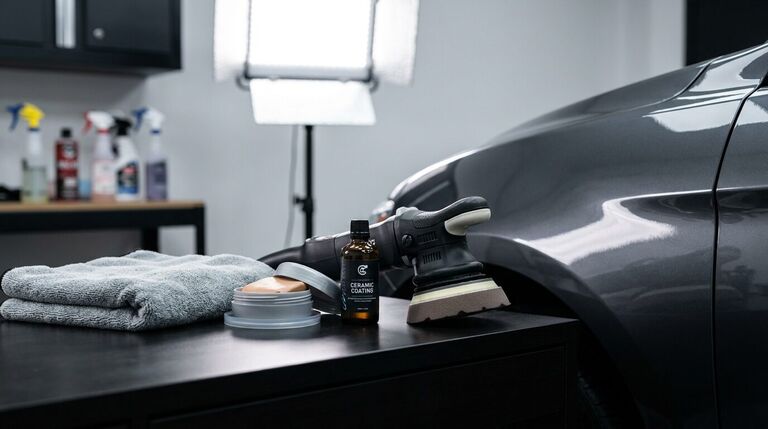
The most effective defense against Portland water spots is a professional-grade ceramic coating that creates a slick, hydrophobic barrier over your paint. According to Feynlab, advanced ceramic nanotechnology forms a semi-permanent chemical bond with the clear coat, filling in microscopic pores and creating a surface with extremely high surface tension. When hard water lands on a coated car, the water beads up instantly and rolls off with minimal wind resistance, drastically reducing the chances of mineral deposits drying and baking onto the panels.
While ceramic coatings do not make a car completely immune to water spots, they change how the minerals behave during evaporation. Because the surface is so slick, the minerals have trouble gripping the paint, making them much easier to wash off during a routine maintenance routine. Entry-level coatings offer basic protection for about a year, while mid-tier and advanced options provide multi-year durability against environmental fallout. For car owners who want top-tier defense against local weather and hard water, pairing paint correction with a professional coating is the smartest investment.
Maintaining a coated car in the Pacific Northwest requires simple habits like drying the vehicle promptly after a wash and avoiding parking under sprinklers with high mineral content. If you do notice fresh water spots forming on your coated finish, washing the car right away stops the minerals from hardening. For reliable cleaning between major details, a professional hand wash service safely removes fresh road grime and surface contaminants before they can turn into permanent etching.
Paint Protection Film As a Barrier Against Etching
While ceramic coatings protect the chemical integrity of your clear coat, physical barriers like paint protection film offer an extra layer of defense against harsh environmental damage. According to STEK Automotive, modern protective films feature advanced top coats that resist staining, chemical etching, and mineral bond formation far better than standard factory clear coats. This urethane shield takes the brunt of the abuse from road grit, tree sap, and hard water, keeping your original paint safe underneath.
Global Films self-healing TPU film, which measures roughly 6 mil thick, features an elastomeric top coat that uses ambient heat to smooth away minor surface defects and light water spot rings. If minerals manage to etch into the surface of the film, the heat from the sun often relaxes the top layer and erases the blemish naturally. This self-healing property makes film an exceptional choice for vehicles that spend a lot of time parked outdoors in wet weather or near industrial zones.
Choosing full front or full body coverage protects your car's most vulnerable horizontal surfaces, such as the hood, roof, and trunk lid, where water pooling is most common. To explore the best coverage options for your specific vehicle, you can review Global Films clear bra and PPF packages to see how durable urethane film shields your car from everyday environmental hazards.
Practical Maintenance Tips for Portland Car Owners
Keeping water spots at bay in Portland requires a proactive maintenance schedule that accounts for our wet climate and changing seasons. Never wash your car in direct sunlight, as the heat causes soapy water to dry too quickly and leaves behind fresh mineral spots before you can rinse them away. Always use a clean microfiber drying towel or a filtered air blower to remove every last drop of water after a wash, paying special attention to flat panels like hoods and roofs where puddles tend to form.
If you park your car outside at home or at work, consider using a breathable car cover during heavy rain and shine cycles to block falling debris and mineral-heavy runoff. When you notice light water spots forming after a light drizzle, do not wait for your next scheduled detail. Wipe the affected area gently with a quick detailer spray and a clean microfiber cloth to lift the minerals off the surface before they have time to etch into the clear coat.
Regular decontamination washes also play a huge role in keeping your exterior finish clear and smooth. Using a specialized iron remover and a fine clay mitt once or twice a year pulls embedded mineral fallout out of the paint pores before it can cause permanent damage. Combining these simple DIY habits with professional care ensures your car maintains its deep gloss and resale value through every rainy season.
Autumn and winter in Portland bring relentless rain mixed with road debris and mineral-rich grime, creating the peak season for water spot formation and clear coat etching across the metro area. Custom Details sees the highest volume of mineral damage requests during these wet months as drivers struggle to keep their vehicles clean against the elements.
Frequently Asked Questions
Can normal car wash soap remove water spots?
Normal car wash soap only removes loose dirt and surface dust, leaving hard water mineral bonds untouched on the paint.
What is the difference between water spots and etching?
Water spots are mineral deposits sitting on top of the paint, while etching occurs when those minerals eat away a depression into the clear coat.
How do ceramic coatings prevent water spots?
Ceramic coatings create a slick, hydrophobic surface that causes water to bead up and roll off, reducing the chance for minerals to bond and dry.
Related service: Learn more about car detailing in Portland, paint correction in Portland and paint protection film in Portland at Custom Details, installed in-house at 3433 SW Multnomah Blvd, or request a quote and call (971) 400-1406.