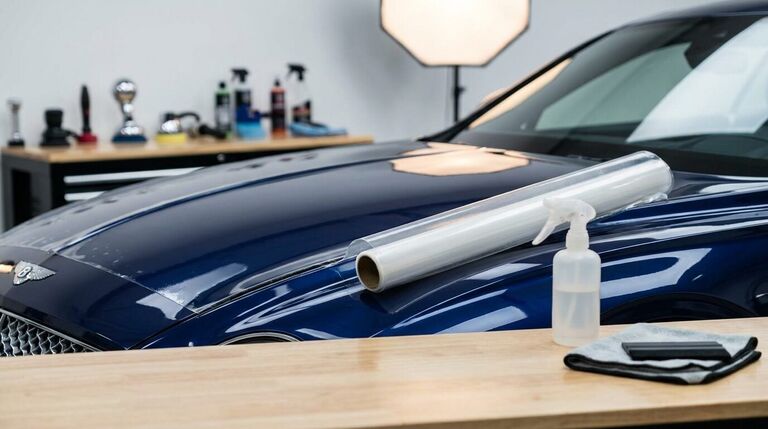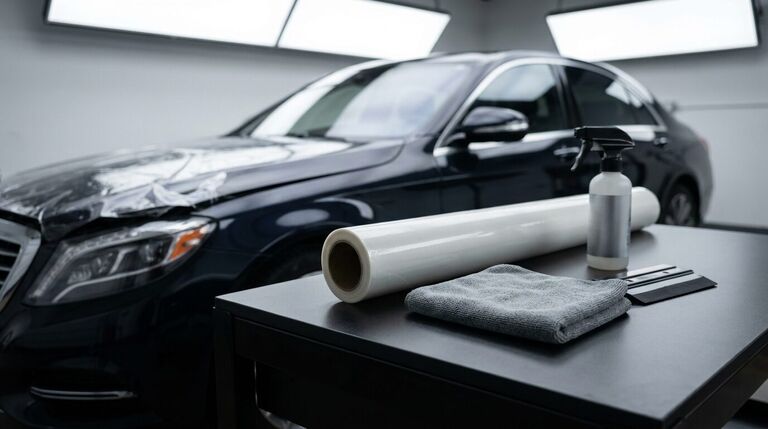

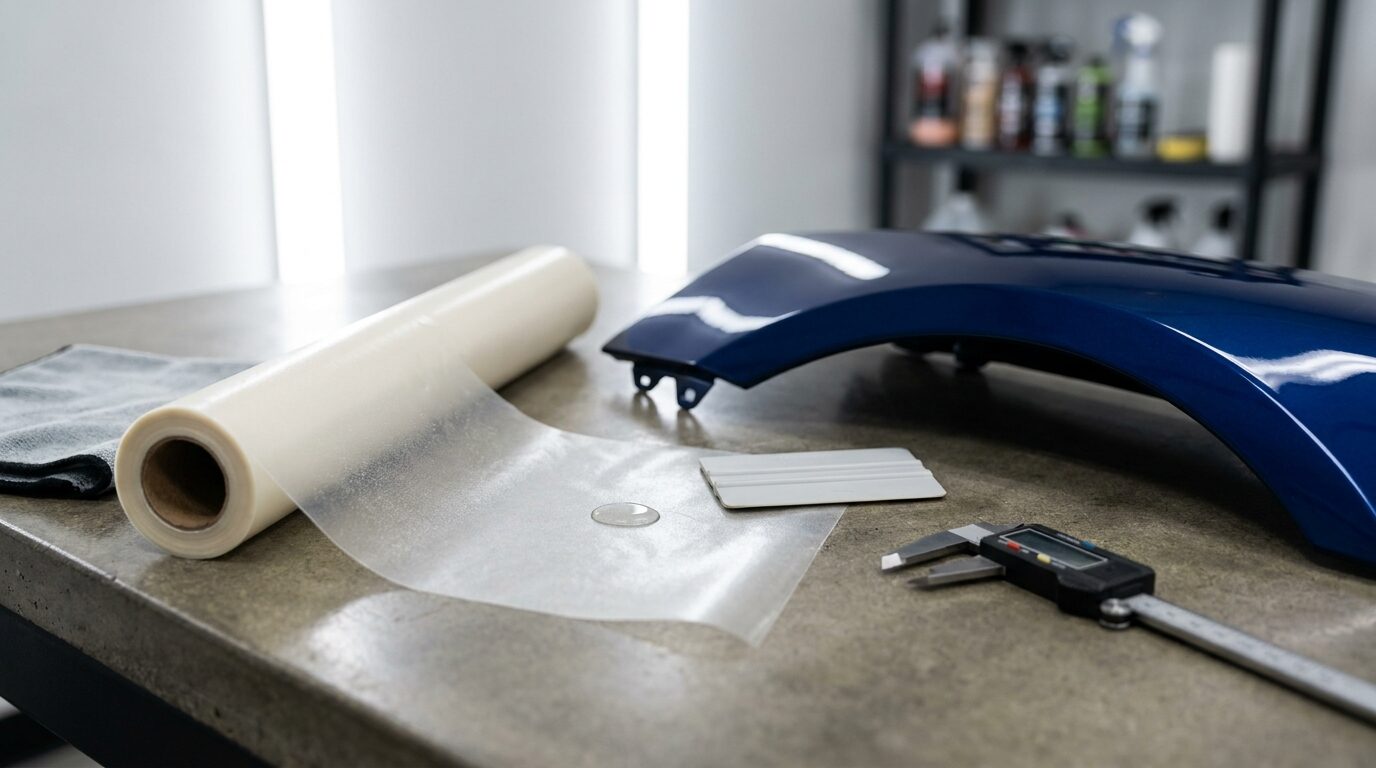
Paint protection film stops rock chips because it is a urethane layer thick enough to absorb the hit before it reaches the clear coat. When vehicle owners start researching clear bras for their daily drivers, the exact measurements of the material often raise questions. Understanding the physical dimensions of the film helps clarify why certain products outlast others on the road.
At our shop located at 3433 SW Multnomah Blvd in Portland, we work exclusively with high performance materials designed to withstand local driving conditions. Handling the daily grit on I-5, I-205, and US-26 requires a specific grade of defense. This guide breaks down the physical properties of modern urethane films and explains why thickness plays a critical role in your vehicle's safety.
Defining Paint Protection Film Thickness
In the automotive film industry, thickness is measured in mils, where one mil equals one thousandth of an inch. A standard quality paint protection film measures roughly 6 mil to 8 mil in total thickness. This measurement includes the clear polyurethane structural layer, the underlying adhesive, and the top release or protective cap sheets. When applied to your vehicle, the protective layer remains thin enough to stay virtually invisible while providing a tangible barrier.
According to SEMA, automotive aftermarket protective films undergo rigorous testing to ensure they maintain structural integrity under harsh environmental stressors. The manufacturing process involves casting or extruding thermoplastic polyurethane into precise sheets. This material must maintain optical clarity while retaining high tensile strength and elongation capabilities to stretch over complex body contours during installation.
Understanding these dimensions helps vehicle owners evaluate what they are paying for when booking a professional service. Thinner consumer grade films often fail to absorb heavy impacts, while excessively thick films can prove difficult to wrap around tight bumper corners and mirror housings. The industry standard balances stretchability with sheer stopping power, ensuring the film conforms smoothly while halting flying stones.
The Anatomy of a 6 Mil Urethane Layer
The core of any reliable clear bra is the 6 mil urethane layer. This specific thickness represents a sweet spot in chemical engineering. Polyurethane offers a unique combination of elasticity and toughness. When a piece of gravel strikes the front bumper at highway speeds, the urethane deforms locally to dissipate the kinetic energy, then springs back into its original shape without cracking or tearing.
Beneath the urethane sits an advanced acrylic pressure sensitive adhesive layer. This adhesive bonds securely to your factory clear coat without damaging the underlying paint when eventually removed by a professional. The adhesive must be thick enough to fill microscopic imperfections in the clear coat, yet stable enough to prevent edge lifting over years of temperature fluctuations and Willamette Valley rain exposure.
On top of the urethane sits a clear coat or self healing top layer. This specialized coating fills in minor surface scuffs automatically using heat from the sun or a warm water rinse. Together, these laminated layers create a composite structure that resists staining from bird droppings, bug splatters, and road tar while shielding the metal panels underneath from oxidation.
Why Thickness Matters on Portland Roads
Driving through the Pacific Northwest exposes vehicle front ends to a constant barrage of road hazards. Winter sand, loose construction gravel, and general highway debris routinely assault painted surfaces. A thin vinyl wrap or a standard ceramic coating alone cannot stop a high velocity pebble. You need a dedicated physical barrier with enough mass to absorb the impact energy.
According to consumer guidance from the FTC, automotive protection products should perform as advertised to justify their cost. When a 6 mil urethane film takes a direct hit, the thickness acts as a shock absorber. Instead of the rock piercing straight through to the bare primer or sheet metal, the force is distributed across a wider surface area within the film matrix.
Local commuters in daily traffic face distinct environmental challenges. Wet roads combine with abrasive grit to sandblast unprotected front bumpers and rocker panels. Applying a durable paint protection film creates a sacrificial shield that takes the abuse so your factory paint does not have to, preserving the long term resale value of your investment.
The Manufacturing and Engineering Behind Global Films TPU
At Custom Details, we rely on Global Films thermoplastic polyurethane for our installations. This material utilizes advanced aliphatic urethane formulations that refuse to yellow or discolor when exposed to intense ultraviolet radiation. The molecular structure of the TPU allows the film to stretch up to four hundred percent of its original size during the installation process.
Quality control during manufacturing ensures uniform thickness across every square foot of the roll. Variations in thickness can cause optical distortion or weak spots where stones might penetrate. Maintaining a consistent 6 mil profile guarantees predictable performance whether the film is stretched over a flat hood or wrapped deep into a complex front fascia.
The self healing properties integrated into the top coat rely on elastomeric memory polymers. When micro-scratches occur from automated car washes or aggressive towel drying, these polymers flow back together to smooth out the surface. This technology ensures the vehicle maintains a gloss finish that looks freshly detailed year after year.
Professional Installation Versus DIY Thickness Challenges
Attempting to install paint protection film at home often highlights why material thickness matters so much. A 6 mil urethane layer requires precise tension control during placement. If pulled too tight, the film thins out in vulnerable areas and loses its impact resistance. If left too loose, fingers and air pockets form beneath the surface.
Professional installers use specialized slip solutions and squeegees to float the film into position before locking down the adhesive. Our shop team at 3433 SW Multnomah Blvd in Portland spends hours prepping each vehicle, decontaminating the paint, and carefully tucking edges behind body panels to prevent lifting. Proper post-heating locks the urethane in place around complex curves.
Investing in professional application ensures the film performs at its designed thickness rating. Paired with a Feynlab ceramic coating over the top, your vehicle gains chemical resistance and hydrophobic properties that make maintenance effortless in rainy weather.
Comparing PPF Thickness to Other Surface Protections
Many vehicle owners wonder how paint protection film compares to traditional waxes, sealants, or ceramic coatings in terms of physical dimensions. A standard carnauba wax layer measures mere nanometers in thickness. Ceramic coatings cure at roughly one to two microns, which is a fraction of a single mil. While coatings offer stellar chemical defense and slickness, they add virtually no physical mass to stop a rock chip.
To put things in perspective, a 6 mil film is hundreds of times thicker than a ceramic coating. This mass difference is precisely why coatings cannot replace film for impact mitigation. They serve entirely different purposes in a complete vehicle protection plan. Coatings protect against chemical etching and UV fading, while PPF guards against physical trauma.
For complete automotive care, many drivers choose to layer both technologies. Applying a ceramic coating directly over your paint protection film enhances gloss and eases cleaning without interfering with the film's ability to absorb stone impacts. You can also explore options like ceramic IR window tint to manage cabin temperatures and interior UV exposure.
How to Check Film Thickness Before You Buy
Thickness claims are easy to make and hard to verify by eye, so here is how to check what an installer is actually selling.
- Ask for the film's technical data sheet. Every serious manufacturer publishes one. Look for the total thickness and, separately, the thickness of the urethane layer; a sheet that only lists a total, or that quotes 8 mil without saying whether that includes the adhesive, is hiding the number that matters.
- Ask which film, by name and product line. "Premium self healing film" is not an answer. A shop that installs a named product can show you the roll, the box and the warranty registration.
- Feel a sample edge. A 6 mil urethane sample has a noticeable, slightly rubbery edge and resists a fingernail; thin film or vinyl feels like packing tape and creases when folded.
- Check how the warranty is registered. A 10-year manufacturer warranty is registered per car with the film's batch or serial number. If the warranty exists only as the installer's word, so does the thickness.
- Look at a finished car, not a photo. On a real install, run a finger along a hood edge: proper film is wrapped or ends in a clean, raised line. A ragged edge usually means thin film that tore during stretching.
Thicker is not always better either. Films marketed at 10 mil or more resist stretching, bridge over tight bumper corners instead of conforming, and tend to lift at the edges within a couple of years. Six mil of quality urethane is the standard for a reason: it is the thickest layer that still wraps a modern front end cleanly.
This week, find a panel edge where your current film ends, usually the rear edge of the hood or the top of the front fender, and look at it under direct light. A true 6 mil urethane shows a clean, slightly raised edge that holds its line; thin film or old vinyl shows a ragged line, lifting corners or a yellow tint along the seam. If you cannot find an edge at all, the film was wrapped, which is the sign of an installer who did not cut corners. Custom Details checks those same edges on every car that comes in, whether it wore our film or someone else's.
Frequently Asked Questions
How thick is standard paint protection film?
Standard quality paint protection film measures roughly 6 mil to 8 mil in total thickness, providing an optimal balance of impact absorption and optical clarity.
Does a 6 mil film stop rock chips completely?
Yes, the elastomeric urethane layer absorbs and disperses the kinetic energy of flying gravel before it can reach your factory clear coat or paint.
Can PPF be polished or corrected if it gets scratched?
Most quality films feature a self-healing top coat that erases minor surface swirls with heat, though aggressive sanding or heavy compounding should be avoided.
Will thick PPF alter the appearance of my car paint?
High grade thermoplastic polyurethane is optically clear, meaning it allows your factory paint color and metallic flake to shine through completely unaltered.
Related service: Learn more about paint protection film in Portland at Custom Details, installed in-house at 3433 SW Multnomah Blvd, or request a quote and call (971) 400-1406.