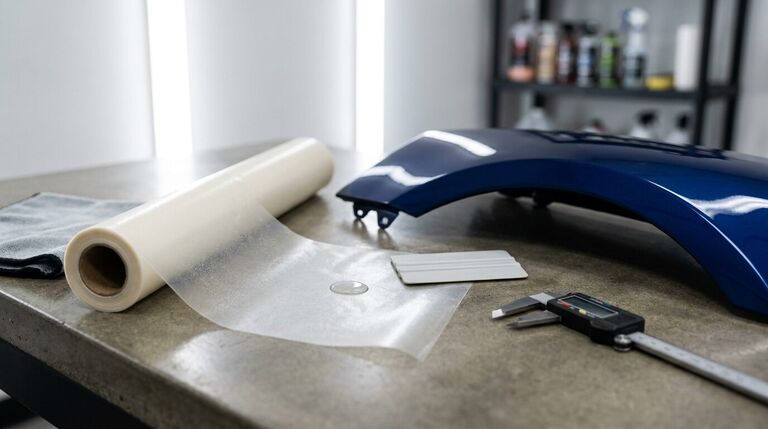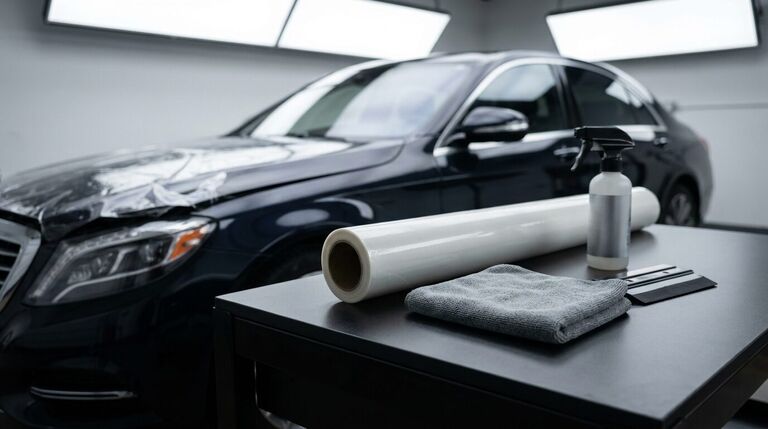

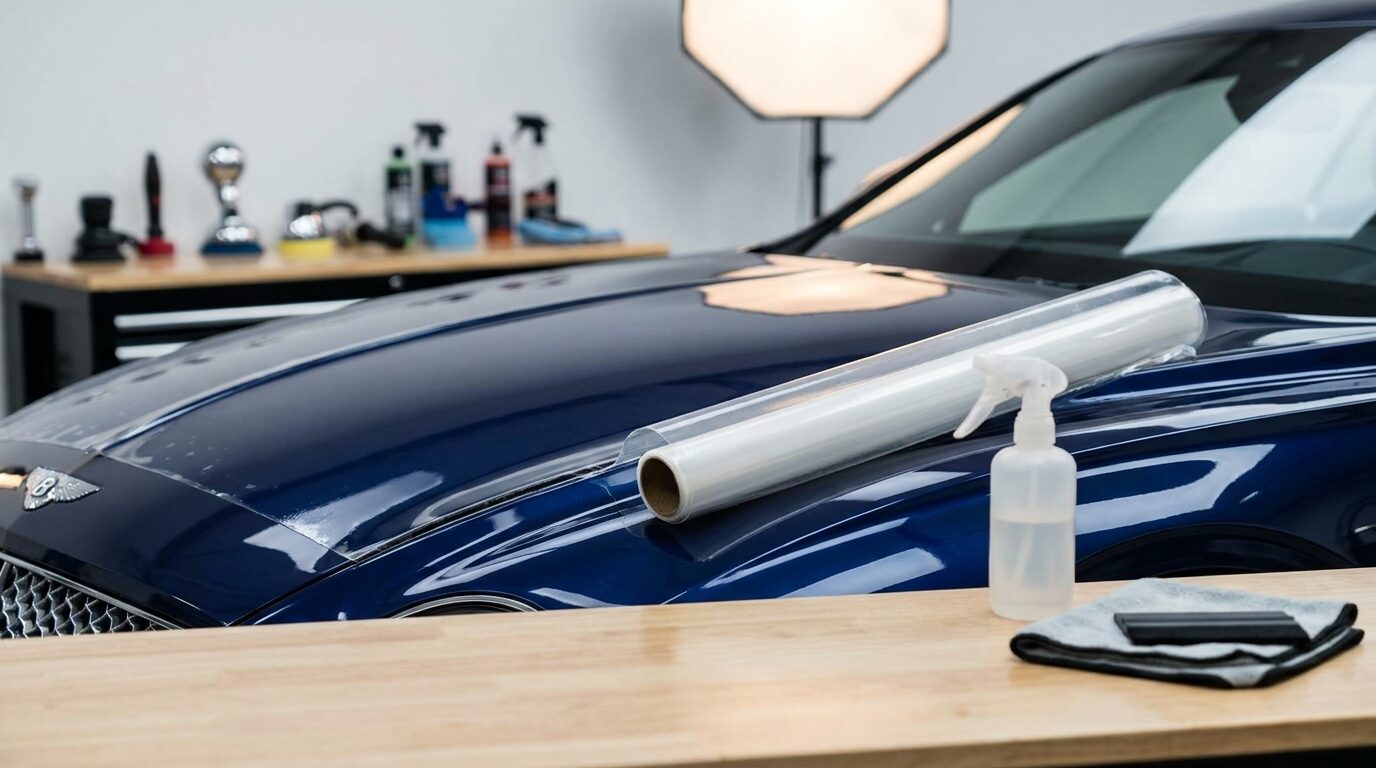
Paint protection film lasts roughly ten years before it requires removal and replacement, assuming it is made from quality self-healing polyurethane and maintained properly over its lifespan. When you bring a vehicle into our shop at 3433 SW Multnomah Blvd in Portland, OR, we install Global Films self-healing thermoplastic polyurethane, which measures about 6 mil thick and comes backed by a solid 10-year warranty. Understanding what happens to this material over a decade helps you protect your investment and recognize when the film has reached the end of its useful life.
The Anatomy of Modern PPF and Lifespan Factors
Modern paint protection film is a multi-layer composite engineered to absorb physical impacts while remaining optically clear. The bottom layer consists of an acrylic pressure-sensitive adhesive that bonds securely to your factory clear coat without damaging the paint underneath. The middle core is made of flexible aliphatic polyurethane, which provides the actual barrier against rock chips, road salt, and minor parking lot abrasions. The top layer is a clear coat infused with elastomeric polymers that give the material its famous self-healing properties when exposed to ambient heat or warm water.
Environmental exposure plays the biggest role in determining whether a film reaches its full decade-long lifespan or degrades prematurely. Vehicles parked outside under direct sun 24 hours a day experience accelerated UV degradation compared to cars stored in a garage at night. While quality films include powerful UV inhibitors to prevent yellowing and cracking, constant thermal cycling takes a toll on the topcoat over many years. Industry organizations like SEMA provide extensive resources on automotive aftermarket standards, confirming that high-grade urethane films maintain their structural integrity far longer than older vinyl-based protection products from previous decades.
Maintenance routines also dictate how long the film looks fresh and functions correctly. Leaving acidic contaminants like bird droppings, tree sap, and bug splatter on the film for extended periods can etch the topcoat and eventually compromise the underlying polyurethane. Regular washing prevents buildup that degrades the elastomeric clear coat. Many vehicle owners choose to layer a Feynlab ceramic coating over their Global Films clear bra and PPF packages to add chemical resistance and make routine maintenance much easier throughout the year.
Portland Driving Conditions and Film Wear
Driving habits and regional road hazards heavily influence how film ages, particularly in the Pacific Northwest. Commuting daily along I-5, I-205, and US-26 exposes your front bumper and hood to a constant barrage of sand, construction gravel, and winter road grit. This high-velocity debris pits and scuffs the surface of the film over time. While the self-healing topcoat easily swallows light swirls and minor scratches from washing, heavy sandblasting over several years will eventually dull the clarity of the film in high-impact zones.
The local climate brings prolonged periods of heavy rain and damp conditions, which do not harm the polyurethane itself but do encourage biological growth if vehicles are left parked under trees. Organic debris left sitting on the film can leave stubborn water spots or staining if not cleaned away regularly. Our shop frequently treats local cars that face these exact environmental challenges, showing that a well-maintained wrap easily survives the rainy winters and dry summers without lifting at the edges or peeling away from complex curves.
Proper edge sealing during the initial installation prevents moisture and road grime from creeping underneath the film edges. When an installer wraps the edges around body panels cleanly, the film remains locked in place against the rigors of high-speed highway driving and frequent pressure washing. Poorly installed film with exposed, unsealed edges will collect dirt lines and begin to lift within the first few years, illustrating why professional installation at our Portland shop matters just as much as the quality of the film itself.
Recognizing When PPF Needs Replacement
Knowing when to remove and replace paint protection film prevents aesthetic issues and ensures continuous protection for your factory paint. One of the most common signs of aging film is edge lifting, where the adhesive bond weakens due to contaminants or pressure washer misuse, allowing dirt to become visible beneath the edges. If you notice dark outlines framing your hood or fenders, the adhesive is failing and the film should be serviced by a professional.
Yellowing or discoloration is another clear indicator that a film has reached its limit. Older generation films or lower-tier products often lack advanced UV stabilizers, causing them to turn a distinct amber color over time, especially on white or silver vehicles. While top-tier films resist this discoloration for ten years, cheap films can yellow in as little as two or three years under intense sun exposure. If your white car now has a yellowish shield on the front bumper, it is time for a fresh installation.
Surface cracking or hazing that no longer responds to self-healing heat treatment means the polyurethane has oxidized past its operational window. When the elastomeric topcoat is completely exhausted, rock chips will begin to pierce straight through the core instead of bouncing off harmlessly. Replacing the film before it degrades to this point ensures that the removal process remains clean, pulling away in large, solid pieces rather than fragmenting into tiny brittle flakes.
The Removal Process and Paint Safety
Removing aged paint protection film requires specialized techniques and controlled heat to reactivate the acrylic adhesive without pulling up the factory clear coat. Professional installers use steam generators or infrared heat lamps to warm the film evenly, softening the adhesive grip and allowing the material to peel away at a shallow angle. Yanking cold film off a vehicle panel can result in adhesive transfer or, in worst-case scenarios, pulling fragile factory paint off the metal substrate.
Once the film is successfully peeled away, a residual layer of adhesive almost always remains on the painted surface. Removing this sticky residue safely requires specialized citrus-based or solvent-based adhesive removers paired with microfiber towels, working gently to avoid scratching the newly exposed clear coat. For motorists wanting to explore other finish options or modern upgrades like Feynlab ceramic coating tiers, this clean slate provides the perfect opportunity to re-evaluate their vehicle protection strategy.
After the old film is gone and the paint is thoroughly cleaned and inspected, the panels are prepped for a brand-new application. Many vehicle owners use this milestone to switch up their vehicle aesthetic entirely, transitioning from a standard clear gloss wrap to specialized options like matte finishes or custom colors. Because the original paint remained completely shielded beneath the old film for a decade, the vehicle still looks new underneath.
Maximizing Your Investment Through Maintenance
Extending the lifespan of your paint protection film requires a consistent and gentle washing routine that avoids harsh chemical cleaners and abrasive scrubbing tools. Automatic car washes with spinning nylon brushes should be avoided completely, as they introduce deep micro-scratches that even self-healing topcoats struggle to overcome over time. Hand washing using the two-bucket method with a pH-neutral automotive shampoo is the safest way to keep the surface clean.
Applying protective sealants specifically formulated for wraps helps maintain the hydrophobic properties of the film and prevents mineral deposits from bonding to the surface. For car owners seeking maximum durability against the elements, pairing the film with a professional ceramic coating provides an extra layer of slickness that repels water, road grime, and UV rays effortlessly. Organizations like Consumer Reports regularly evaluate automotive care products, emphasizing that proactive maintenance drastically reduces long-term wear and tear on vehicle exterior surfaces.
Inspecting your vehicle quarterly for signs of impact damage, edge fraying, or chemical staining allows you to catch minor issues before they require a full panel replacement. If a heavy rock strike tears a small section of the film, an experienced installer can often patch or replace just that specific section rather than re-wrapping the entire hood or bumper, saving you time and money.
This week, look at the leading edge of your hood and the front of the mirrors under direct light. Fresh film shows a faint edge line and nothing else; film that is nearing the end shows yellowing at the edges, a haze that a wash does not clear, or a corner that has started to lift. Any of those on a car more than a few years old is worth a look at Custom Details, because film removed while it is still bonded comes off clean and film left past that point can take clear coat with it.
Frequently Asked Questions
How many years does paint protection film typically last?
High-quality self-healing polyurethane film typically lasts for 10 years when properly installed and maintained.
Does paint protection film turn yellow over time?
Modern premium films feature advanced UV inhibitors that prevent yellowing, though cheaper or older films can discolor within a few years.
Can old paint protection film be removed safely without damaging the paint?
Yes, professional removal using controlled heat softens the adhesive so the film peels away cleanly without harming the factory clear coat.
What factors cause PPF to fail prematurely?
Constant exposure to intense UV rays, neglected chemical contaminants like bird droppings, and unsealed edges that trap moisture will cause early failure.
Related service: Learn more about paint protection film in Portland at Custom Details, installed in-house at 3433 SW Multnomah Blvd, or request a quote and call (971) 400-1406.