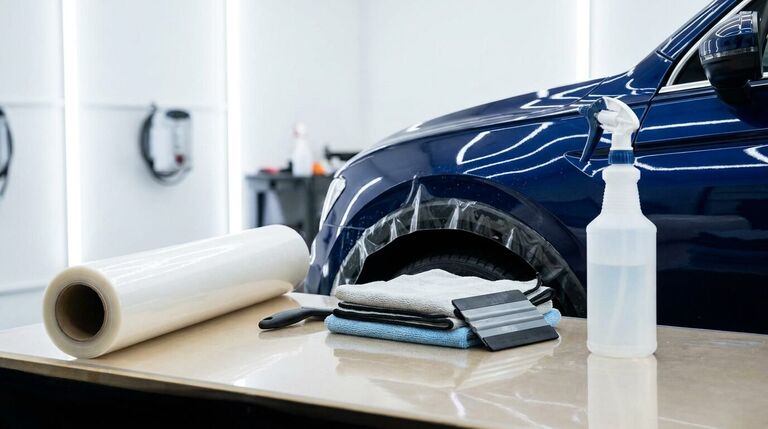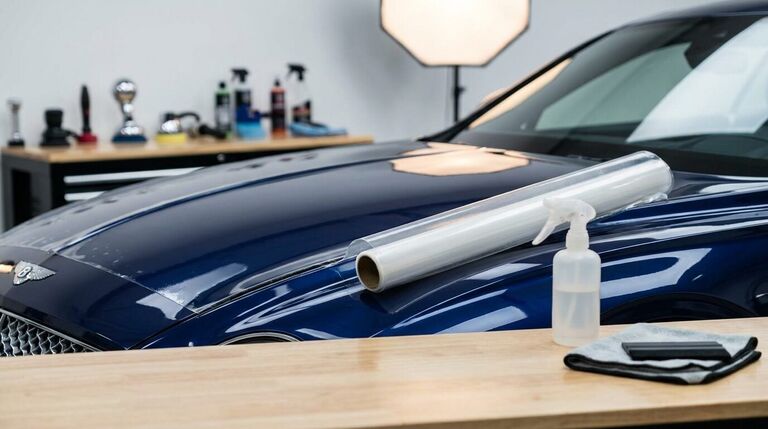

Cheap paint protection film installations achieve their low prices by cutting corners on surface preparation, film quality, wrapping edges, and post-installation curing. When you bring your vehicle to our shop at 3433 SW Multnomah Blvd in Portland, OR, every panel undergoes a rigorous decontamination process to ensure the self-healing TPU film bonds permanently to your clear coat. Across the industry, a gloss full front PPF package typically runs $1,500 to $2,500 depending on the vehicle, and Custom Details quotes these per vehicle at the shop. A quote far under that range almost always means one of the steps below was skipped, and the film fails early on local roads.
Drivers in Portland face harsh conditions every day, from heavy Willamette Valley rain and winter road grit to flying gravel on I-5, I-205, and US-26. A budget-friendly clear bra might look acceptable on day one, but without proper installation techniques, it quickly reveals the hidden compromises of cheap labor and inferior materials. Understanding what goes on behind closed doors at a discount tint and film shop helps you protect your automotive investment from costly removal and reapplication.
According to SEMA, professional automotive restyling requires precise technical training and specialized tools to handle complex body lines without damaging the underlying paint. When shops slash their labor rates to undercut competitors, they eliminate the time-consuming steps required for a durable finish. Let us break down the exact corners that get cut when a price seems too good to be true.
Rushed Decontamination and Paint Prep
The single most common shortcut in cheap PPF installations is inadequate paint preparation. Proper film adhesion requires an immaculate surface free of tar, iron fallout, wax, and road grime. Discount shops often skip the clay bar treatment, mechanical decontamination, and thorough isopropyl alcohol wipe-down that guarantee a clean bonding surface. If microscopic debris remains on your hood or bumper, the film will trap that contamination underneath, creating unsightly bubbles and premature lifting.
Rushed prep work often means the installer fails to properly clean panel edges and door jambs. When dirt from these hidden crevices migrates onto the adhesive during squeegee application, the edges lose their tack immediately. The International Window Film Association puts it plainly for any film install: the surface must be cleaned thoroughly of dirt, dust and debris that could interfere with adhesion, and the same rule governs paint protection film, where clean surfaces are critical for the optical clarity and long-term durability expected from modern thermoplastic polyurethane films. Skipping these careful steps saves the shop hours of labor, but it ruins the lifespan of your investment.
At our Portland shop, surface prep takes up a massive portion of the total installation time because we know that skipping it invites failure. Road film from local wet weather creates an oily layer on your paint that ordinary soap simply cannot remove. Taking shortcuts here is a guarantee that your film will begin peeling within the first year of exposure to temperature swings and moisture.
Skipping Custom Edge Wrapping
Precision edge wrapping separates professional work from generic plotter cuts that leave raw film edges exposed to the elements. Cheap installations rely heavily on pre-cut digital patterns pulled straight from a software library without any manual trimming or tucking. This leaves a visible gap of two to three millimeters between the edge of the film and the edge of the panel, creating a dirt trap that darkens over time and outlines every single panel on your car.
When an installer takes the time to custom wrap edges around hoods, fenders, and mirrors, they must manually lift or remove trim pieces and carefully tuck the excess film underneath. Budget shops skip this step entirely because it requires an expert hand and carries the risk of a blade nicking the clear coat. Leaving edges unwrapped means wax, dirt, and pressure washers will eventually catch the seam and cause the film to roll back.
Exposed edges also look unappealing on light-colored vehicles where dirt buildup creates a dark border around every protected panel. Investing in quality paint protection film ensures that every available edge is safely tucked away from hazards. A cheap installation might save you money upfront, but the accumulation of grime along exposed cut lines will quickly become an eyesore.
Using Inferior or Thin Materials
To hit a rock-bottom price point, discount shops often substitute premium self-healing TPU with cheap PVC or low-grade vinyl alternatives. Genuine paint protection film utilizes high-end aliphatic polyurethane that absorbs the kinetic energy of rock chips and heals minor surface scratches under ambient heat. Inferior films lack this self-healing capability, turn yellow rapidly under UV exposure, and become brittle within a couple of years.
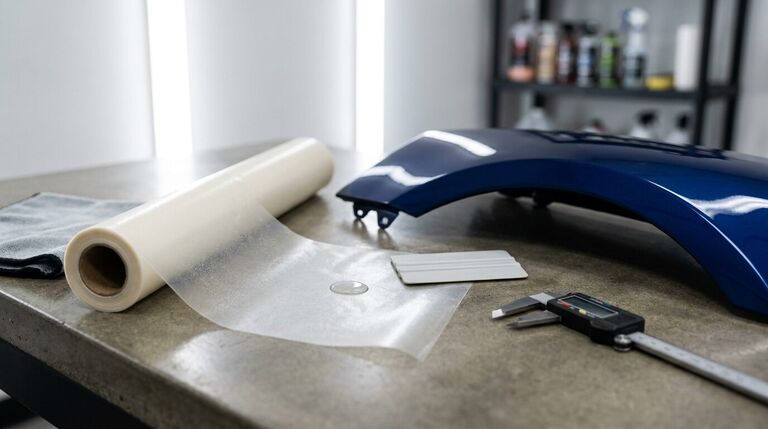
Thickness is another major casualty of budget installations. Premium films measure roughly 6 mil or more, providing a solid barrier against road debris. Cheap films are often thinner, making them easier to stretch and apply quickly for an untrained installer, but far less effective at stopping sharp stones at highway speeds. These thin films also stretch out of shape during application, causing optical distortion and uneven protection across the front end of your vehicle.
Choosing a shop that utilizes reputable films like our Global Films line guarantees that your vehicle receives durable, 6 mil self-healing TPU backed by a solid 10-year warranty. Cheap films offer no such assurance, often leaving you with cracked, yellowed material that damages your clear coat upon removal. Quality materials combined with expert Feynlab ceramic coating ensure your exterior stays clean for years.
Rushed Squeegee Work and Trapped Moisture
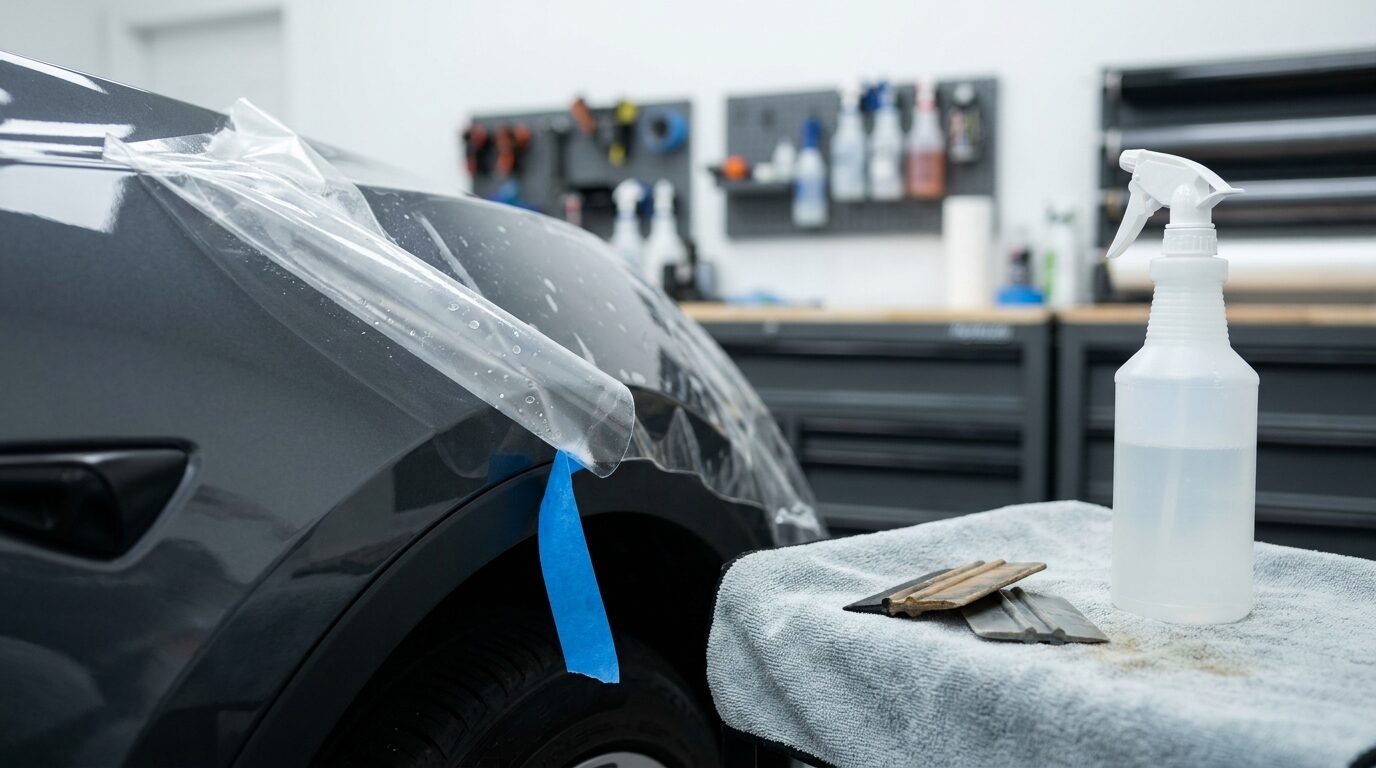
Water and slip solution must be carefully removed from underneath the film during the squeegee phase to ensure a strong, uniform bond. Budget shops often rush this process to turn over cars as quickly as possible, leaving excessive moisture and slip solution trapped beneath the surface. While minor water haze naturally evaporates over the first few days, large trapped pockets lead to permanent fogging, large blisters, and localized lifting.
Inexperienced installers also apply uneven pressure with their squeegees, creating stretch marks and distortion in the topcoat of the film. These waves are especially noticeable under direct sunlight or streetlights at night, giving your car a wavy, distorted appearance. Proper technique requires patience, specific squeegee angles, and heat management to force all liquid out to the nearest edge.
Portland drivers experience plenty of humidity and rain, which can slow down the natural curing process of automotive films. When an installer does not allow adequate indoor curing time before handing the keys back to the customer, early exposure to moisture can ruin the adhesive bond entirely. Quality installations demand a controlled environment where the vehicle stays indoors until the film stabilizes completely.
Ignoring Complex Body Lines and Stretch Limits
Modern vehicles feature aggressive styling with deep bumper contours, sharp headlight recesses, and complex aerodynamic curves. Cheap PPF installations often struggle with these areas because the installer lacks the advanced technique required to properly anchor and stretch the material. Instead of properly managing the tension, budget installers will simply pull the film tight and hope it sticks, leading to severe adhesive failure in recessed pockets.
When film is over-stretched beyond its design limits, the adhesive thins out dramatically in the corners, causing the material to pull back within weeks. Professional installers know how to use relief cuts, proper heat application, and multi-piece layouts where necessary to ensure the film rests naturally on the paint without fighting its own tension. Ignoring these geometric realities results in lifted corners around fog lights, parking sensors, and air dams.
Parking sensors are a notorious trouble spot for discount installers who simply lay film right over the sensors without cutting them out, causing false collision warnings and erratic system behavior. A professional shop takes the time to carefully trim around every sensor and camera so your safety features continue working flawlessly. Pairing your protected front end with proper ceramic IR and standard window tint completes the professional look of your vehicle.
Lack of Post-Install Quality Control
The final step of any professional film installation is a thorough quality control inspection after the vehicle has sat in the shop for at least twenty-four hours. This waiting period allows the adhesive to cure and reveals any edge lifting or micro-bubbles that need to be addressed before the customer arrives. Cheap shops skip this crucial review, pushing cars out the door immediately upon completion to maximize daily volume.
Without a proper post-install check, tiny imperfections go unnoticed until the customer washes their car for the first time and high-pressure water forces its way under a lifted corner. Fixing these issues requires specialized heat guns and edge sealants that discount operations rarely bother to apply. A reputable shop stands behind its workmanship by inspecting every square inch of the install before handing over the keys.
Choosing quality over a cheap discount protects you from the frustration of warranty claims that get denied due to fine print exclusions. When you bring your car to our shop at 3433 SW Multnomah Blvd in Portland, OR, you receive honest craftsmanship and attention to detail. Contact us today or visit our facility to discuss the right protection package for your daily driver.
The trade-off is not hidden: a cheap install saves a few hundred dollars up front and gives it back in lifted edges, trapped dirt and film that has to be removed and redone within a couple of years. A proper install costs more because every one of those skipped steps takes hours. Custom Details recommends paying for the hours once; film that is prepped, wrapped and inspected correctly is the only version that reaches the end of its warranty.
Frequently Asked Questions
Why do cheap PPF installations peel at the edges?
Cheap installations fail at the edges because installers skip proper surface decontamination, leave film cut short without wrapping, and fail to post-heat the edges to kill the film memory.
How thick is quality paint protection film?
Quality paint protection film typically measures around 6 mil thick, featuring self-healing TPU that absorbs rock hits and resists yellowing over a 10-year lifespan.
Can damaged cheap PPF be repaired?
Once cheap film begins lifting, collecting dirt, or yellowing, it generally cannot be repaired and must be completely stripped off, which can sometimes damage the underlying clear coat.
What should I look for in a professional PPF installer?
Look for an established dedicated shop with a clean indoor environment, custom wrapped edges where possible, and transparent communication regarding material brands and warranties.
Related service: Learn more about paint protection film in Portland at Custom Details, installed in-house at 3433 SW Multnomah Blvd, or request a quote and call (971) 400-1406.