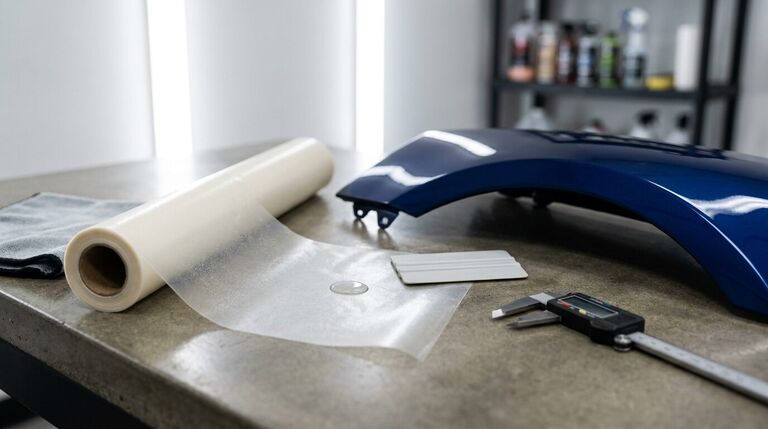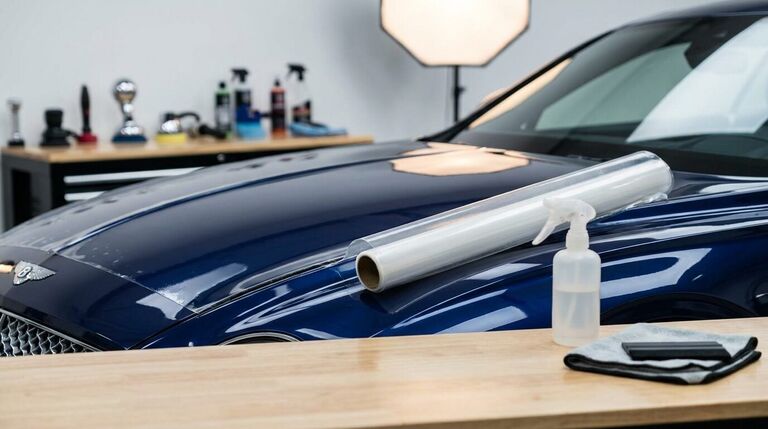

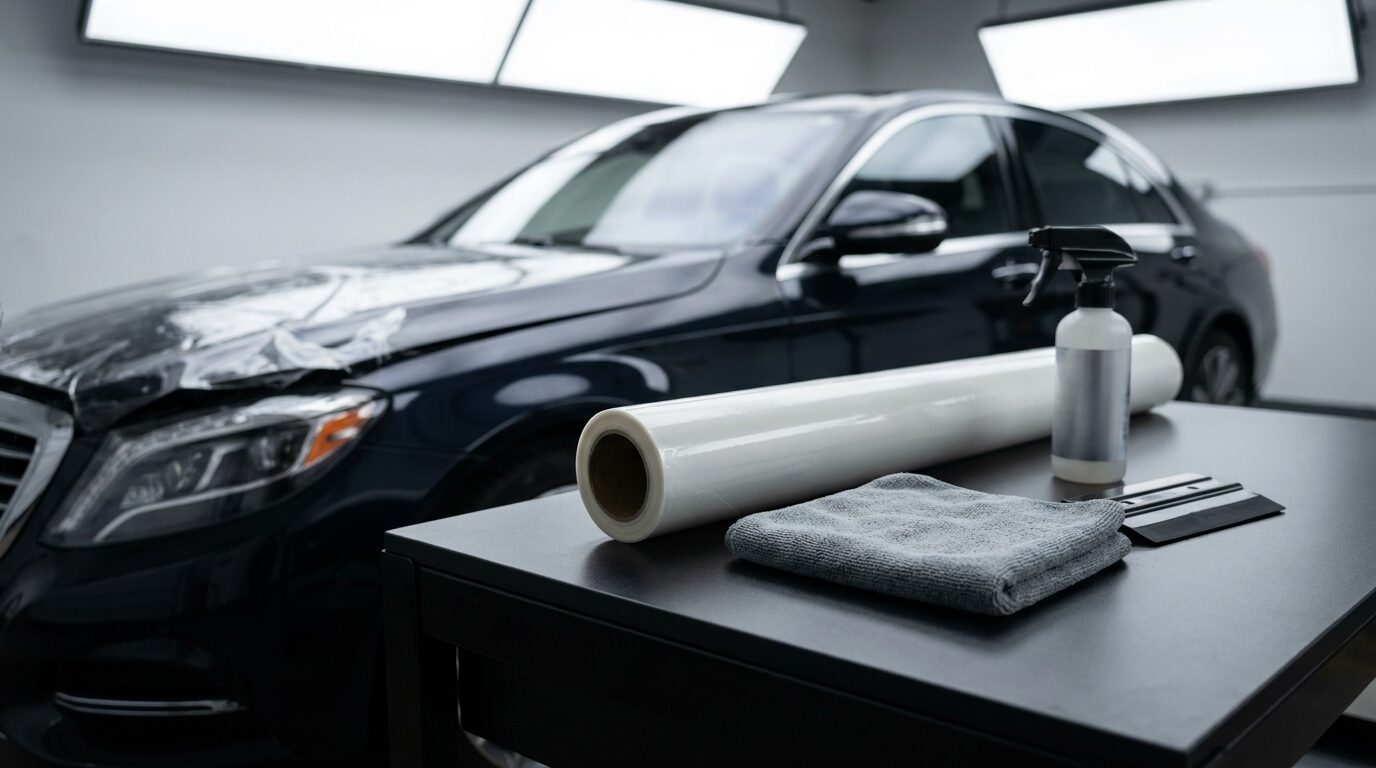
Choosing the right paint protection film coverage level comes down to balancing your daily driving exposure against your budget for vehicle preservation. Paint protection film stops rock chips because it is a durable urethane layer thick enough to absorb the kinetic energy of road debris before that impact reaches your factory clear coat. When you bring your vehicle to our shop at 3433 SW Multnomah Blvd in Portland, Oregon, we evaluate your specific commuting habits, vehicle type, and aesthetic goals to recommend the ideal coverage package. Whether you are driving a brand new daily commuter or a weekend track car, understanding the differences between partial front, full front, and full body applications ensures you make an informed investment in your automotive finish.
Understanding Partial Front PPF Coverage
Partial front paint protection film coverage represents the traditional entry point for automotive preservation. This package typically covers the front bumper, the lower portion of the fenders, and roughly eighteen to twenty four inches up the hood of the vehicle. Installers cut the film to stop midway across the hood and fenders, creating a distinct line where the protected area meets the bare painted surface. This approach targets the most vulnerable impact zones on a standard passenger car without wrapping the entire front clip.
The primary advantage of a partial front installation is lower cost while still shielding the areas that suffer the highest volume of direct rock strikes. Highway driving kicks up gravel and sand that immediately pepper the forward facing fascia and the lower hood. By placing a thick layer of urethane in these high risk zones, you prevent the unsightly white speckling that ruins the front end of modern cars. According to SEMA, protecting vulnerable painted surfaces significantly maintains vehicle resale value over time.
However, partial front coverage has distinct limitations that vehicle owners must consider before making a final decision. The most noticeable drawback is the visible line that stretches horizontally across the hood and fenders. Over time, road grime, pollen, and wax residue tend to build up along this film edge, requiring careful cleaning during routine hand washes. Debris does not always respect the boundaries of a partial kit. Higher impacts on the hood or wind whipped stones hitting the upper fenders will still cause chips on unprotected paint.
What Full Front PPF Coverage Includes
Full front paint protection film coverage eliminates the visible line across the hood by wrapping the entire hood, both complete front fenders, the full front bumper, and the side mirrors. Installers tuck and wrap the edges of the film around the panel seams wherever possible, making the installation nearly invisible to the casual observer. This complete front end shield ensures that every surface facing forward against oncoming traffic receives solid protection from stone chips, bug acids, and minor abrasions.
When you upgrade to a full front package, you protect vulnerable complex curves and sweeping bumper contours that a partial kit simply cannot reach. Modern automotive design features aggressive front fascias with deep recesses and intricate aerodynamic elements. A full front installation allows our technicians to customize the pattern alignment and wrap edges cleanly into door jambs or under hood lines. This careful edge wrapping prevents dirt accumulation and creates a seamless transition between protected and unprotected body panels.
Industry standards for complete front end protection are well established among professional installers. Across the industry, full front applications are the most popular choice for daily drivers who want full coverage on the highway without committing to a total vehicle wrap. Across the industry, a gloss full front PPF package typically runs $1,500 to $2,500 depending on the vehicle, and Custom Details quotes these per vehicle at the shop. Custom Details quotes these complete front end packages in person at our shop in Portland.
The Ultimate Defense with Full Body PPF
Full body paint protection film coverage wraps every painted exterior panel of your vehicle in self-healing urethane armor. This includes the roof, all four doors, rear quarter panels, trunk lid, rear bumper, and every accessory surface. While front end packages defend against highway impacts, a full body installation protects your entire car from parking lot door dings, rogue shopping carts, brush scratches, keying incidents, and environmental fallout from industrial pollutants or tree sap.
Applying film to every square inch of painted surface requires immense technical precision and patience. Installers must remove specific trim pieces, door handles, and lights to achieve clean, hidden edges that mimic the factory paint finish. The Global Films self-healing TPU paint protection film used in our shop measures roughly six mil in thickness and features an advanced top coat that erases minor swirl marks and light scratches automatically when exposed to heat from the sun or warm water. This ten-year warranty film maintains absolute optical clarity, ensuring your factory paint color and metallic flake shine through brilliantly.
Investing in full body protection completely changes how you experience car ownership. You no longer need to stress about tight parking spaces, construction zones, or highway debris flying off commercial trucks. For exotic cars, black vehicles that show every imperfection, or enthusiasts who demand absolute perfection, full body PPF is the definitive solution. While industry pricing for full body applications varies widely based on vehicle dimensions, it represents the highest tier of automotive preservation available on the market today.
How Portland Driving Conditions Affect Your Choice
Driving conditions in the Pacific Northwest present unique challenges that make paint protection film a wise investment for local motorists. Commuting along Interstate 5, Interstate 205, and US-26 exposes vehicles to heavy volumes of semi trucks kicking up coarse aggregate, winter road sand, and abrasive grit. The constant barrage of heavy debris during rainy commutes accelerates paint pitting on unprotected front ends much faster than in drier climates.
The Willamette Valley experiences prolonged periods of wet weather, falling leaves, and organic debris that test your vehicle exterior. Leaves sitting on a damp car release tannins that stain clear coat if left unchecked. While Feynlab ceramic coatings in Portland provide exceptional chemical resistance and hydrophobic properties, they do not absorb physical impacts. Combining paint protection film on high impact zones with a Feynlab coating creates a dual layer defense strategy tailored specifically to Portland weather patterns and highway hazards.
Local commuters also deal with tight urban parking structures, narrow residential streets, and roadside brush during weekend trips to the mountains or the coast. These everyday environmental hazards mean that partial front coverage might leave your doors and rear quarters exposed to accidental scrapes. Assessing your specific daily route helps determine whether stopping at the front end is sufficient or if extending protection to the entire body is worth it for the way you drive.
Material Quality and Film Specifications
The longevity and performance of your paint protection film depend heavily on the quality of the raw material used during the installation process. At Custom Details, we rely exclusively on Global Films, a high grade thermoplastic polyurethane engineered to withstand harsh environmental conditions while remaining virtually invisible. This material features self-healing properties that allow surface scuffs to vanish under ambient heat, maintaining a glossy and clean appearance for a decade.
Understanding film specifications helps vehicle owners differentiate between budget vinyl alternatives and true protective urethane. Quality PPF measures approximately six mil thick, providing substantial impact absorption without altering the natural body lines of your car. The adhesive backing is engineered to bond securely to automotive clear coat without leaving stubborn residue if the film is ever removed years down the road. The top coat resists yellowing from ultraviolet radiation, ensuring that white and silver cars maintain their true color over time.
Professional installation technique is just as important as the material itself. Computer cut patterns ensure precise alignment around parking sensors, cameras, and body emblems without requiring razor blades near your factory paint. Expert hand trimming and edge wrapping secure the film against lifting during high pressure washes or extreme temperature shifts. When applied correctly, quality film becomes an invisible second skin that safeguards your vehicle investment.
Evaluating Industry Pricing and Value
Evaluating the financial aspect of paint protection film requires looking at long term vehicle maintenance and ownership goals. While professional film installation demands a significant upfront investment, it prevents costly body shop resprays and preserves trade in value. Industry pricing for these services reflects the labor intensive nature of preparation, panel decontamination, custom pattern fitting, and careful edge finishing.
Because every vehicle features unique body contours, paint condition, and surface dimensions, full PPF packages are always quoted in person at our shop. Across the industry, a gloss partial front PPF package typically runs $600 to $1,500 and a gloss full body PPF package typically runs $4,000 to $8,000 depending on the vehicle; matte and color films cost more, and the shop's matte packages are listed from $2,599 for a full front and $7,599 for full body. Full body applications represent an extensive custom project that requires careful evaluation of the vehicle platform. We invite you to visit our Portland shop so we can inspect your car and provide an accurate, tailored quote.
To complement your film installation, we also offer professional detailing and protective services. Our hand wash service starts at $89, while our full interior detail is priced at $259. For owners seeking maximum paint gloss and slickness, pairing your PPF with a Feynlab ceramic coating provides the ultimate combination of physical impact defense and chemical stain resistance.
Maintenance and Care After Installation
Maintaining your paint protection film properly ensures it performs at its best for the duration of its ten year warranty. You should wait at least one week after installation before washing your car to allow the adhesive to cure completely in the Portland climate. Once cured, regular hand washing using a neutral pH car shampoo and a clean microfiber wash mitt keeps the surface free of abrasive contaminants.
Avoid taking your wrapped vehicle through automated tunnel washes that use harsh stiff brushes, as these can introduce deep scratches into the film top coat over time. If you notice stubborn bug splatters, bird droppings, or tree sap, remove them promptly with a dedicated detail spray and a soft microfiber towel. While the self-healing top coat handles minor marring automatically, aggressive chemical contaminants should never be left to bake in direct sunlight on the film surface.
You can also apply specialized sealants or ceramic coatings formulated specifically for use over paint protection film to enhance water beading and simplify routine cleaning. Our team at Custom Details is always happy to provide personalized maintenance advice and demonstrate the correct washing techniques when you pick up your newly protected vehicle at our shop.
The question to bring to the shop is not which package is cheapest but where the chips on your last car actually were. If they stopped at the leading edge of the hood, partial front coverage was doing its job; if they climbed the hood, marked the mirrors and pitted the A-pillars, you already know the answer. A straight answer from Custom Details starts with how and where you drive, then names the coverage that matches, even when that is the smaller package.
Frequently Asked Questions
Is partial front PPF enough for daily driving?
Partial front PPF is sufficient if your main concern is stopping rock chips on the bumper and lower hood during standard commutes. However, it leaves upper hood areas and side panels exposed to debris.
Will full front PPF show a visible line?
Full front PPF wraps around the edges of your hood and fenders, meaning there are no flat surface lines across the panels making the installation virtually invisible.
How long does full body PPF last?
Quality films like our Global Films TPU feature a ten year warranty against cracking, yellowing, and peeling when properly maintained.
Related service: Learn more about paint protection film in Portland at Custom Details, installed in-house at 3433 SW Multnomah Blvd, or request a quote and call (971) 400-1406.