
Understanding the Window Tint Curing Process
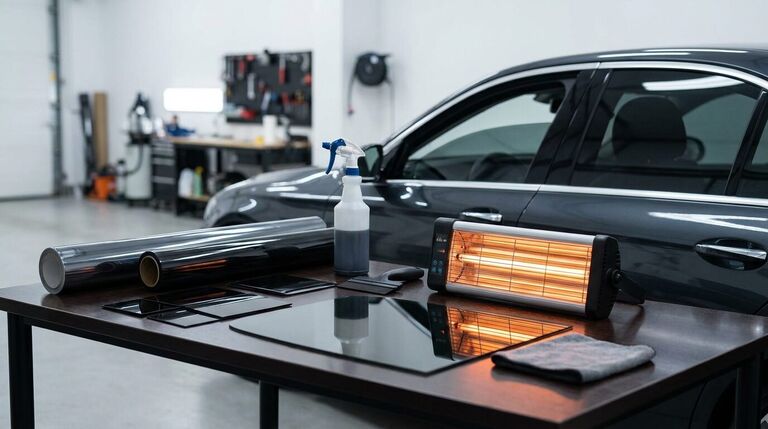
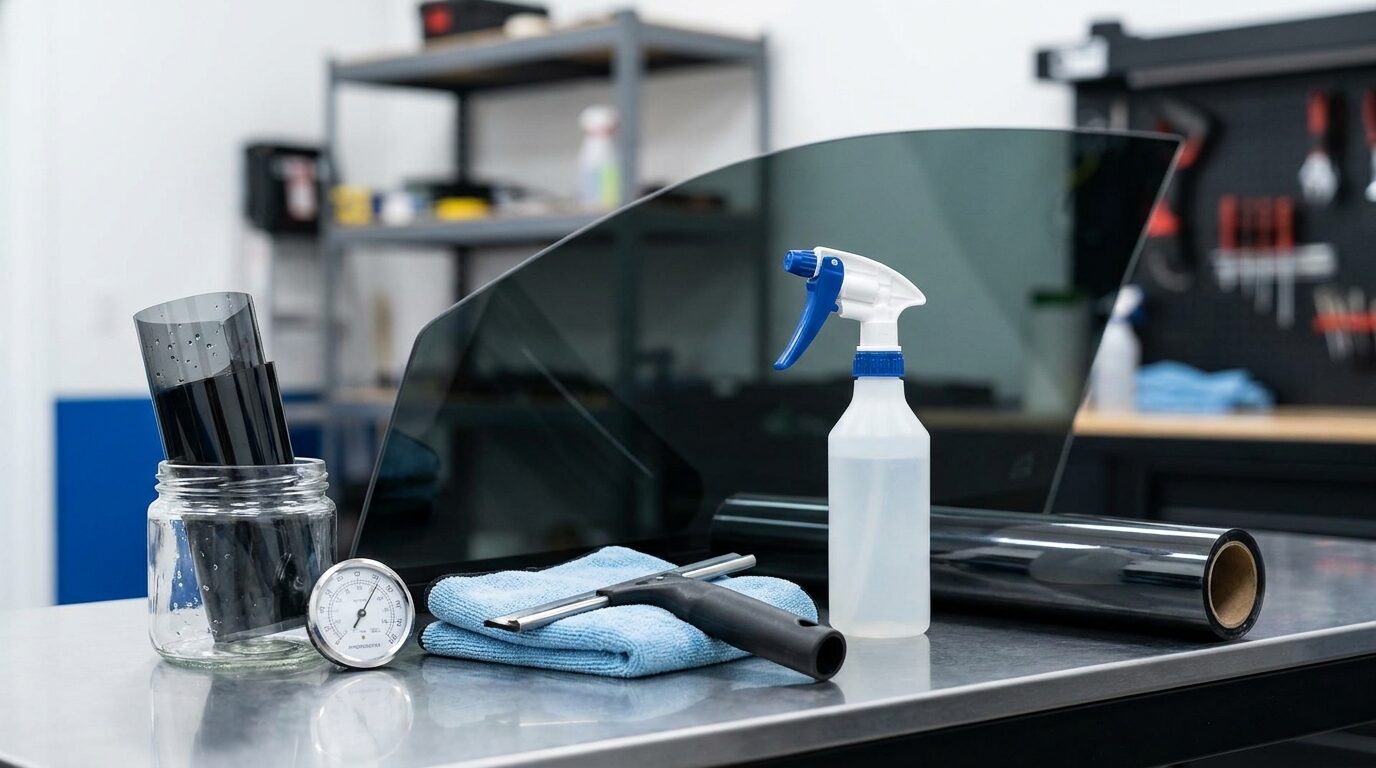
Window tint typically takes between three to ten days to fully cure, depending on ambient humidity, temperature, and the specific film technology applied. When you bring your vehicle into our shop at 3433 SW Multnomah Blvd in Portland, our technicians use a slip solution consisting of water and a specialized soap slip to position the film precisely on the interior glass. This liquid must completely evaporate through the microscopic pores of the polyester film before the pressure-sensitive adhesive bonds permanently to the glass surface. Without this drying phase, the film would lack the structural adhesion required to withstand daily rolling and environmental wear.
The curing timeline is not uniform across all seasons, especially in the Pacific Northwest where moisture levels fluctuate significantly. During warmer summer months, direct sunlight and heat accelerate the evaporation of the underlying moisture, often cutting the cure time down to just a few days. Conversely, the damp autumn and winter seasons in the Willamette Valley introduce ambient humidity that slows down the drying process. According to the International Window Film Association, understanding these environmental factors helps vehicle owners avoid premature rolling of their newly tinted glass.
The science behind modern window tint involves multiple engineered layers designed to reject infrared heat and ultraviolet radiation while maintaining optical clarity. Global Films and STEK window tint films utilize advanced adhesives that require a controlled curing window to achieve maximum optical performance. As the moisture slowly escapes, you might notice minor visual anomalies that vanish entirely on their own once the process concludes. Patience during this initial week ensures that your investment remains flawless and durable for years to come.
Why You Must Leave Your Windows Alone After Installation
One of the most critical post-installation rules is leaving your windows completely untouched for at least three to five days. When technicians finish applying film using products from manufacturers like STEK, the edges are wet and vulnerable to displacement. Rolling a window down even a fraction of an inch can catch the top edge of the film on the rubber window seals, causing it to peel, bunch, or tear irreparably. If the film shifts before the adhesive sets, the entire piece must be stripped and replaced, which delays your satisfaction and requires additional shop time.
Vehicle doors experience constant vibration from driving over rough patches of I-5, I-205, and US-26, which further complicates the settling of fresh tint. Keeping the windows closed stabilizes the film against these vibrations, allowing the adhesive to anchor evenly across the entire expanse of the glass. The pressure exerted by the closed window against the upper seals actually helps press out the final remnants of moisture trapped beneath the surface. Forcing the windows to stay up requires restraint, but it is the single most important action an owner can take to protect their new tint.
We always remind our customers at Custom Details to leave a physical reminder, such as placing a piece of painter tape over the window switches, if they are worried about muscle memory causing them to roll a window down. Passengers, especially children or pets in the backseat, must also be informed of the restriction. Taking these simple precautions guarantees that the installation remains undisturbed while the chemical bonding process finishes its crucial work without interruption.
Why Rolling Down the Windows Breaks the Seal
The mechanics of a car door are surprisingly harsh on fresh window film. When you press the window switch down, the glass drops rapidly into the interior door panel. Along the top edge of the door frame sits a tight rubber weatherstripping seal designed to keep wind noise and rainwater out of your cabin. This seal exerts continuous pressure against the glass.
When the film is freshly applied, the adhesive is in a semi liquid state. It lacks the shear strength required to resist the mechanical drag of that rubber seal. Even if the window has been up for forty eight hours, the bottom portion of the film tucked below the belt line molding dries much slower than the exposed glass above. Rolling the window down forces that damp, unbonded edge against the scraper seal, instantly catching and rolling the material back. The International Window Film Association gives the same instruction to every new tint customer: avoid rolling down the windows or applying force to the film during the curing period, because either one can disrupt the bonding process.
Replacing a damaged piece of window tint takes time and interrupts your schedule. Avoiding the window switch entirely for the recommended duration prevents this frustrating mishap. If you have passengers, especially children or pets who like to control their own windows, make sure to engage your master window lockout switch on the driver door panel as an extra safety measure.
How Portland Weather Affects Tint Curing Times
Portland weather presents a unique set of challenges for automotive window tint curing due to our persistent rain and moderate temperatures for much of the year. When outdoor humidity is high, the air cannot absorb moisture as efficiently, which directly slows down the rate at which water evaporates from beneath the film. Vehicles parked outside in damp conditions will naturally take longer to cure than vehicles parked inside a climate-controlled garage or driven regularly in dry daylight conditions. Sunlight acts as the primary catalyst for drying, heating the glass and driving the trapped moisture toward the edges.
During the wetter months, we advise our Portland customers to park their vehicles facing south or in open sunlight whenever possible to maximize thermal energy absorption. Even on overcast days, indirect UV rays penetrate the glass and assist in the gradual evaporation of the slip solution. According to STEK Automotive, exposure to ambient heat significantly improves the final bond strength of high-performance window films. Avoiding underground parking garages or prolonged shade during the first week helps your tint reach full maturity much faster.
Temperature swings also play a role in how the glass and film expand and contract during the curing cycle. The sudden transition from a cold morning to a mild afternoon causes the glass to shift microscopically, which helps squeeze out microscopic pockets of water. While our shop environment provides ideal conditions for the initial application, what happens outside our doors during the following week determines the exact day the curing process reaches completion.
The Role of Moisture and Adhesive Evaporation
The moisture trapped beneath window tint immediately after installation is a necessary component of the application technique rather than a flaw in the workmanship. Installers squeegee out the vast majority of the slip solution during the mounting phase, but a microscopic film of liquid always remains behind. This residual moisture creates a slight haze or milky appearance when you first look through the glass. As the water molecules break down into vapor and escape through the breathable layers of the film, this haze gradually clears up from the center outward.
Adhesive chemistry has advanced significantly, allowing modern films to cure cleanly without leaving chemical residue or permanent cloudiness. Global Films uses advanced formulations that bond securely once dry, but they rely on this gradual evaporation period to achieve ultimate clarity. If you press on the glass during this phase, you might push the remaining water into a concentrated pocket, creating a larger bubble that takes longer to disappear. Leaving the glass untouched lets the evaporation process occur naturally and evenly.
Humidity levels inside the vehicle cabin also influence how quickly this moisture escapes. Running your vehicle climate control with the defroster on can help pull ambient moisture out of the interior air, indirectly speeding up the drying of the glass surfaces. However, rolling down the windows to vent the cabin defeats the purpose during the critical first few days. Balancing cabin ventilation with closed windows is a delicate part of caring for fresh tint.
What Normal Curing Bubbles Look Like Versus Flaws
Seeing small water pockets or hazy patches immediately after a window tint installation is completely normal and expected. These visual imperfections are typically referred to as curing fingers or water pockets, and they look like small, localized ripples in the glass. As the sun bakes the windows, these pockets shrink and eventually disappear entirely over the course of the first week or two. Trying to pop or flatten these bubbles with a credit card or cloth will only scratch the delicate interior surface of the film and ruin the installation.
True installation flaws look fundamentally different from normal curing artifacts and do not change or shrink over time. Dust specs, hair trapped under the film, or creased material will maintain their exact shape and size regardless of how much time passes or how much sunlight the vehicle receives. If you notice a sharp-edged particle or a permanent crease after two full weeks of curing, it represents an imperfection that our team at Custom Details will gladly evaluate and correct. Knowing the difference saves a lot of worry while your vehicle goes through the natural drying phases.
Monitoring the evolution of the tint during the first week allows you to identify any genuine issues early on. Most normal water bubbles will shift slightly or reduce in diameter day by day as the moisture evacuates. If a bubble contains a tiny piece of debris at its center, it will remain stationary and rigid. We encourage customers to reach out if they have questions about what they are seeing on their glass.
Oregon Window Tint Laws and Legal Compliance
Choosing a window tint darkness level means working within state regulations to stay legal and avoid fines; our Oregon window tint laws guide covers the limits, the medical exemption and the penalties. Under Oregon window tint law (ORS 815.221), sedan and passenger vehicle front side windows must allow more than 35 percent of light to pass through. Multipurpose passenger vehicles, such as SUVs and trucks, are subject to different front side requirements while enjoying more flexibility on rear cabin glass. Ensuring your vehicle complies with these standards protects you from traffic stops and mandatory removal notices.
Windshield tinting is strictly regulated across the state, restricting film application to the top AS-1 line or the uppermost six inches of the glass. Applying dark film across the entire front windshield compromises nighttime visibility and violates state safety statutes. Our shop guides every customer through these legal parameters before starting any work to ensure the chosen shade matches both personal preference and local statutes. Choosing the correct darkness level from the beginning saves time and prevents the hassle of stripping illegal film later.
Modern ceramic IR films provide exceptional heat rejection without requiring extremely dark shades to block thermal energy. This means you can stay compliant with Oregon light transmission laws while still enjoying superior interior temperature control and ultraviolet protection. Investing in quality film means getting maximum performance within the boundaries of local legislation.
Choosing Between Standard and Ceramic IR Films
Selecting the right window film depends on your specific performance goals, driving habits, and budget considerations. Standard window films provide excellent privacy, reduce glare effectively, and block a substantial amount of visible light. At Custom Details, standard film applications run $99 to $279 depending on the specific coverage package and vehicle type. These films use traditional dyed polyester constructions that offer reliable, classic performance for daily drivers.
For vehicle owners seeking maximum heat rejection and electronic signal friendliness, ceramic IR film represents the pinnacle of modern tint technology. Ceramic particles embedded within the film structure block infrared radiation without relying on metallic dyes that can interfere with GPS, cellular, or radio signals. Ceramic IR window tint installations at our shop run $159 to $599 depending on the exact configuration of your vehicle. This premium option keeps cabin temperatures significantly lower during warm weather without requiring ultra-dark shades.
Both options undergo the same essential curing process and require the same careful adherence to the window-up rule following installation. Whether you choose standard dyed film or high-end ceramic IR, proper maintenance during the first week ensures a flawless result. Our team at 3433 SW Multnomah Blvd is always ready to discuss your options and help you select the ideal film for your car.
The trade-off with tint curing is simple: a few days of leaving the windows alone against months of a film that was disturbed while its adhesive was still wet. There is no way to shortcut the drying, only ways to ruin it. At Custom Details we would rather you wait the full week before the first window comes down, and we will tell you when the haze you are seeing is normal and when it is something we need to look at.
Frequently Asked Questions
How long should I keep my windows up after getting tint installed?
You must keep your windows completely rolled up for a minimum of three to five days to allow the adhesive to bond and moisture to evaporate.
Are the bubbles in my new window tint normal?
Yes, small water pockets and a hazy appearance are normal during the first week and will disappear as the film fully dries.
What is the difference between standard and ceramic tint?
Standard film uses dyed polyester for privacy and glare reduction, while ceramic IR film uses advanced nanoparticles to block infrared heat without signal interference.
Can I clean my windows immediately after tinting?
You should wait at least one week before cleaning the inside of your tinted windows, and only use ammonia-free cleaners thereafter.
Related service: Learn more about car window tinting in Portland and Oregon window tint laws at Custom Details, installed in-house at 3433 SW Multnomah Blvd, or request a quote and call (971) 400-1406.