
Summer ultraviolet radiation degrades unprotected car paint by breaking down its chemical structure, leading to oxidation, clear coat failure, and permanent fading. When you drive your car through the Portland area during peak summer months, the solar radiation combines with ambient heat to bake airborne pollutants directly into your clear coat. Without a physical barrier like paint protection film or a chemical shield like a ceramic coating, your vehicle is completely exposed to these damaging rays. Understanding how UV light attacks automotive finishes helps you protect your investment before permanent degradation sets in.
The Science of Ultraviolet Degradation on Car Paint
Ultraviolet rays from the sun consist of UVA and UVB wavelengths that penetrate automotive clear coats and attack the underlying pigment layers. According to Consumer Reports, prolonged exposure to direct sunlight causes the molecular bonds in paint resins to break down over time. This breakdown leads to a dull appearance, chalky oxidation, and eventual peeling of the clear coat layer. Once the clear coat fails, the base coat has no defense against moisture, road salts, and future sun exposure.
During a typical Portland summer, the sun shines intensely during the afternoons, trapping heat against metal body panels parked outside. As the metal expands and contracts under thermal cycling, the microscopic fissures created by UV rays widen. This process accelerates the aging of your exterior finish, turning a vibrant factory color into a washed out, chalky surface. Owners often notice the roof, hood, and trunk showing the worst damage because these horizontal surfaces receive the most direct vertical sunlight.
Many drivers mistakenly believe that cloudy days in the Pacific Northwest block all harmful solar radiation. In reality, UV rays easily penetrate cloud cover, meaning your car absorbs high doses of radiation even on overcast summer afternoons. Relying solely on occasional car washes does nothing to stop this invisible photochemical reaction. To prevent long term damage, vehicle owners must block the rays before they reach the sensitive clear coat layers.
How Portland Summer Driving Accelerates Paint Wear
Driving on local routes like I-5, I-205, and US-26 exposes your vehicle to a harsh combination of summer heat, blowing dust, and asphalt oils. When these abrasive particles settle on your paint and bake under intense sunlight, they etch into the clear coat much faster than they would in cooler weather. According to SEMA, environmental contaminants combined with UV exposure create a synergistic damaging effect that ruins automotive finishes prematurely. This is why daily commuters often see rapid paint degradation on the front bumper and hood.
Tree sap and bird droppings present another major hazard during the warm months in our region. When a bird dropping lands on your hood and bakes in the 90 degree sun, the acidic compound expands into the softening clear coat within hours. Without a protective layer, the acid etches a permanent crater into the paint. Summer heat makes this process happen in a fraction of the time it takes during our wet winter months.
Traditional car waxes melt and evaporate quickly when exposed to prolonged summer temperatures. A standard carnauba wax offers very little defense against sustained UV radiation and thermal stress. Once the wax barrier vanishes, the clear coat absorbs the full force of the sun. Car owners need durable solutions like modern ceramic coatings or protective films to maintain a durable shield through the warm season.
The Role of Ceramic Coatings in UV Defense
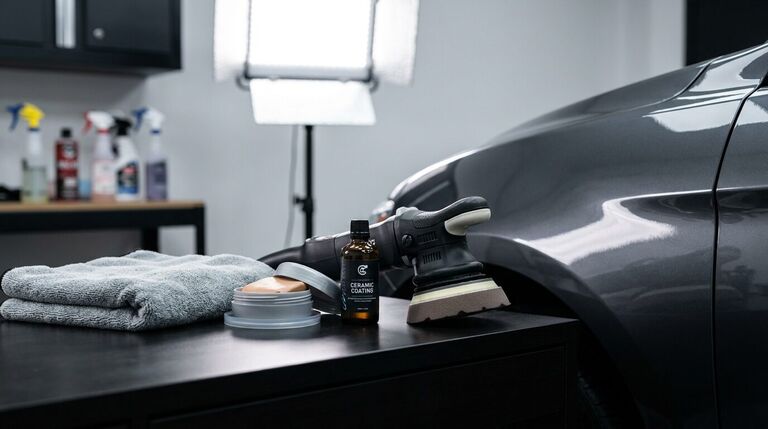
Ceramic coatings provide a semi permanent chemical bond with your factory clear coat, creating a hard sacrificial layer that resists UV rays and environmental fallout. At Custom Details, we install Feynlab ceramic coatings, which range from a 1 year entry level option to the V3 lasting 3 years and the Plus package offering 5 years of protection. For vehicles with factory satin or matte finishes, we also apply a specialized matte coating lasting about 3 years. These advanced formulations block harmful UV radiation from reaching your actual paint.
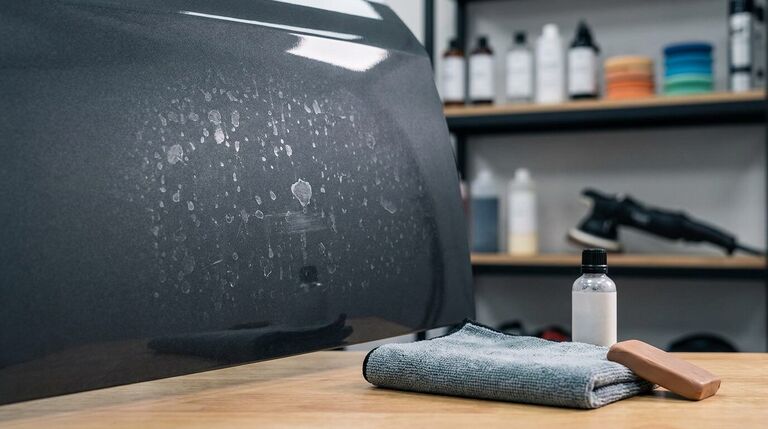
Applying a ceramic coating involves careful paint preparation, including a thorough hand wash and multi stage paint correction to remove existing swirls and oxidation. Once the surface is completely bare and refined, the coating is applied panel by panel and cured. The resulting surface features high hydrophobic properties, meaning water beads up and rolls off, taking dust and pollen with it. This prevents baked on water spots that commonly plague vehicles during dry summer spells.
Maintaining a coated car through the summer is straightforward compared to maintaining unprotected paint. Routine maintenance requires nothing more than a gentle hand wash using pH neutral soap. Industry standard detailing services, such as our Hand Wash starting at $89 or an Exterior Detail plus Polish at $499, help preserve the lifespan of your protective layer. You never have to worry about waxing your vehicle every few weeks because the coating stands firm against the elements.
Physical Shielding with Paint Protection Film
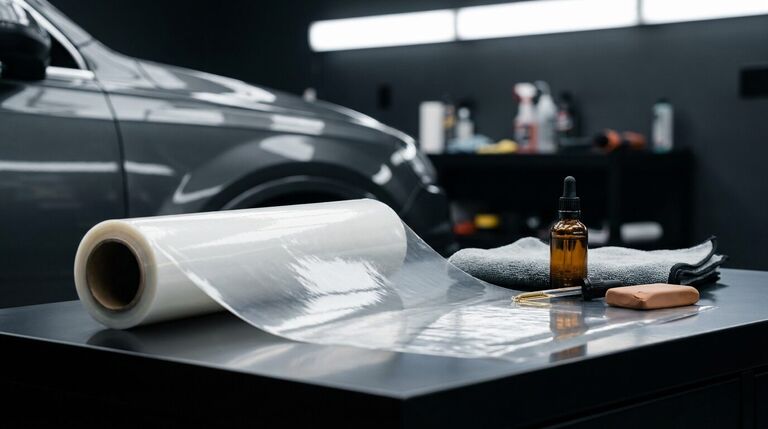
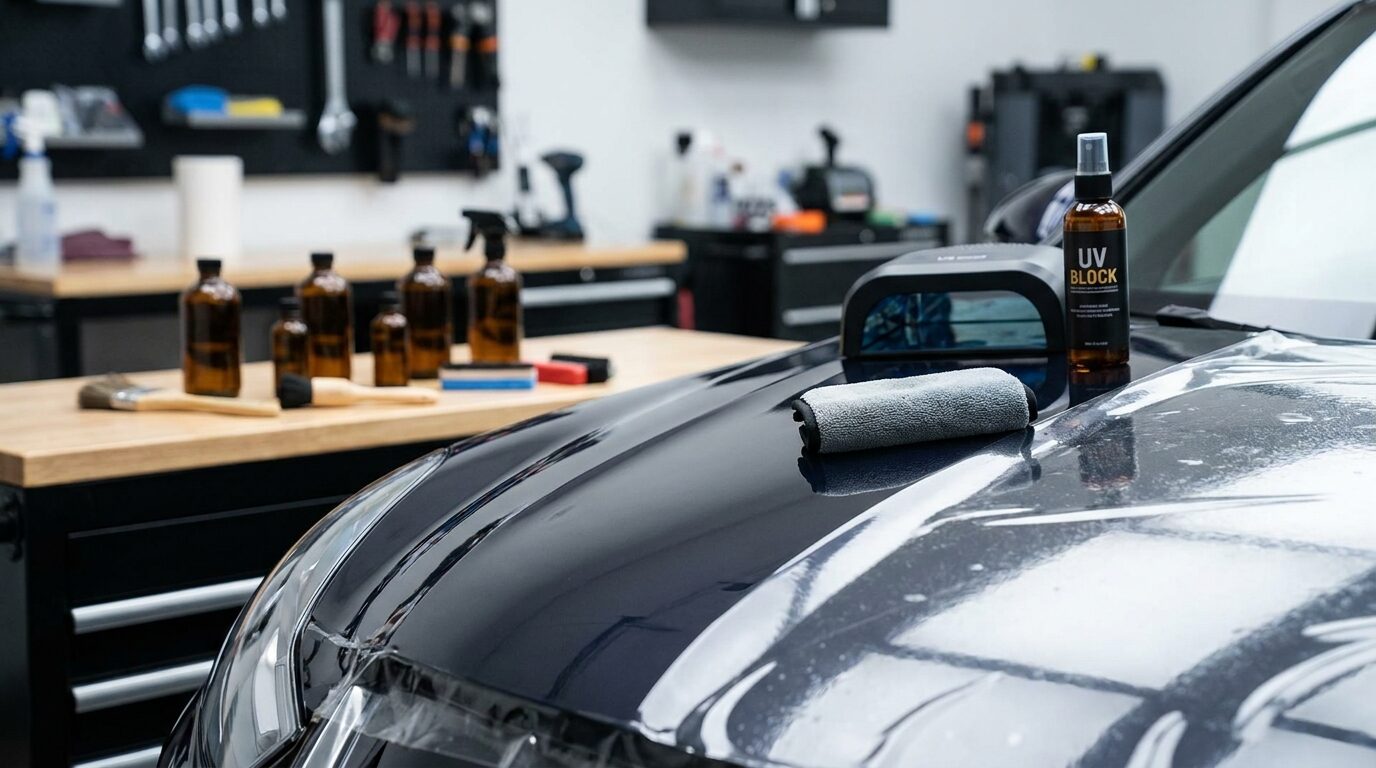
While ceramic coatings excel at chemical and UV resistance, physical impact from road debris requires paint protection film. We utilize Global Films self healing TPU paint protection film, which measures roughly 6 mil in thickness and comes backed by a full 10 year warranty. This durable urethane layer absorbs the impact of gravel kicked up on the highway while simultaneously blocking 100 percent of harmful UV rays from reaching the covered panels.
The self healing topcoat of modern PPF means that minor swirl marks and light scratches caused by summer dust disappear when exposed to ambient heat or warm water. If a rogue pebble strikes your hood on I-5, the film takes the blow instead of your clear coat. This keeps the underlying factory paint untouched and prevents unsightly white rock chip speckles from forming across the front end of your car.
For drivers who want the fullest coverage, combining PPF on high impact areas with a ceramic coating over the entire vehicle offers the ultimate defense. Across the industry, a gloss full front PPF package typically runs $1,500 to $2,500 depending on the vehicle, and Custom Details quotes these per vehicle at the shop. Investing in physical film defense ensures your vehicle keeps its like-new appearance year after year.
Interior Heat and UV Damage Control
Exterior paint is not the only part of your vehicle suffering under summer ultraviolet rays. Cabin temperatures routinely soar to dangerous levels in Portland, cracking dashboards, fading leather seats, and degrading electronic displays. Applying high quality window tint is the single most effective way to combat interior solar degradation. We offer Global films and STEK window tint options that block intense infrared heat and damaging ultraviolet light, with ceramic IR film starting at $159.
Our window tinting services are tiered to fit your specific needs and budget. Standard window tint film runs $99 to $279 depending on the coverage area, while advanced ceramic IR film runs $159 to $599. Ceramic window films block a massive percentage of infrared heat without interfering with mobile phones, GPS, or radio signals. This keeps your cabin significantly cooler and protects your interior trim from premature drying and cracking.
Pairing window tint with professional interior detailing helps maintain a healthy cabin environment. Our Basic Interior detail starts at $139, while our full Interior Detail is $259, and an Engine Bay detail is available for $50. Keeping your interior clean and protected from UV rays ensures your vehicle remains comfortable and retains its resale value over the long haul.
Preventative Maintenance Steps for Portland Car Owners
Protecting your car from summer sun damage requires a proactive maintenance routine tailored to our regional climate. Never let bird droppings, tree sap, or bug splatters sit on your vehicle for more than a day when the weather is warm. These contaminants bake into the clear coat rapidly under direct sunlight. Wash your car every week or two using the two bucket method to avoid dragging abrasive dust across your painted surfaces.
Always park in a shaded area or use a quality car cover whenever possible when your vehicle sits parked outside for long periods. If your garage is cluttered, take the time to clear space so your car escapes the peak afternoon rays. Minimizing direct solar exposure dramatically extends the life of your clear coat and any aftermarket protective products you have installed.
Finally, inspect your paint condition at the start and end of every summer season. Look for signs of fading, rough patches, or clear coat thinning on the hood and roof. If you notice the paint losing its deep gloss, visit our shop to discuss professional paint correction and protective coatings. Addressing early signs of wear prevents costly repainting down the road.
The question worth bringing to the shop in summer is not whether UV is fading your paint but how much of the damage is already done. A paint depth reading and a look at the roof and hood under strong light tell us whether the clear coat is still thick enough to correct and coat, or whether film should go on now to stop the loss where it stands. A straight answer from Custom Details includes that reading, not just a package price.
Frequently Asked Questions
Does cloudy weather in Portland protect car paint from UV rays?
Cloud cover only filters visible light while letting harmful UVA and UVB rays pass through to your car paint.
How long do ceramic coatings last against summer heat?
Feynlab ceramic coatings installed at our shop range from 1 year options up to 5 year Plus packages that withstand severe thermal stress.
Can window tint reduce interior fading?
Quality window tint blocks up to 99 percent of ultraviolet light, preventing dashboard cracking and leather seat discoloration.
Where is Custom Details located?
All work is performed at our shop located at 3433 SW Multnomah Blvd in Portland, Oregon.
Related service: Learn more about paint protection film in Portland, ceramic coating in Portland and car window tinting in Portland at Custom Details, installed in-house at 3433 SW Multnomah Blvd, or request a quote and call (971) 400-1406.