
Ceramic IR Tint vs Standard Dyed Film: Heat Rejection and Durability
Ceramic infrared tint blocks significantly more solar heat than standard dyed film because it utilizes advanced nano-ceramic particles that absorb infrared radiation rather than relying solely on dark pigment. When you bring your vehicle to our shop at 3433 SW Multnomah Blvd in Portland, OR, we help you weigh the performance differences so you can choose the right material for your daily driving needs. Standard dyed film offers a classic dark appearance and reduces visible glare, but it lacks the advanced molecular structure required to stop high levels of thermal energy from entering the cabin.
Understanding how these two window film options handle solar energy starts with the core manufacturing differences. Standard dyed films use a layer of dye sandwiched between an adhesive layer and a protective topcoat to absorb incoming visible light. Ceramic IR films incorporate microscopic non-conductive ceramic particles that remain invisible to the naked eye while selectively blocking infrared heat rays and ultraviolet light. According to the International Window Film Association (IWFA), advanced architectural and automotive films can drastically reduce interior temperatures, which directly lowers your reliance on air conditioning during warmer months.
Drivers in the Pacific Northwest face a unique climate cycle that tests automotive materials. While Willamette Valley rain and overcast skies dominate much of the year, the summer months bring intense solar radiation that bakes interiors while vehicles sit parked outside or travel along local corridors like I-5, I-205, and US-26. Choosing the right film ensures your cabin stays comfortable during unexpected heat waves without forcing your air conditioning system to work overtime. Our installation team carefully measures and applies both film types to manufacturer specifications to ensure flawless optical clarity.
How Standard Dyed Film Handles Heat and Glare
Standard dyed film provides an effective barrier against bright visible light and gives your car a sleek, uniform privacy look from the outside. The dark dye absorbs a portion of the sun's energy before it reaches the glass, which helps cut down eye strain while driving during bright daylight hours. However, because dyed films rely strictly on pigment concentration to manage heat, they have a strict physical limitation. Once the dye absorbs as much thermal energy as it can hold, the remaining heat transfers directly through the glass and into your vehicle interior.
Over time, standard dyed films are also susceptible to color degradation, particularly when subjected to prolonged ultraviolet exposure. Cheaper dyed options can turn a distracting shade of purple or bubble away from the glass as the adhesive breaks down under thermal stress. This degradation not only ruins the aesthetic appeal of your vehicle but also compromises outward visibility at night or during heavy Portland rainstorms. Replacing degraded window tint requires careful removal of the old adhesive, which adds unnecessary time and service expense compared to installing a high-quality film right from the start.
When budgeting for window tint, standard dyed film offers an accessible entry point for vehicle owners who primarily want privacy and glare reduction without a major upfront investment. At Custom Details, standard window tinting runs $99 to $279 depending on the specific glass coverage you choose for your vehicle. We use dependable materials from Global Films and STEK to ensure that even our standard film options deliver clean edges, scratch-resistant topcoats, and reliable daily performance for cars, trucks, and SUVs brought into our shop.
The Advanced Science of Ceramic IR Window Tint
Ceramic IR tint represents a major technological leap forward in window film engineering by utilizing non-metallic, non-conductive ceramic particles. These microscopic particles possess high thermal resistance, allowing the film to block a vast majority of infrared radiation, which is the primary source of felt solar heat. Unlike metallic films that can interfere with cell phone reception, GPS navigation, and radio signals, ceramic films remain completely signal-friendly. This makes ceramic IR tint an ideal choice for modern vehicles equipped with extensive onboard electronics, safety sensors, and integrated antenna arrays.
The heat rejection capabilities of ceramic IR film translate into a noticeable difference inside the cabin on hot days. While a dyed film might leave your steering wheel and seats hot to the touch after parking in the sun, ceramic IR film acts as a formidable thermal shield. According to the International Window Film Association, solar control films block a significant portion of the infrared and ultraviolet energy streaming through untreated automotive glass, which is what keeps the cabin cooler. This keeps your climate control system efficient and protects sensitive interior dash materials from drying out, cracking, or fading prematurely.
Beyond thermal comfort, ceramic IR film provides exceptional optical clarity and color stability that lasts for the life of your vehicle. Because the nano-ceramic particles do not rely on unstable organic dyes, the film will never fade into a purple hue or lose its protective properties. Drivers in Portland appreciate this longevity, especially when paired with our full range of Feynlab ceramic coating tiers to protect exterior paint from environmental contaminants, road grit, and seasonal moisture. Combining window tint with exterior paint protection creates a fully shielded vehicle ready for any local driving condition.
Fade Resistance and Long-Term Durability
Fading is one of the most common complaints vehicle owners have regarding older or lower-quality window tints. Standard dyed films absorb solar radiation directly into their pigment layers, causing those pigments to break down chemically over a span of several years. When the dye breaks down, the film loses its dark shade, turns translucent or purple, and fails to block glare effectively. This gradual failure forces owners to deal with bubbling side windows and compromised visibility that can become a safety hazard during nighttime driving.
Ceramic IR films eliminate the fading problem entirely by utilizing inorganic mineral components that remain chemically stable under continuous ultraviolet and thermal assault. The ceramic structure holds its color, heat rejection properties, and anti-glare characteristics indefinitely. High-end films from manufacturers like STEK and Global Films feature solid, scratch-resistant hard coats on the surface. These protective topcoats prevent everyday items like seatbelts, pet claws, and cleaning tools from gouging or damaging the interior side of the film.
Maintaining your newly tinted windows requires simple care to ensure the adhesive and topcoat last for years. We always advise clients to wait for the proper curing window, as detailed in our guide on professional window tinting options and pricing, before rolling down their freshly tinted side windows. Using ammonia-free glass cleaners and microfiber towels prevents chemical degradation of the topcoat, ensuring your windows maintain their crisp, factory-fresh look through years of daily commuting and road trips.
Cost Breakdown: Upfront Investment vs Long-Term Value
Evaluating the cost of window tint requires looking past the initial receipt to understand the long-term value each film type provides. Standard dyed film requires a smaller initial outlay, making it a popular choice for budget-conscious drivers or those leasing a vehicle for a short term. At Custom Details, standard film applications range from $99 to $279 depending on the amount of glass covered. If you only need a basic two-window front match or a standard sedan setup, this entry-level pricing provides immediate privacy and glare reduction without breaking the bank.
Ceramic IR film commands a higher initial price point due to the advanced nanotechnology and premium raw materials involved in its manufacture. At our Portland shop, ceramic IR window tinting runs from $159 to $599 depending on vehicle size and glass configuration. While this represents a higher upfront cost, the investment pays dividends through superior heat rejection, enhanced energy savings for your vehicle climate control, and absolute color stability. You will never need to pay for a tint removal and re-application due to fading, making ceramic IR film the more cost-effective option over the total lifespan of a kept vehicle.
Many vehicle owners also choose to pair their window tint installation with complementary protection services to ensure total vehicle care. For instance, applying Global Films clear bra and PPF packages safeguards your front bumper and hood from rock chips kicked up by gravel trucks on local highways. Integrating these services at our Multnomah Boulevard shop ensures your car receives professional, careful application from experienced technicians dedicated to quality craftsmanship.
Compliance with Oregon Window Tint Regulations
Understanding state law on window tint darkness is a necessary step before choosing any film for your car or truck; our Oregon window tint laws guide lists the limits window by window. Oregon's vehicle code sets specific visible light transmission percentages for different windows on a vehicle. Under Oregon window tint law (ORS 815.221), non-commercial passenger vehicles must allow a certain percentage of light through the front side windows, while rear side windows and the rear windshield can often be much darker depending on the vehicle type and year.
Choosing ceramic IR film allows you to maximize heat and UV rejection without necessarily resorting to an illegal dark shade. Because ceramic particles block infrared heat independently of visible light darkness, you can select a lighter shade or even a nearly clear ceramic film for your front windshield and front doors while still achieving exceptional thermal comfort. This keeps your vehicle fully compliant with state regulations while eliminating the discomfort of solar heat baking your arms during a commute.
Our installation team stays fully up to date with local legal thresholds so we can guide you toward the right film darkness for every glass panel on your car. We measure your factory glass VLT before starting any installation to ensure the final product meets legal standards. Whether you drive a daily commuter car, a family SUV, or a dedicated weekend cruiser, getting the right tint installed correctly the first time saves you from potential fix-it tickets and the hassle of stripping non-compliant material.
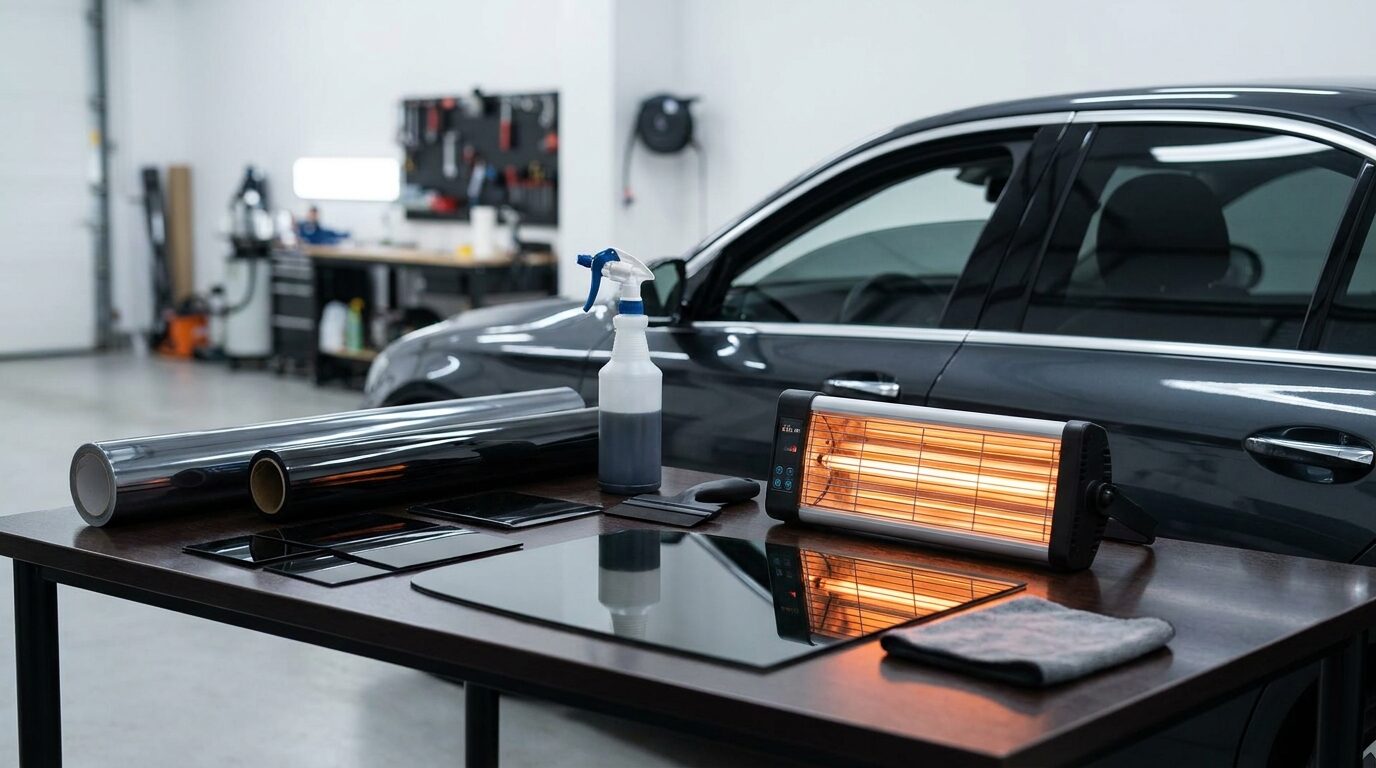
The question to bring in is what you want the tint to do, because the answer decides the film. If it is privacy and looks, standard carbon film does the job for less. If it is a cooler cabin on a hot day and less strain on the air conditioning, ceramic IR is the only one of the two that measurably delivers. Ask Custom Details to show you both films on the same sample glass under a heat lamp; the difference is easier to feel than to explain.
Frequently Asked Questions
Does ceramic IR tint completely stop all heat from entering a car?
No window film can block one hundred percent of solar heat, but high-end ceramic IR film blocks a vast majority of infrared radiation to keep cabin temperatures significantly lower than untreated glass.
Why does standard dyed film turn purple over time?
Standard dyed films use organic dyes that break down chemically when exposed to continuous ultraviolet radiation and high cabin heat, causing the pigment to lose its original dark color.
Can window tint interfere with my GPS or cell phone signal?
Traditional metallic window tints often block electronic signals, but ceramic IR films use non-metallic, non-conductive nanoparticles that allow cell phones, GPS, and radio signals to pass through freely.
Related service: Learn more about car window tinting in Portland and Oregon window tint laws at Custom Details, installed in-house at 3433 SW Multnomah Blvd, or request a quote and call (971) 400-1406.