
Understanding Matte Finish Vulnerabilities
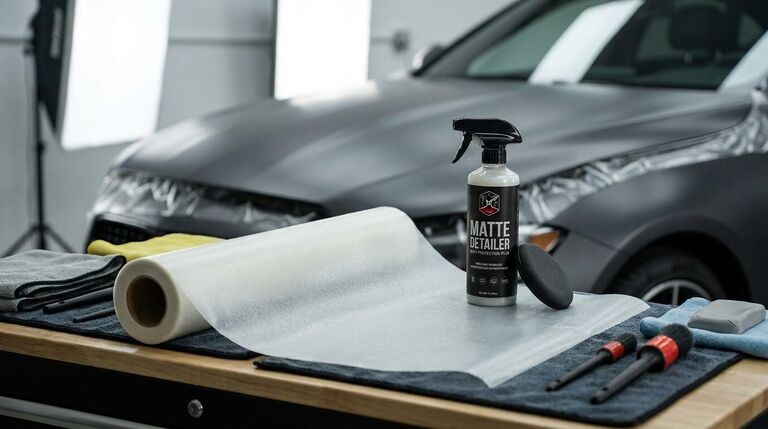
Matte finishes lack the smooth, clear coat layer found on glossy cars, meaning they cannot be polished to remove scratches, swirls, or etching. On a gloss car, a light scratch can often be buffed out with a compounding pad and a rotary polisher, but doing that to a matte surface will instantly flatten the texture into a shiny, polished spot. This makes prevention your primary defense against permanent damage, whether your car features raw matte paint or a protective wrap like our Global Films self-healing TPU paint protection film. Bird droppings, tree sap, and hard water spots pose a severe threat because they etch into the porous satin topcoat much faster than they do on traditional gloss clear coats.
Portland weather presents unique challenges for matte vehicle owners throughout the year, from wet winter road grime to sticky summer pollen and tree saps. When moisture sits on a matte surface and evaporates, it leaves behind mineral deposits that quickly bond to the microscopic texture. If you try to scrub these mineral spots away with a standard microfiber towel and a dry wipe, you will scratch the surface and create permanent gloss lines. Understanding these inherent vulnerabilities helps you approach routine maintenance with the caution required to keep your finish looking uniform and clean.
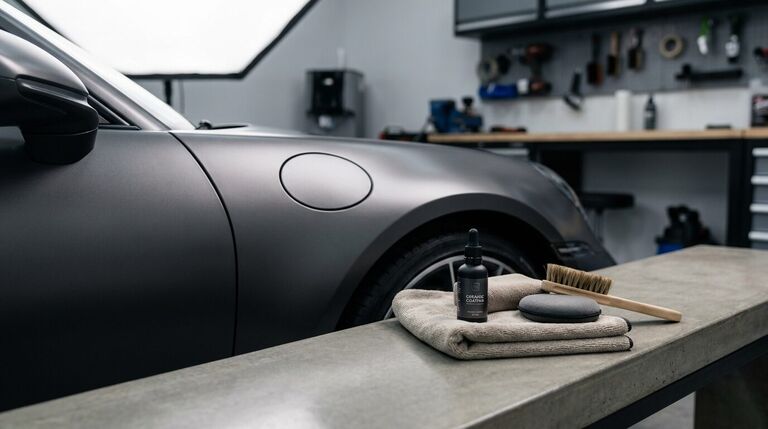
Protecting your investment also means choosing the right chemical defenses before contamination becomes a permanent issue. Applying a dedicated satin-safe coating, such as a specialized Feynlab ceramic coating designed specifically for matte surfaces, adds a layer of chemical resistance without altering the appearance. This coating creates a barrier against industrial fallout and organic contaminants, making your regular wash routine much easier and safer for the finish. Without this protection, everyday driving around the Pacific Northwest will quickly degrade the look of your matte panels.
Essential Tools and Safe Washing Products
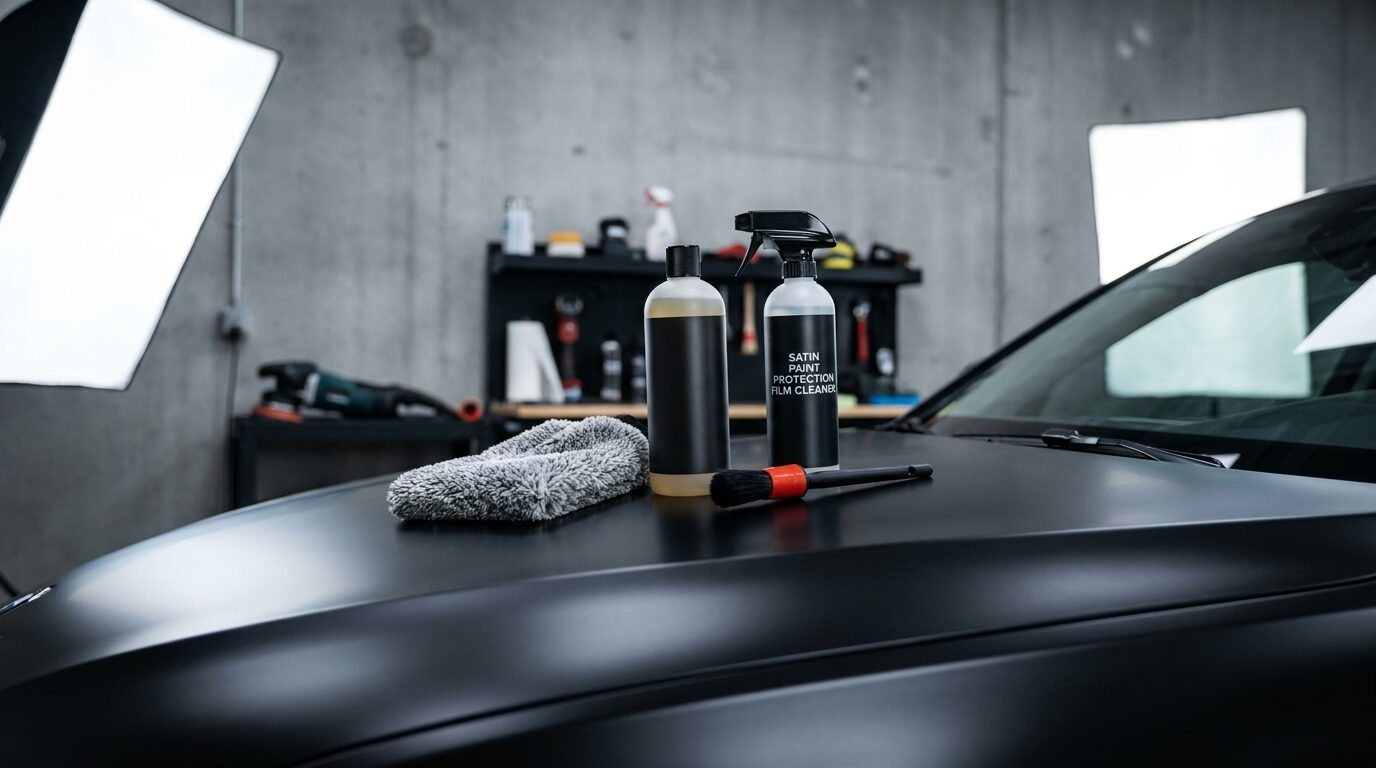
Washing a matte vehicle demands specialized wash media, starting with a dedicated matte car shampoo that contains zero glossifiers, waxes, or polymers. Traditional car washes often boast shine-enhancing formulas, but these additives are the absolute enemy of matte finishes because they leave behind a residual film that creates patchy spots. You will need two separate buckets equipped with grit guards, a high-quality pH-balanced soap, and several ultra-soft microfiber wash mitts dedicated solely to the upper and lower sections of the car. Never use automated tunnel car washes with rotating brushes, as these mechanical bristles will instantly mar and scratch matte paint beyond repair.
In addition to safe soap, your drying technique must be completely free of friction and mineral transfer. Using a filtered air blower to chase water off the panels eliminates the need to drag drying towels across the matte surface, reducing the risk of marring. If you must use a drying towel, choose a thick, plush microfiber waffle-weave towel and gently pat the surface dry rather than wiping back and forth. Ensuring your wash tools are spotless before every session prevents trapped dirt particles from acting like sandpaper against your delicate satin finish.
Water quality plays a massive role in maintaining a spot-free matte finish during your wash routine. Washing your car in direct sunlight on a warm day will cause soap and rinse water to dry instantly, baking mineral deposits directly into the porous matte texture. Always wash your vehicle in the shade when the panels are cool to the touch, and rinse thoroughly from the top down. If you live in an area with hard tap water, investing in a portable deionizing water system will save you from troublesome water spots that require aggressive chemical removal.
Step-by-Step Two-Bucket Wash Routine
Executing a safe two-bucket wash on a matte finish begins with a thorough pre-rinse using a pressure washer to blast away loose grit, mud, and road salt collected from local highways. Skipping this pre-rinse step leaves abrasive particles sitting on the paint, which will get trapped in your wash mitt and inflict fine scratches across your panels. Cover the vehicle in a thick layer of pH-balanced soap foam using a foam cannon if available, allowing the soap to encapsulate dirt and gently lift it away from the satin surface without mechanical agitation.
Once the foam has dwelt for a few minutes without drying, begin washing the car from the top down using your first bucket for soapy water and your second bucket for rinsing your mitt. Dip your wash mitt into the rinse bucket to release trapped debris before reloading it with fresh soap from your wash bucket. Wash gently in straight, overlapping lines rather than circular motions, as straight lines make any incidental light marking far less noticeable to the eye. Rinse frequently as you move from section to section to ensure the soap never dries on the paint.
After a final, thorough rinse to remove all remaining soap residue, immediately begin the drying process to prevent ambient water spots. Use your filtered air blower to clear out all water pooled in panel gaps, emblems, mirrors, and window seals. Finish by gently patting any remaining moisture with your clean microfiber drying towel. Taking your time with this methodical washing process ensures your matte finish remains completely uniform, satin, and free of accidental gloss spots.
Safe Spot Cleaning for Bugs, Sap, and Bird Bombs
Spot cleaning localized contamination requires extreme care because rubbing a dry bug carcass or a streak of tree sap will instantly mar a matte surface. When you encounter bird droppings or tree sap while out on the road, address the issue as soon as possible before the organic acids have time to etch the finish. Soak a clean microfiber towel in a dedicated matte-safe quick detailer or a mild water and soap solution, then lay the damp towel flat over the affected spot for a few minutes to soften the debris.
Once the contaminant has thoroughly softened, gently lift it away by wiping in a straight line without applying downward pressure. Never use fingernails, plastic razor blades, or aggressive bug sponges, as these tools will permanently flatten the texture of the surrounding matte paint or film. If a stubborn residue remains, repeat the soaking process rather than scrubbing harder. Patience is your best asset when dealing with stubborn road tar or sap on a satin finish.
For oily residues like tar or asphalt splashes, use a specialized solvent formulated to be safe on paint protection films and automotive clear coats. Apply a small amount of the solvent directly to a microfiber towel, never directly to the matte paint, and gently dab the tar spot until it dissolves. Follow up immediately by washing the cleaned area with your pH-balanced soap and rinsing with clean water to remove any residual solvent chemicals. Keeping a bottle of matte-safe quick detailer and clean microfiber towels in your trunk ensures you can handle unexpected messes safely while away from home.
Handling Stubborn Water Spots and Mineral Deposits
Mineral deposits from hard water are notoriously difficult to remove from matte surfaces because you cannot simply polish them out the way you would on gloss paint. When hard water dries on a matte car, it leaves behind calcium and magnesium rings that bond tightly to the porous texture of the finish. If left untreated, these minerals will eventually etch through the matte clear coat or protective film, leaving permanent hazy outlines that disrupt the uniform satin look.
To safely dissolve mineral spots, use a specialized water spot remover designed for automotive paint and PPF, applied with a soft microfiber applicator pad. Work on a cool surface in the shade, apply a small amount of the product to your pad, and gently massage the affected area for thirty seconds before neutralizing it with a damp soapy towel. Rinse the area thoroughly with clean water to ensure no acidic residue from the spot remover stays on the finish. Never allow water spot removal chemicals to dry on the vehicle.
If chemical water spot removers fail to lift deep mineral etching, professional intervention at our shop may be required to evaluate the severity of the damage. In severe cases where minerals have compromised the top layer of a matte paint protection film, the affected section of film can be safely removed and replaced without repainting the vehicle. Regular maintenance washes and immediate spot cleaning remain your best insurance policy against ever having to deal with advanced mineral damage.
Seasonal Maintenance for Portland Driving Conditions
Portland drivers face a demanding environment that shifts from heavy autumn leaf fallout to winter road treatments and spring pollen surges. During the rainy season, organic matter like wet leaves left sitting on a matte finish will stain and discolor the satin surface within a matter of days. Make it a habit to brush away wet leaves, pine needles, and debris promptly, and never let organic matter decompose against your vehicle's exterior panels.
Winter brings its own set of challenges when municipal crews apply road salts and anti-skid gravel to combat freezing temperatures on local routes. Salt and magnesium chloride residue will dry out and degrade matte finishes if allowed to accumulate over extended periods. Commit to a regular wash schedule throughout the winter months, ensuring the undercarriage and lower body panels are thoroughly rinsed of corrosive road salts after driving through inclement weather.
Springtime introduces heavy pollen loads that coat cars in a yellow blanket of organic dust, which mixes with morning dew to form a sticky film. Washing your matte vehicle more frequently during peak pollen season prevents this acidic film from hardening into the texture of your paint or wrap. Establishing a seasonal rhythm tailored to local weather patterns keeps your matte finish looking new year-round without requiring aggressive corrective work.
A water spot left on matte paint for a month is a different problem from one wiped off the same afternoon. Fresh mineral deposits lift with a matte-safe detailer; ones that have baked through a summer etch into the texture, and there is no polish that removes them without adding gloss. Getting into the rhythm this article describes costs a few minutes a week; skipping it for a season can cost a panel. When the finish is past what a home wash will fix, Custom Details can decontaminate it safely without changing the sheen.
Frequently Asked Questions
Can I take a matte finish car through an automatic car wash?
Never take a matte finish vehicle through an automatic car wash, as the abrasive brushes and harsh chemicals will permanently scratch and gloss the satin surface.
How do I remove tree sap from matte paint without ruining it?
Soak the sap with a matte-safe quick detailer on a microfiber towel for a few minutes, then gently wipe it away in a straight line without scrubbing.
Why do matte finishes show water spots so easily?
Matte finishes feature microscopic peaks and valleys that trap minerals when hard water evaporates, making deposits bond much faster than they do on flat gloss paint.
Related service: Learn more about paint protection film in Portland, matte PPF in Portland and ceramic coating in Portland at Custom Details, installed in-house at 3433 SW Multnomah Blvd, or request a quote and call (971) 400-1406.