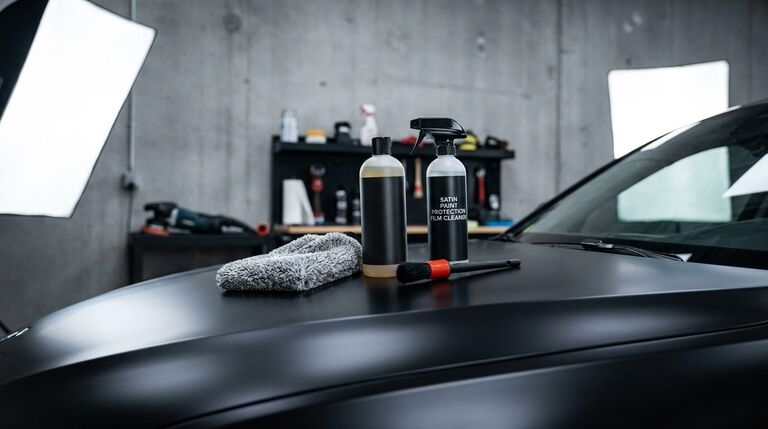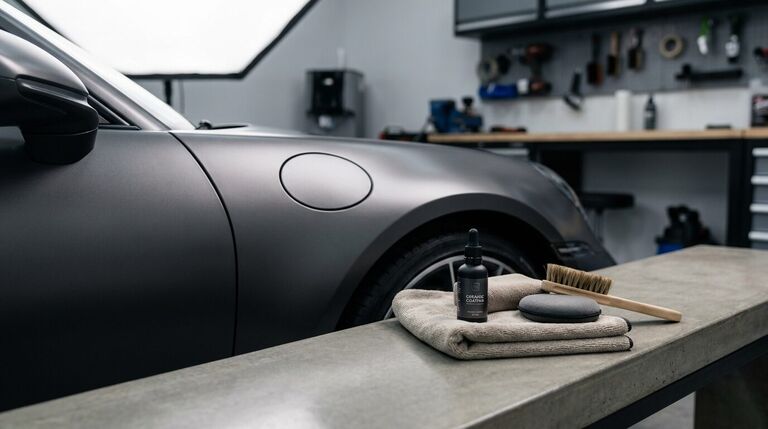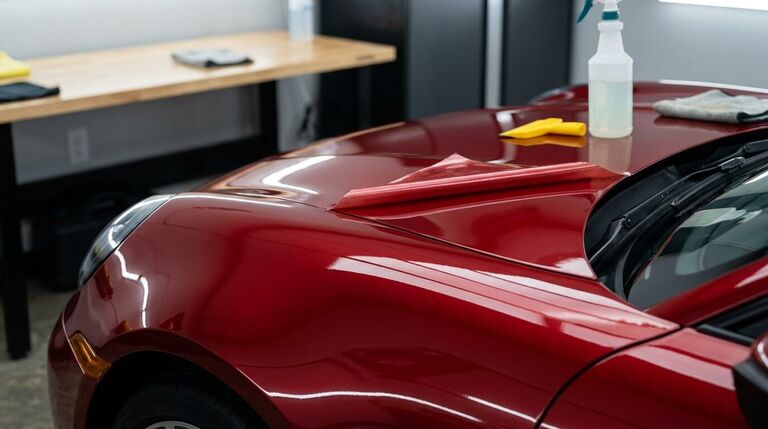

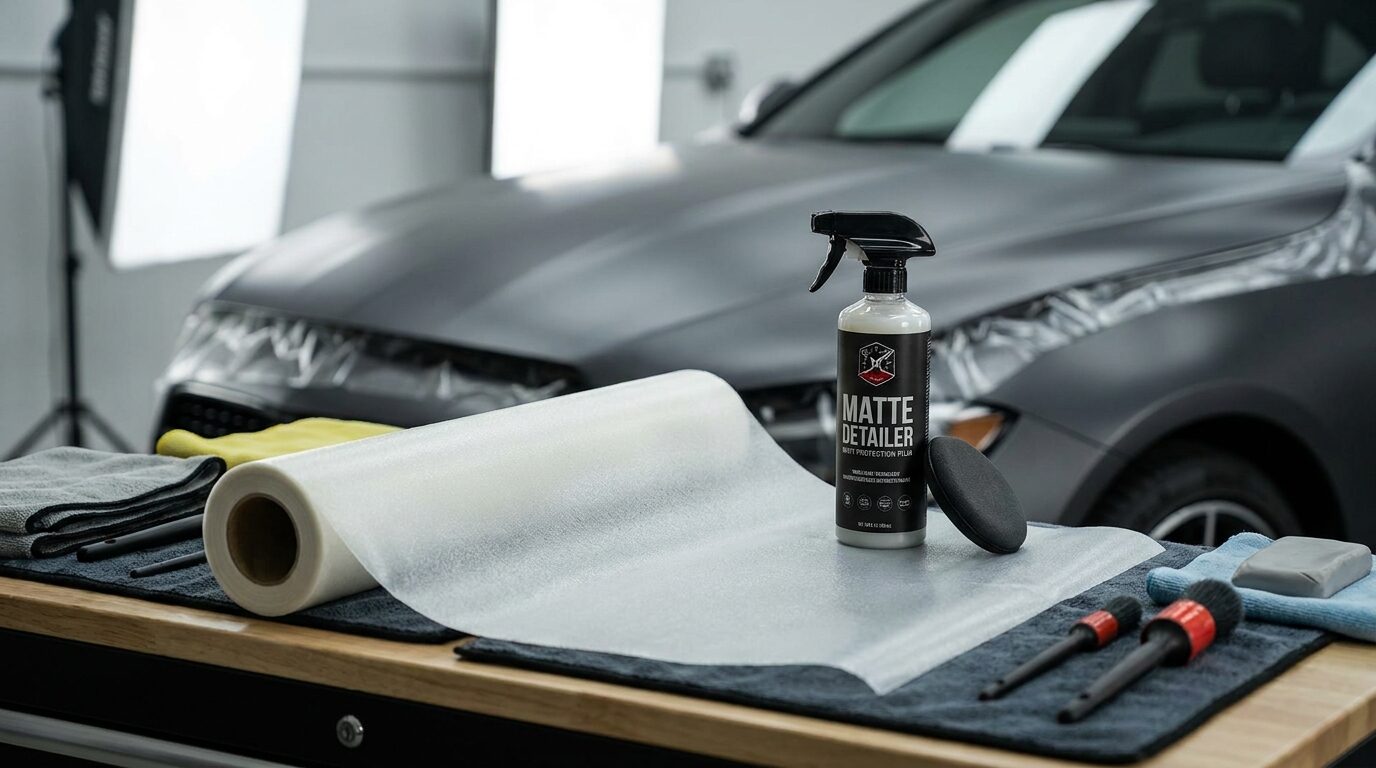
Factory matte paint has to be protected from day one because it cannot be repaired the way gloss paint can: there is no polishing out a scratch, a bird dropping etch or a wax smear on a BMW Frozen, Mercedes Magno, Porsche satin or Genesis matte finish without turning that spot glossy. The look comes from microscopic peaks and valleys in the clear coat that scatter light instead of reflecting it, and anything abrasive flattens them. This guide is for owners of paint that left the factory matte; if you have a gloss car and want the satin look, our guide to matte PPF over gloss paint is the one to read. Here the job is different: keep what the factory sprayed exactly as it is, through the gravel on I-5, I-205 and US-26, the Willamette Valley rain and the tree sap, with stealth film and a matte-specific coating.
Understanding Factory Matte Paint Vulnerabilities
Factory matte paint is notoriously delicate because you cannot polish out scratches, bird droppings etch, or tree sap stains using conventional methods. On a glossy car, a minor scratch can be buffed away with a machine polisher and a cutting compound, but doing that on a matte panel smooths down the texture and creates a shiny spot that stands out under sunlight. Portland drivers face constant environmental hazards, including Willamette Valley rain, industrial fallout, and winter road grit, all of which settle into the porous microscopic structure of matte clear coats. Without a protective barrier, these contaminants bond aggressively to the surface and require harsh chemical cleaners that can degrade the paint over time.
Bird droppings and bug splatters are particularly dangerous for matte finishes because the acid eats into the paint very quickly. Because you cannot scrub aggressively or use abrasive polishes, even a brief encounter with organic contaminants can leave a permanent ghost mark or discoloration. Dealerships often deliver cars with minor shipping residues, and removing them safely takes specialized chemistry designed specifically for low-gloss finishes. Understanding these vulnerabilities highlights why waiting even a few weeks to apply protection leaves your investment exposed to irreversible damage from day-to-day driving conditions.
Maintaining a matte finish by hand without proper protection becomes a tedious and frustrating weekly chore. Every touch creates micro-marring, and improper drying techniques leave stubborn water spots that require acidic spot removers to clear up. Applying a physical and chemical shield from day one transforms the ownership experience by making regular washes easier and safer. When you bring a new matte vehicle to our shop at 3433 SW Multnomah Blvd in Portland, OR, we inspect the paint thoroughly to ensure no factory defects are locked beneath your chosen protection layers.
The Role of Stealth PPF in Matte Preservation
Stealth paint protection film, also known as matte PPF, is the single most effective way to safeguard a matte finish while maintaining the exact satin appearance of the original paint. Global Films manufactures the self-healing TPU paint protection film we install, which measures roughly 6 mil in thickness and comes with a 10-year warranty against cracking, yellowing, or peeling. When applied to a matte car, stealth PPF adopts the underlying texture of the paint while adding a solid physical shield against rock chips, road salt, and parking lot scuffs. If you apply a standard glossy film to a matte car, it will turn the finish shiny, but stealth film uses a specialized frosted topcoat that preserves the flat look.
During the installation process, our technicians clean and decontaminate the panels carefully before laying down the urethane film. Because matte paint cannot be polished if dust gets trapped underneath, our shop environment is strictly controlled to prevent airborne debris from ruining the application. The film features a self-healing topcoat that eliminates light swirl marks and minor surface scratches automatically when exposed to ambient heat or warm water. This means your high-impact areas, such as the front bumper, hood, and rocker panels, remain completely safe from the abrasive gravel kicked up during your daily commute.
Across the industry, a gloss full front PPF package typically runs $1,500 to $2,500 and a gloss full body PPF package typically runs $4,000 to $8,000 depending on the vehicle, and Custom Details quotes these per vehicle at the shop. Stealth film costs more than gloss film; at Custom Details, matte PPF packages are listed from $2,599 for a full front and $7,599 for full body, and on a factory matte car we confirm the figure after inspecting the paint. Investing in stealth PPF on day one ensures that your factory paint never takes a direct hit from road hazards, preserving the high resale value of a clean, undamaged matte finish.
Specialized Feynlab Ceramic Coatings for Matte Surfaces
Ceramic coatings designed specifically for matte finishes provide incredible chemical resistance and hydrophobic properties without altering the low-gloss aesthetic. Feynlab offers a dedicated Matte ceramic coating that lasts about 3 years, bonding at a molecular level to seal the porous structure of matte clear coats. Unlike traditional coatings that add a deep candy-like gloss, Feynlab Matte protects the vehicle while keeping the finish completely flat and uniform. This coating repels water, road grime, and brake dust effortlessly, cutting your routine wash time down significantly.
Applying a coating to a matte car requires exceptional precision because any high spots or uneven residue cannot be wiped away with polish after the product cures. According to Feynlab, proper surface preparation and flash time management are critical when working with specialized low-gloss formulations to prevent streaks. Our installers follow strict manufacturer protocols inside our shop to ensure the coating cures evenly across every complex curve and body line of your vehicle. The resulting layer provides strong resistance against bird droppings, tree sap, and environmental fallout common throughout the Pacific Northwest.
In addition to the dedicated matte option, our shop offers other Feynlab tiers for different vehicle surfaces, including a 1 year entry coating, V3 at 3 years, and Plus at 5 years for gloss components or trim. For complete protection, many owners choose to layer a Feynlab ceramic coating on top of their stealth PPF to get the ultimate combination of impact resistance and chemical defense. This dual-layer approach makes maintenance remarkably simple, allowing you to rinse away winter road grit with a basic pressure washer and a pH-neutral soap.
Factory Matte and Stealth Film Over Gloss Are Different Jobs
A stealth wrapped gloss car and a factory matte car look alike from ten feet away and are opposites underneath. On the wrapped car the film is the finish: if a panel is damaged, that piece of film is replaced and the gloss paint under it is untouched. On the factory matte car the film is a shield over a finish that cannot be redone, so the stakes of every decision are higher. Film edges have to land where they will never be seen lifting, the paint has to be flawless before the film goes on because nothing under it can be corrected later, and removal years down the line has to be done by someone who knows how to lift film off matte clear coat without marring it.
That changes the advice. On a factory matte car we cover more, sooner: full front at minimum, and full body if the car is driven daily, because a chip on an unprotected rear quarter is permanent in a way it is not on gloss. We also skip anything that touches the paint mechanically. No clay bar, no polish, no rubbing at a spot; decontamination is chemical only, and a stubborn contaminant is a reason to add coverage rather than to scrub.
Washing follows the same logic. The routine is the one in our guide to washing and spot cleaning a matte finish: hand wash only, matte-safe soap with no gloss agents, blot dry, and deal with sap and bird droppings the same day. On factory matte paint that routine is not a preference, it is the only thing standing between the finish and a respray.
Daily Driving Habits and Environmental Defense
Daily driving in the Pacific Northwest exposes your vehicle to a constant barrage of environmental elements, from persistent rain and road tar to falling leaves and organic debris. Tree sap is particularly troublesome because it contains sticky sugars that bond tightly to matte clear coats and protective films. Parking under trees during spring and autumn should be avoided whenever possible, and any sap deposits must be dissolved immediately using safe citrus-based cleaners. Letting organic contaminants sit on a matte surface for extended periods will permanently damage the texture.
Winter driving brings an added layer of hazard in the form of de-icing salts, chemical anti-skid liquids, and abrasive sand spread across local roadways. These compounds dry into a chalky crust that accelerates corrosion and attacks unprotected matte paint if left unattended. Rinsing the undercarriage and lower body panels regularly during the wet winter months removes corrosive road salts before they cause degradation. Combining this disciplined maintenance routine with a quality layer of stealth PPF and a Feynlab ceramic coating takes the worry out of the daily commute.
According to Consumer Reports, proper and timely preventive maintenance is the single most effective way to preserve automotive finish integrity and maximize vehicle longevity. Taking a proactive stance from day one prevents the gradual degradation that catches many new car owners by surprise after their first year on the road. By understanding what your matte finish faces on the highway, you can tailor your cleaning schedule and protection choices to keep the car looking new for years to come.
Professional Installation Versus DIY Approaches
Attempting to install matte paint protection film or apply advanced ceramic coatings as a do-it-yourself project almost always ends in costly mistakes and wasted materials. Stealth PPF requires specialized plotting software, precise blade work near delicate edges, and extensive experience to stretch and lay the film without creating distortion or lifting. If a DIY installer misjudges the tension on a matte film, the texture alters visibly, forcing the entire piece to be thrown away and replaced. Dust contamination in a home garage ruins film adhesives instantly.
Ceramic coatings demand an equally sterile and controlled environment, requiring precise temperature and humidity ranges during application and initial curing phases. Missing a high spot during the leveling process results in a hardened glossy streak that must be wet-sanded off the matte paint, risking permanent damage to the factory finish. Professional installers invest heavily in specialized lighting, dust-reduction systems, and ongoing manufacturer training to master these complex products. Entrusting your brand new matte vehicle to trained professionals ensures the job is done right the first time without risking your factory warranty.
When you bring your vehicle to our shop at 3433 SW Multnomah Blvd in Portland, OR, every installation is performed in a dedicated indoor bay optimized for paint protection work. We take the time to wrap edges cleanly around panels, tuck seams out of sight, and inspect every square inch before handing the keys back to you. Choosing professional-grade materials like Global Films TPU and Feynlab coatings backed by expert labor guarantees superior durability and flawless visual results.
When a factory matte car rolls into Custom Details, the installer's first job is to find every gloss spot the paint already has: a polished-through corner from a previous detailer, a shiny halo where someone rubbed at a bird dropping, a wax residue line along a door. Those cannot be corrected, only documented and worked around, and they decide where film edges land. Expect a slow walk around the car under raking light before anyone talks about packages.
Frequently Asked Questions
Can you use a clay bar on a matte finish?
Traditional clay bars should never be used on matte paint because the abrasive friction flattens the textured clear coat and creates permanent glossy spots.
Does stealth PPF change how factory matte paint looks?
No; stealth film carries its own satin top coat that closely matches a factory matte sheen, so the color stays the same and the finish stays even without adding gloss.
How often do matte ceramic coatings need to be reapplied?
Feynlab Matte ceramic coatings typically last about 3 years before requiring professional evaluation and reapplication to maintain peak hydrophobic performance.
Can factory matte paint be polished if it gets scratched?
No; polishing flattens the texture that makes the paint matte and leaves a permanent glossy patch, which is why film has to take the damage instead of the paint.
Related service: Learn more about paint protection film in Portland, matte PPF in Portland and ceramic coating in Portland at Custom Details, installed in-house at 3433 SW Multnomah Blvd, or request a quote and call (971) 400-1406.