
Matte PPF is the right choice when you want a satin look on a gloss car and you want the film to earn its keep as protection, not just styling. It is the same self-healing urethane as clear film with a light-diffusing top coat, so it stops rock chips and road grit while changing the sheen, and it comes off later without touching the paint. This guide is the buying decision: what the film does, what it costs across the industry, where it beats vinyl and factory matte paint, and who should skip it.
Understanding Matte Paint Protection Film
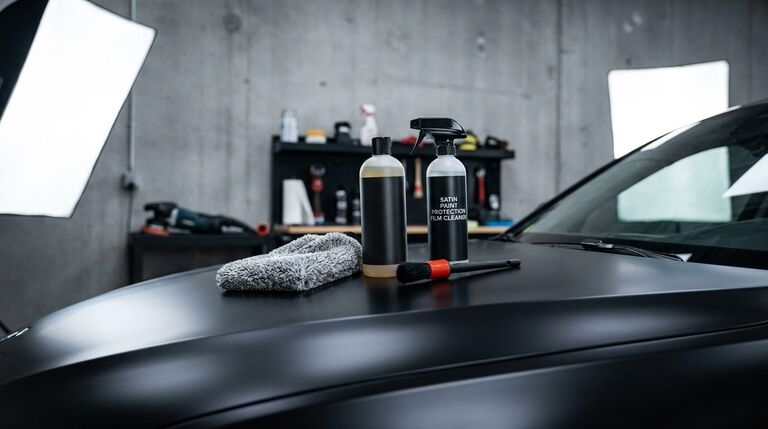
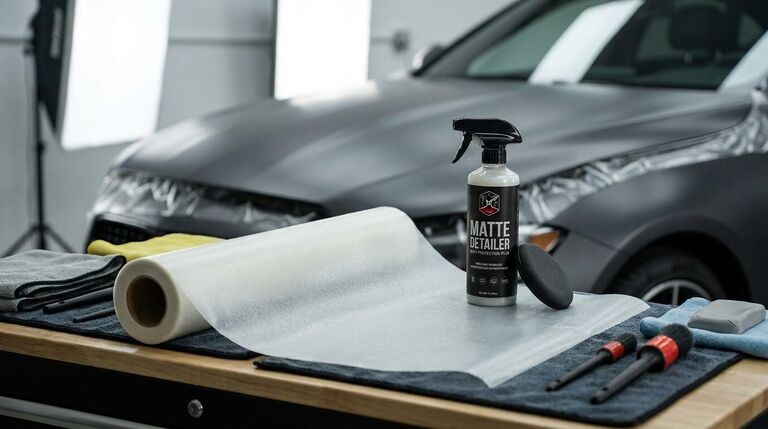
Matte PPF is a specialized thermoplastic polyurethane film engineered with a diffusing topcoat that scatters light, turning a reflective gloss factory paint job into a flat or satin finish. Unlike traditional clear film that preserves the original shine, matte film alters the sheen of the underlying paint while keeping the color intact. This allows owners of standard gloss cars to achieve a frozen or matte look without the risks and maintenance nightmares of factory matte paint.
At our shop located at 3433 SW Multnomah Blvd in Portland, OR 97219, we install Global Films self-healing TPU paint protection film, which measures roughly 6 mil in thickness and comes backed by a 10-year warranty. This thickness is crucial because it provides enough physical mass to absorb the kinetic energy of flying stones kicked up by trucks on I-5, I-205, and US-26. When a rock hits the film, the urethane stretches and disperses the force, preventing the sharp edge from piercing through to your factory clear coat.
The science behind self-healing films relies on elastomeric polymers that return to their original smooth state after being stretched or lightly scratched. When the Portland sun warms up the surface during the rare dry days, minor surface scuffs in the matte film naturally disappear. According to SEMA, automotive aftermarket protection products undergo rigorous testing to ensure they perform under extreme environmental stress, and high-grade TPU is designed to handle temperature fluctuations without yellowing or cracking.
The Visual Transformation and Satin Look
The most striking aspect of installing matte film is the instant alteration of body lines and character creases on a vehicle. A satin texture tends to accentuate the aggressive angles of modern sports cars and trucks by creating soft, muted light reflections instead of harsh glare. This look mimics expensive factory frozen paint options offered by high-end European manufacturers, but with a massive upgrade in durability compared to OEM matte paint.
Factory matte paint is notoriously fragile because it cannot be polished or buffed when scratched, meaning a single deep scratch or bird dropping etching requires repainting the entire panel. In contrast, matte PPF acts as a sacrificial barrier. If the film takes severe damage from a deep gouge or an aggressive chemical spill, an installer can simply peel away the damaged section of film and replace it with a fresh piece, leaving your factory paint completely unharmed underneath.
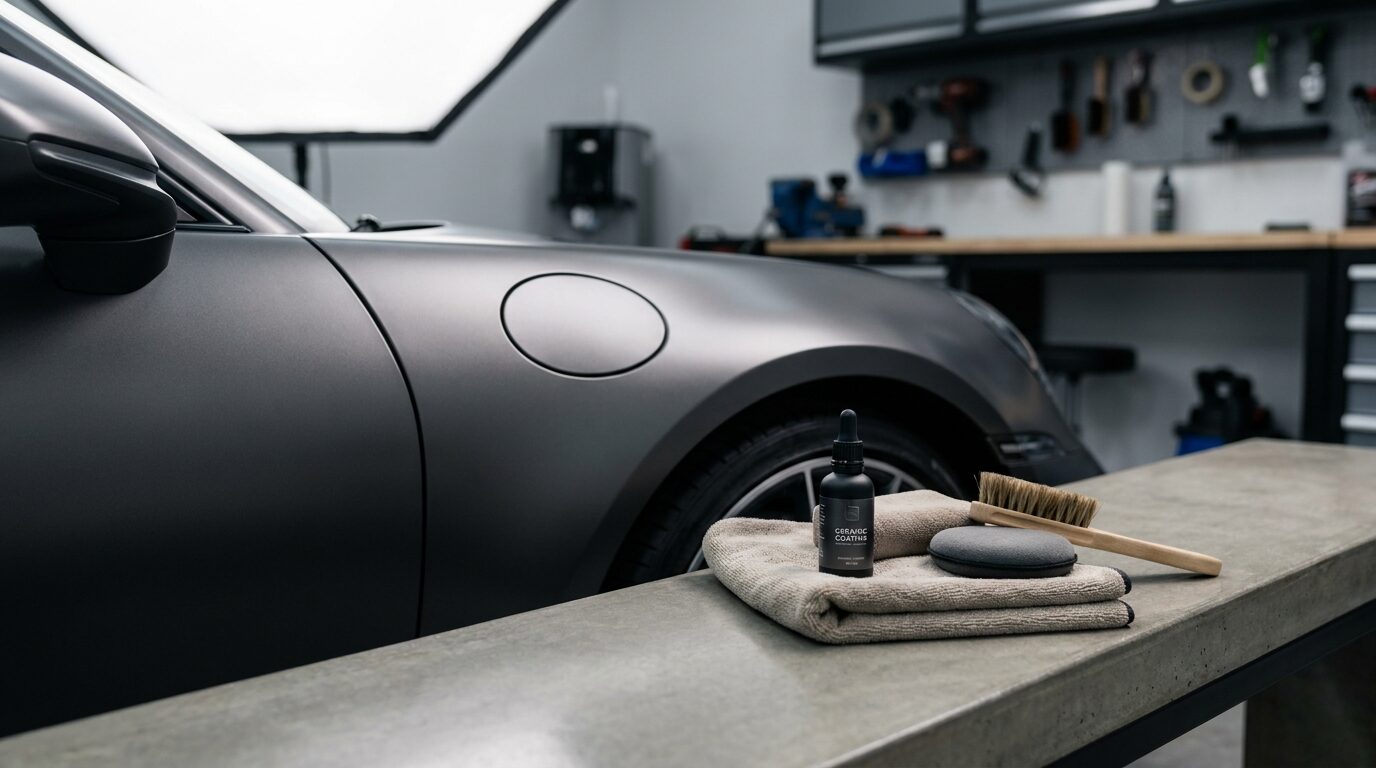
Portland weather presents unique challenges for exterior finishes, with relentless rain, organic fallout from trees, and winter road grime testing every type of automotive coating. While standard gloss paint shows water spots easily, a quality matte film diffuses surface moisture, though keeping the car clean remains important. To maintain the finish, pairing the film with a dedicated protection layer like Feynlab Matte ceramic coating, which lasts about 3 years, helps repel road oils and makes routine washing much easier.
Installation Challenges and Precision Wrapping
Installing matte film requires a much higher level of precision than installing clear gloss film because any mistake in alignment or edge wrapping becomes instantly visible. With clear film, minor imperfections or stretch marks can sometimes blend into the reflective paint, but matte film reacts poorly to uneven stretching because it alters the light diffusion across the panel. If a piece is stretched too tightly around a bumper corner, the finish can turn slightly glossy or hazy in that specific spot.
Another major challenge during installation is managing gloss edges on a car that was originally shiny. If a vehicle has gloss black trim, mirrors, or roof sections, installers must carefully plan where the matte film starts and stops to maintain a cohesive design. Door jambs, hood edges, and wheel wells must be carefully tucked and wrapped so that no shiny paint peeks through the satin finish, ensuring the conversion looks entirely factory-original.
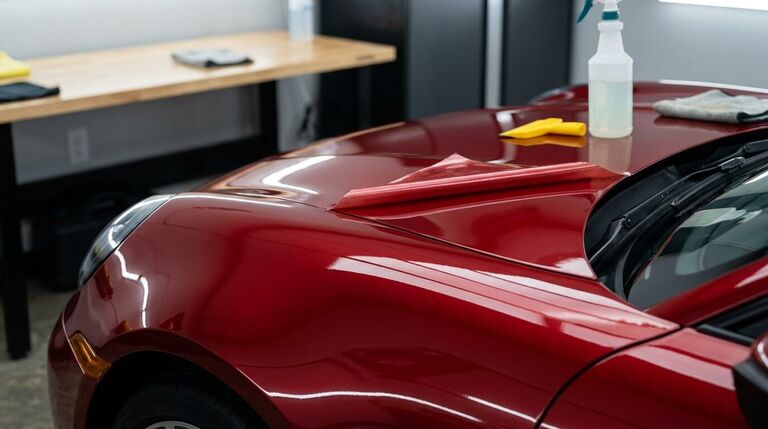
Surface preparation is another intensive phase that demands perfection before the film touches the paint. Every speck of dust, wax residue, or road tar must be chemically removed and clayed away, because any trapped debris under matte film creates a noticeable bump that ruins the flat texture. Our technicians spend hours prepping each vehicle in our Portland shop before laying down the first section of Global Films TPU to guarantee a flawless bond.
Protecting Against Regional Road Hazards
Driving in the Pacific Northwest exposes vehicle front ends to a constant barrage of abrasive elements, from gravel spread during winter freeze events to construction debris found along local highways. Unprotected paint quickly develops a sandblasted appearance on the front bumper and hood, drastically lowering the resale value of the car. Matte PPF absorbs this abrasive abuse entirely, keeping the underlying paint in like-new condition for years.
Beyond physical stone chips, vehicles parked outdoors face constant exposure to organic contaminants like tree sap, pollen, and bird droppings. These substances are mildly acidic and can etch into factory clear coats if left unattended, especially in damp weather where moisture activates the chemical breakdown. The topcoat on quality self-healing TPU resists chemical staining much better than raw paint, giving owners extra time to wash away contaminants without permanent damage.
Pricing follows coverage and film type. Across the industry, a gloss full front PPF package typically runs $1,500 to $2,500 and a gloss full body PPF package typically runs $4,000 to $8,000 depending on the vehicle, and Custom Details quotes these per vehicle at the shop. Matte film costs more than gloss because the material is dearer and the install is slower: at Custom Details, matte PPF packages start at $2,599 for a full front and $7,599 for full body, with the exact figure set after we see the car's body lines.
Who Should Buy Matte PPF, and Who Should Not
Matte film makes the most sense for three kinds of owner. The first is someone with a gloss car who wants the frozen look without buying a factory matte car and taking on its fragility; the film gives the look and can be removed at resale. The second is someone who already planned on full body protection and prefers satin; the styling comes nearly free with the coverage. The third is the owner of a dark gloss car that shows every swirl, because satin hides wash marks that gloss broadcasts.
It is the wrong buy for a few people too. If you wash at automatic brush car washes and do not intend to change that, gloss film will forgive you and matte will not. If you want a color change rather than a sheen change, color PPF or a wrap is the product. And if you only want the bumper and hood protected, a satin front end on a gloss car looks like a mismatch; matte works best as full body coverage or on a car whose remaining panels are already satin.
Expect a small change in upkeep either way: matte-safe soap, no wax, no gloss enhancers, prompt removal of bird droppings and water spots, and a Feynlab Matte coating over the film if you want water and road grime to rinse off with less effort. The full routine is in our guide to washing and spot cleaning a matte finish; the short version is that the film asks for a little discipline and gives back a finish that stays even for years. According to consumer guidance from the FTC, following the maker's care instructions is also what keeps a product warranty intact.
Comparing Matte PPF to Vinyl Wraps
Many car owners confuse matte paint protection film with matte vinyl wraps, but the two products serve entirely different purposes. Vinyl wrap is primarily a cosmetic styling tool made from thin cast PVC, measuring roughly 2 to 3 mil in thickness, and it offers almost zero protection against rock chips, door dings, or deep scratches. In contrast, matte PPF is a thick, energy-absorbing urethane barrier that provides heavy duty physical protection while simultaneously delivering a satin appearance.
Durability is another major differentiator between the two materials. While a standard vinyl wrap typically degrades, fades, or cracks after three to five years under harsh weather conditions, a high-grade TPU film with a solid warranty easily outlasts vinyl by a wide margin. The self-healing properties found in quality PPF mean that minor surface abrasions vanish over time, whereas vinyl wraps permanently retain scratches and scuffs.
Choosing between vinyl and matte film ultimately depends on your primary goals for the vehicle. If you want a temporary color change on a lease vehicle and do not care about rock chip defense, vinyl is a budget-friendly option. If you want genuine, long-term paint protection combined with a sophisticated satin texture that shields your car from daily driving hazards, matte PPF is the definitive choice.
When a gloss car comes into Custom Details for a matte conversion, the installer's first check is the paint itself: any deep scratch, chip or previous repair will show through satin film differently than it does through gloss, so correction happens before the film is even cut. The second check is the trim plan, deciding panel by panel where satin stops and gloss stays. Expect both conversations before a price, because they change how much film and how many hours the car needs.
Frequently Asked Questions
Can matte PPF be applied to a gloss car?
Yes, applying matte film to a gloss vehicle transforms the shiny paint into a smooth satin finish while protecting the original color underneath.
Does matte PPF protect against rock chips?
Yes, the thick polyurethane material absorbs the impact of flying stones and road debris, preventing chips from reaching your factory paint.
Is matte PPF worth it over gloss PPF?
Yes if you want the satin look; the protection is the same 6 mil self-healing urethane, so the extra cost buys the finish, not more coverage.
Can you apply ceramic coating over matte film?
Yes, applying a specialized matte ceramic coating like Feynlab Matte enhances water repellency and makes cleaning road grime much easier.
Related service: Learn more about paint protection film in Portland and matte PPF in Portland at Custom Details, installed in-house at 3433 SW Multnomah Blvd, or request a quote and call (971) 400-1406.