
Ceramic Coating vs Wax vs Paint Sealant
Choosing between a ceramic coating, traditional car wax, and a synthetic paint sealant comes down to balancing upfront cost, chemical durability, and how much time you want to spend maintaining your vehicle in the local climate. According to SEMA, vehicle owners have more advanced chemical protection choices than ever before, moving away from short term carnauba waxes toward semi permanent armor. When you bring your vehicle to our shop at 3433 SW Multnomah Blvd in Portland, OR, we help you weigh these options based on your actual driving habits, garage availability, and long term goals for your clear coat.
Portland drivers face a brutal combination of environmental conditions throughout the year. Between relentless Willamette Valley rain, winter road grit, and highway debris kicked up on I-5, I-205, and US-26, standard paint finishes take a daily beating. Without adequate protection, microscopic pores in your clear coat trap organic matter, road grime, and industrial fallout, leading to oxidation and dullness. Understanding how wax, sealants, and coatings react to these elements helps you make an informed investment in your vehicle appearance.
While every product category aims to protect your paint and ease the washing process, their chemical compositions are vastly different. Natural waxes sit on top of the paint as a soft sacrificial barrier, synthetic sealants offer a harder polymer matrix with moderate longevity, and professional ceramic coatings form a permanent or semi permanent covalent bond with the factory clear coat. Let us examine each option in detail so you can decide which path fits your vehicle best.
Traditional Car Wax: The Classic Choice
Traditional car wax relies primarily on natural ingredients like carnauba palm extract, often blended with natural oils and beeswax to make application easier. Carnauba wax gives paint a warm, deep glow that enthusiasts have appreciated for decades. The application process is straightforward, requiring a clean microfiber applicator pad, a thin layer applied by hand, and a gentle buffing phase once the product hazes over. Many vehicle owners enjoy the therapeutic process of waxing their own cars on a sunny weekend afternoon.
However, traditional wax is the least durable of the three paint protection options. Carnauba melts at relatively low temperatures, meaning direct summer sun quickly bakes it off the surface. In wet climates like Portland, constant rain strips natural wax away in as little as four to six weeks. According to Consumer Reports, natural waxes require frequent reapplication to maintain any meaningful water shedding ability. If you skip a few months of maintenance, your paint is left completely exposed to acid rain, bird droppings, and tree sap.
For daily drivers on local freeways, wax alone offers very little defense against environmental contamination. It will not prevent light wash marring, and it provides zero resistance to chemical etching from bug splatters left too long in the sun. While the entry cost of a tin of wax is low, the labor required to reapply it four to twelve times a year adds up quickly. Traditional wax is best reserved for classic cars kept in a garage and driven only on nice weekends.
Synthetic Paint Sealants: The Mid Tier Option
Paint sealants are entirely man made polymer coatings engineered in a laboratory to mimic the look of wax while delivering significantly longer durability. Instead of organic plant extracts, sealants use acrylic or amino functionalized polymers that cross link on the paint surface. This chemical cross linking creates a tight, uniform barrier that resists high heat and harsh detergents much better than natural wax. A quality synthetic sealant can easily last anywhere from three to six months depending on how frequently the car is washed.
Applying a paint sealant is very similar to applying a wax, but the curing process requires keeping the vehicle dry for several hours so the polymers can fully bond. Once cured, sealants produce a bright, glassy reflection rather than the deep warmth of carnauba. Water behavior is exceptionally crisp, causing rain to bead up rapidly and roll off the vertical panels as you drive down the road. This self cleaning effect makes routine maintenance washes much faster because dirt has a harder time clinging to the slick polymer layer.
Across the industry, professional paint sealant applications or consumer grade bottled sealants represent a great middle ground for daily drivers whose owners want solid protection without stepping up to a permanent coating. Across the industry, a paint sealant detail typically runs $150 to $300 depending on the vehicle; at Custom Details the closest service is the Exterior Detail + Polish at $499, which includes a single stage paint correction before the sealant goes on. At Custom Details, we can discuss whether a sealant fits your budget or if you would benefit more from stepping up to a true nano coating.
Professional Ceramic Coatings: The Permanent Shield
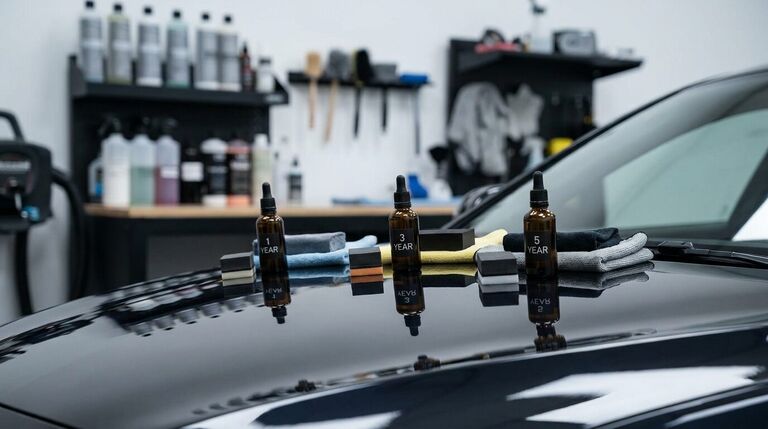
Ceramic coatings represent the pinnacle of modern paint protection chemistry. Unlike waxes and sealants that merely sit on top of the paint, professional ceramic coatings like our Feynlab ceramic coating lineup in Portland chemically bond with the factory clear coat to form a hard, quartz or silicon dioxide shell. Feynlab offers multiple tiers to match your specific needs, including a 1 year entry coating, V3 at 3 years, Plus at 5 years, and a Matte coating designed specifically for specialty finishes at roughly 3 years. These coatings fill in the microscopic valleys of the clear coat, creating an ultra smooth surface that rejects water, mud, and road salt.
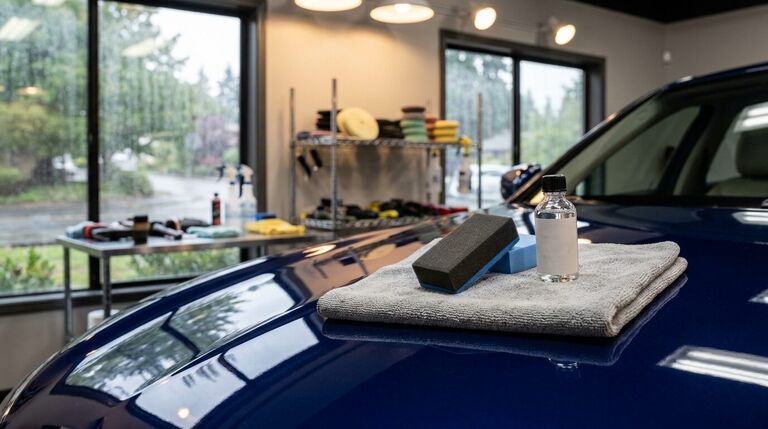
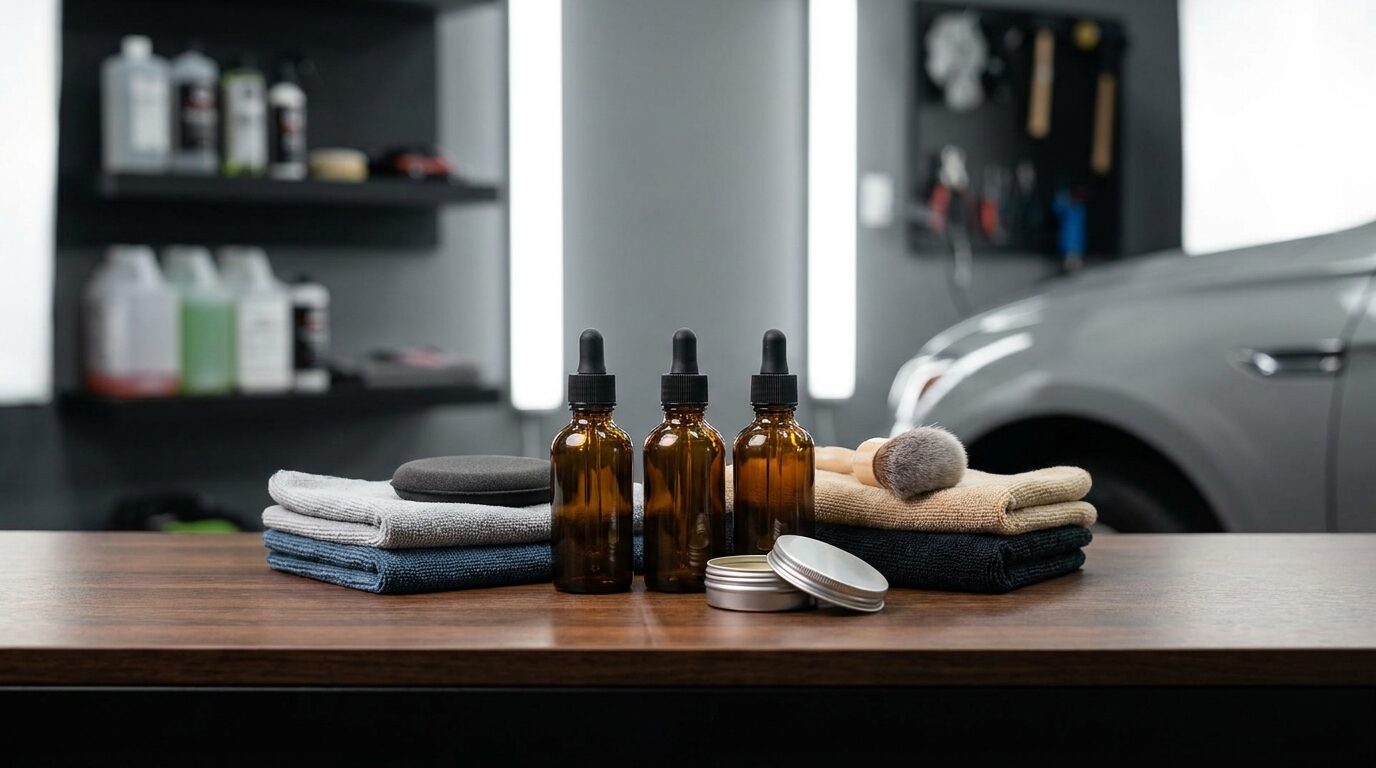
The installation process for a ceramic coating is highly technical and labor intensive. It requires a careful multi stage wash, a clay bar decontamination to remove embedded iron and tar, and mechanical paint correction via machine polishing to eliminate swirls and scratches before the coating locks them in permanently. Once the paint is optically clear and prepped, the Feynlab ceramic liquid is carefully leveled onto the panels by hand and allowed to flash before being buffed off with clean microfiber towels. The vehicle must then remain indoors in our shop at 3433 SW Multnomah Blvd while the chemical matrix cures under controlled conditions.
While ceramic coatings require a higher initial investment than wax or sealants, they eliminate the need to constantly reapply protection every few months. Across the industry, a professional ceramic coating package typically runs $800 to $2,500 depending on the vehicle, and Custom Details quotes these per vehicle at the shop. The maintenance routine becomes remarkably simple because bird droppings, tree sap, and road grime wash away with minimal effort during a standard hand wash, which starts at $89 in our shop.
Comparing Durability and Maintenance
Durability is the single biggest differentiator when comparing ceramic coatings, paint sealants, and traditional waxes. Natural wax lasts weeks, synthetic sealants last months, and professional ceramic coatings last for years. If you measure durability by how well the product withstands harsh alkaline car wash soaps and heavy rainfall, ceramic technology outperforms the others by an enormous margin. A Feynlab Plus coating with its five year lifespan maintains its hydrophobic contact angle long after a cheap wax or sealant has completely degraded.
Maintenance routines change drastically depending on which protection layer you choose. With wax or sealants, you must routinely strip old layers and reapply fresh product to keep your paint safe. With a ceramic coating, your main job is simply washing the car regularly using a pH balanced soap to prevent mineral deposits from clogging the nano pores. We often recommend pairing your coating with a proper hand wash service, which we offer at our shop for $89, to ensure safe removal of local grime without introducing wash scratches.
It is also worth noting that none of these three chemical options will prevent rock chips or deep parking lot scratches. For physical impact protection against flying gravel on local highways, you need a physical barrier like Global Films paint protection film. However, when it comes to chemical resistance, UV protection, and ease of washing, a ceramic coating completely leaves wax and sealants behind.
Cost Analysis: Upfront Expense vs Long Term Value
Evaluating the financial aspect of paint protection requires looking beyond the immediate price tag. A tin of carnauba wax costs about $20 at an auto parts store, making it appear cheap at first glance. However, if you factor in buying new applicators, spending your own weekend labor hours every month, and replacing the product four times a year, the hidden costs accumulate. Inadequate protection leaves your clear coat vulnerable to premature failure and fading from UV exposure.
Paint sealants offer a better balance of cost and longevity, requiring only two or three applications per year. For vehicle owners who enjoy detailing their own cars or prefer a lower upfront investment, a synthetic polymer sealant is a sensible choice. If you prefer professional results without the hassle of chemical application, professional detailing services provide thorough paint cleansing and protection packages tailored to your vehicle condition.
When you invest in a multi year ceramic coating, the cost per month of protection drops significantly over the life of the product. Because you no longer need to buy recurring bottles of wax or spend hours prepping your car every change of seasons, the coating pays for itself in saved time and preserved vehicle resale value. Stop by our shop in Portland to discuss which tier aligns with your financial and aesthetic goals.
The plain trade-off is time against money: wax is cheap and needs redoing every few weeks, a sealant costs a little more and lasts a season, and a coating costs the most up front and then asks almost nothing of you for years. For a car that gets washed by hand and kept for a while, Custom Details usually recommends the coating, because the prep work is the same either way and the coating is the only one of the three that makes that prep last.
Frequently Asked Questions
Can I apply a ceramic coating over car wax?
No, a ceramic coating cannot bond to wax because coatings require a completely bare, oil free clear coat surface to form a proper chemical bond.
How do I know if my old wax or sealant is still working?
You can perform a simple water behavior test by spraying water onto your clean paint to see if it forms tight round beads or spreads out flat.
Does a ceramic coating eliminate the need to wash my car?
No, ceramic coatings make your car much easier to wash and keep clean, but routine maintenance washes are still necessary to remove bonded surface pollution.
Can I use automatic car washes if I have a ceramic coating?
Automatic brush car washes should be strictly avoided because stiff bristles cause heavy micro scratching and degrade the lifespan of any protective layer.
Related service: Learn more about ceramic coating in Portland, paint correction in Portland and car detailing in Portland at Custom Details, installed in-house at 3433 SW Multnomah Blvd, or request a quote and call (971) 400-1406.