
How Regenerative Braking Alters Following Distances
One-pedal driving creates a driving style characterized by smooth, predictive deceleration rather than abrupt brake pedal application. When drivers become accustomed to the immediate slowing response of regenerative braking, they naturally adjust their spatial awareness and highway gaps. This seamless transition between acceleration and deceleration encourages a tighter flow of traffic, particularly during peak commuting hours through Portland. While this style improves energy recovery and reduces mechanical brake wear, it inadvertently places the front fascia of the electric vehicle closer to the rear tires of lead vehicles. Lead vehicles kick up small stones, metal fragments, and hardened rubber shards at high velocity directly into the path of the trailing electric vehicle. Because the electric car is decelerating smoothly through motor resistance rather than diving forward on physical brake pads, the front end stays level and takes the full force of the impact head-on. Traditional internal combustion vehicles often experience nose-dive compression during braking that alters the trajectory of flying debris, but electric vehicles maintain a stable aerodynamic profile. This stable profile means rock chips strike at a direct, perpendicular angle that maximizes paint fracture potential. Addressing this specific risk means recognizing that modern efficiency features change physical driving dynamics in ways that require upgraded exterior protection.The Mechanics of Front End Debris on Portland Highways
Driving along local thoroughfares exposes vehicle front ends to a punishing mix of construction aggregate, asphalt chunks, and seasonal road maintenance materials. Interstate 205 and US-26 carry heavy commercial truck traffic that constantly sheds small stones from tire treads and truck bed seams. When an electric vehicle follows closely behind these commercial haulers, the low-slung front bumpers and expansive painted surfaces of modern cars absorb every bounce. Electric vehicles often feature smooth, aerodynamic front fascias without traditional grilles, leaving large unbroken expanses of paint vulnerable to impact. Electric vehicles are significantly heavier than their gas-powered counterparts due to the massive lithium-ion battery packs mounted beneath the floorboards. This increased vehicle mass generates greater momentum and tire traction, which translates into higher kinetic energy when picking up and redirecting loose road debris. When road grit strikes a heavy electric vehicle at highway speeds, the energy transfer creates deep craters that chip clear coat, base coat, and primer down to the bare plastic or aluminum. Paint protection film acts as a flexible kinetic sponge that absorbs this energy and disperses the shock across a wider surface area.Why Factory Paint on Modern EVs Needs Extra Help
Automotive manufacturers utilize water-based paint systems designed to meet strict environmental regulations, resulting in thinner overall film builds compared to older solvent-based finishes. Electric vehicle manufacturers also focus heavily on weight reduction to maximize driving range per charge, leading to minimal clear coat thicknesses on non-structural exterior panels. When a sharp piece of gravel strikes a thin factory clear coat during a morning commute on Interstate 5, the paint layer shatters easily because it lacks the thickness to absorb the blow. Additionally, many electric vehicles feature striking, futuristic paint colors with complex metallic flake and tinted clear coats that make localized touch-ups exceptionally difficult. Respraying a damaged front bumper on a modern electric car often requires recalibrating front-facing radar sensors, ultrasonic parking sensors, and camera systems housed within the fascia. These sensor calibrations add hundreds of dollars to a standard body shop repair bill, making preventative defense far more cost-effective than repetitive cosmetic repairs. Installing durable urethane film eliminates the need for repeated bumper resprays and preserves the original factory paint integrity for the lifetime of the vehicle.The Role of Self-Healing Urethane Film
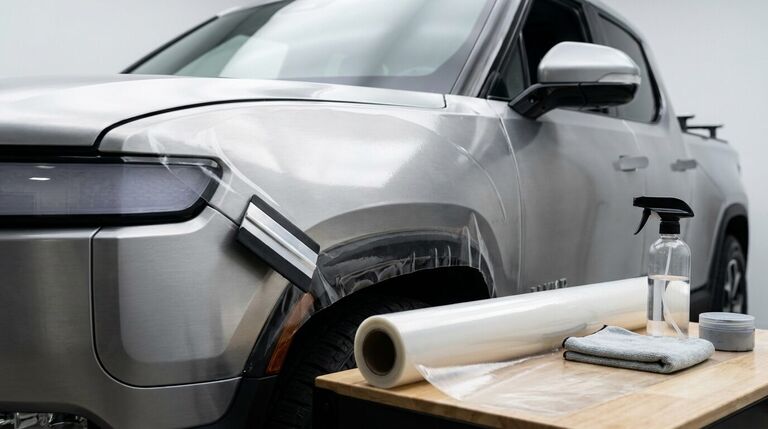
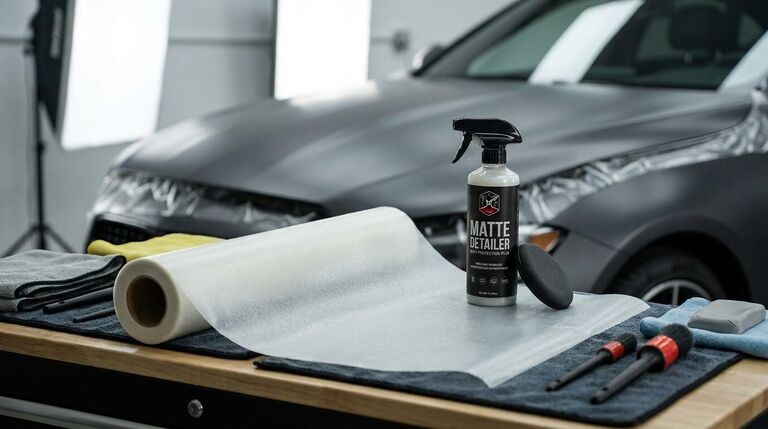
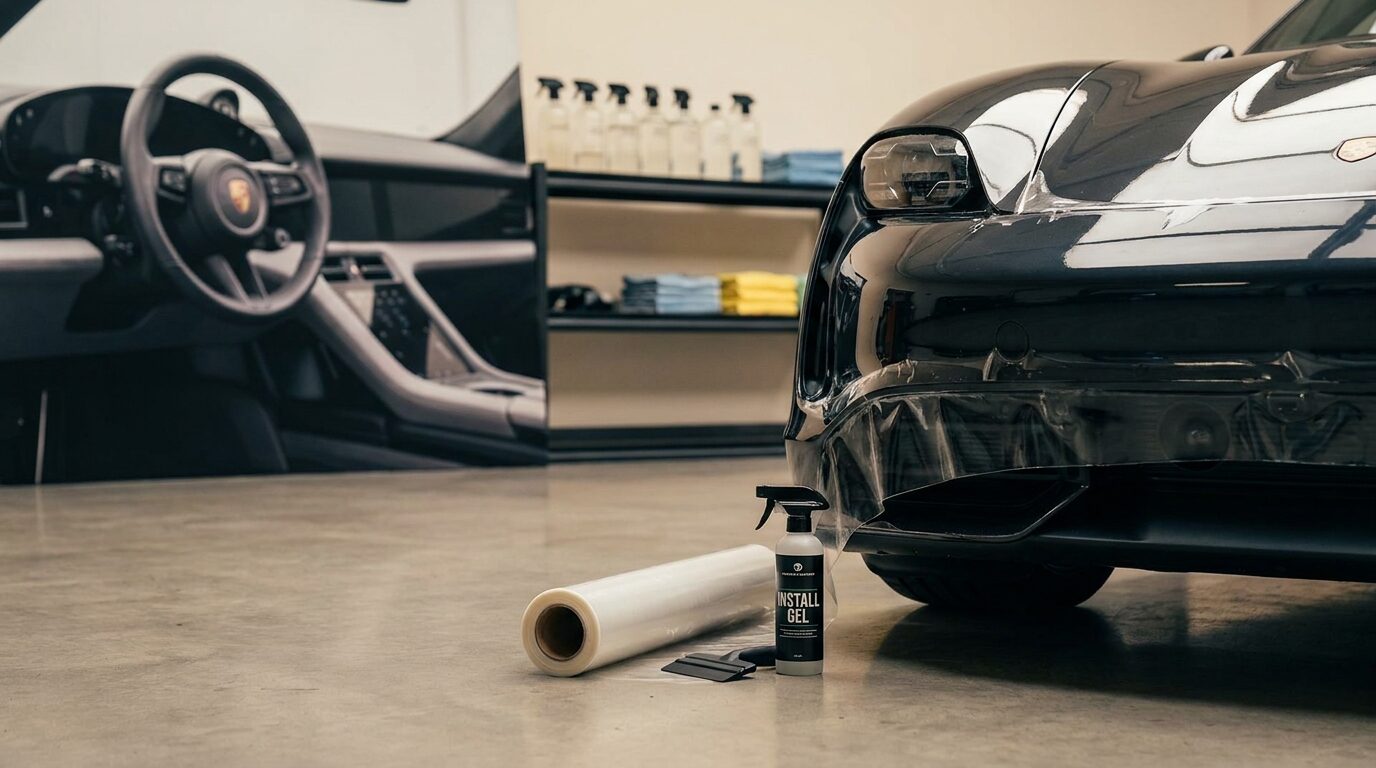
Modern paint protection film utilizes advanced thermoplastic polyurethane technology designed to withstand high-velocity impacts while maintaining optical clarity. The Global Films material used at our shop measures roughly 6 mil in thickness, providing a substantial physical barrier against stone chips, salt, and bug acids. Beyond impact resistance, this specialized polyurethane features a clear elastomeric top coat that heals minor surface scratches automatically when exposed to ambient heat or warm water. When driving in tight traffic clusters under one-pedal operation, the front bumper accumulates minor swirl marks and light abrasions from airborne dust particles. The self-healing property ensures that these superficial blemishes disappear within minutes, keeping the front end looking freshly detailed despite daily highway exposure. Across the industry, a gloss full front PPF package typically runs $1,500 to $2,500 depending on the vehicle, and Custom Details quotes these per vehicle at the shop; EV front fascias with sensor cutouts tend to land at the upper end. This transparent film is virtually invisible once applied, wrapping seamlessly around edges to protect high-impact zones without altering the vehicle design.Pairing Film Protection with Ceramic Coatings
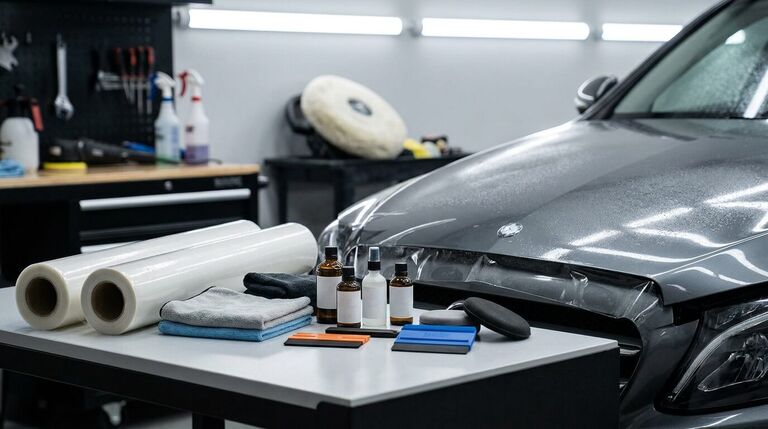
Maximizing exterior durability on an electric vehicle involves combining physical urethane armor with chemical surface protection for complete defense. While paint protection film stops physical rocks and sharp debris from fracturing the paint, a high-grade ceramic coating simplifies routine maintenance against environmental fallout. According to Consumer Reports, protecting vehicle surfaces from environmental contaminants prevents premature clear coat degradation and oxidation. We apply Feynlab ceramic coating tiers over both painted surfaces and installed film to create a slick, hydrophobic barrier that repels water and road grime. Portland receives substantial rainfall throughout the autumn and winter months, which mixes with airborne pollutants and organic tree sap to create stubborn chemical stains. The ceramic layer prevents these contaminants from bonding to the exterior, ensuring that road spray slides off effortlessly during your daily drive. Feynlab options range from entry-level 1-year formulations up to the 5-year Plus tier, giving owners tailored protection levels that match their driving habits and vehicle retention plans.Maintaining Your Protected EV Through Portland Seasons
Owning a protected electric vehicle in the Pacific Northwest requires simple yet consistent maintenance habits to keep both the film and ceramic layers performing at their peak. Because one-pedal driving keeps cars moving smoothly through traffic spray, road grime and organic residues accumulate rapidly across the low-slung front fascia. Regular hand washing removes abrasive grit before it has a chance to bake into the surface under sporadic afternoon sunbeams. For optimal results, schedule a professional exterior detail and polish or a gentle hand wash to safely lift stubborn winter salt and road film without introducing swirl marks. Avoid harsh automated car washes with stiff nylon brushes that can prematurely degrade the protective top coat of your window tint and paint film. Maintaining clean surfaces ensures that the self-healing properties of the film remain active and that your electric vehicle keeps its like-new appearance year-round.The question to bring in is how much of your commute is highway following distance versus city stop-and-go, because that decides whether the front bumper alone or the full front end needs film. One-pedal drivers who spend most of their miles on I-5 and US-26 usually need the fuller coverage; drivers who mostly creep through town can often stop at the bumper and hood edge. Custom Details will give you that answer from your actual route, not from the size of the package.
Frequently Asked Questions
Does one-pedal driving actually increase rock chip damage?
One-pedal driving encourages closer highway following distances and steady momentum, which keeps your front end exposed to more flying debris from surrounding traffic.
Can paint protection film be applied over EV parking sensors?
Yes, high-quality polyurethane film is optically clear and thin enough to allow factory ultrasonic and radar sensors to function perfectly without interference.
How long does paint protection film last on an electric vehicle?
Global Films paint protection film comes with a 10-year manufacturer warranty against yellowing, cracking, and peeling when properly maintained.
Where is the film installation performed?
All paint protection film and ceramic coating services are performed directly in-shop at our Portland location on SW Multnomah Blvd.
Related service: Learn more about paint protection film in Portland, Tesla PPF packages and ceramic coating in Portland at Custom Details, installed in-house at 3433 SW Multnomah Blvd, or request a quote and call (971) 400-1406.