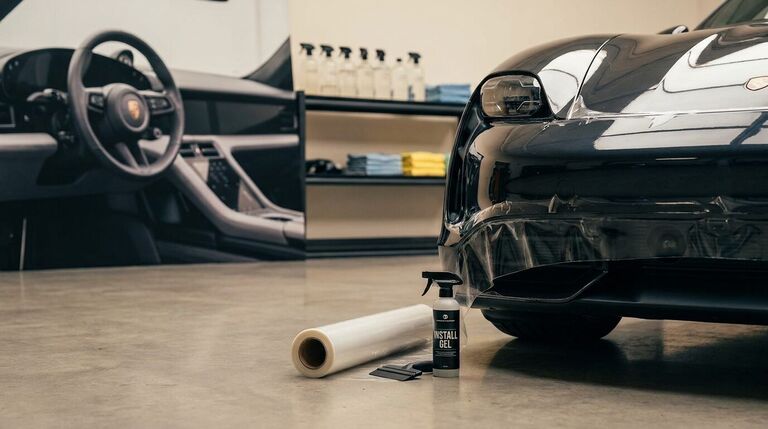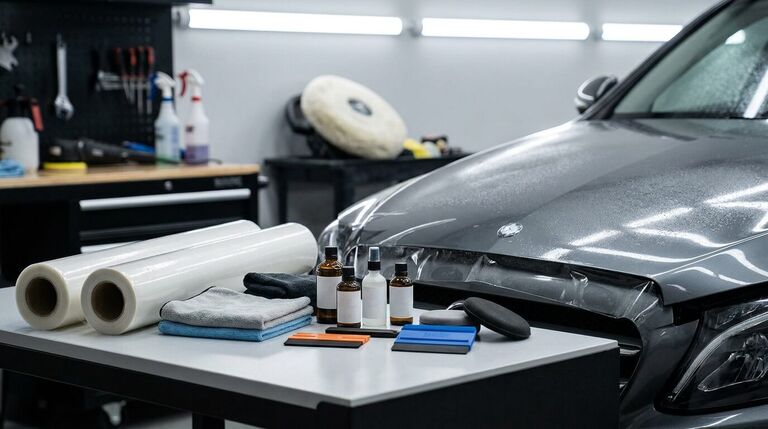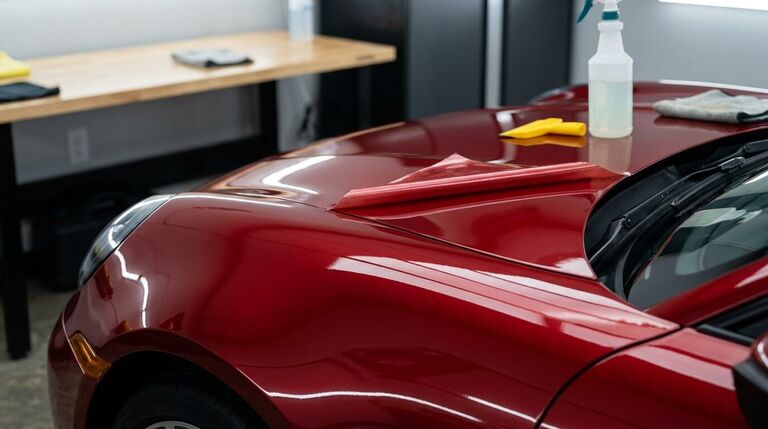

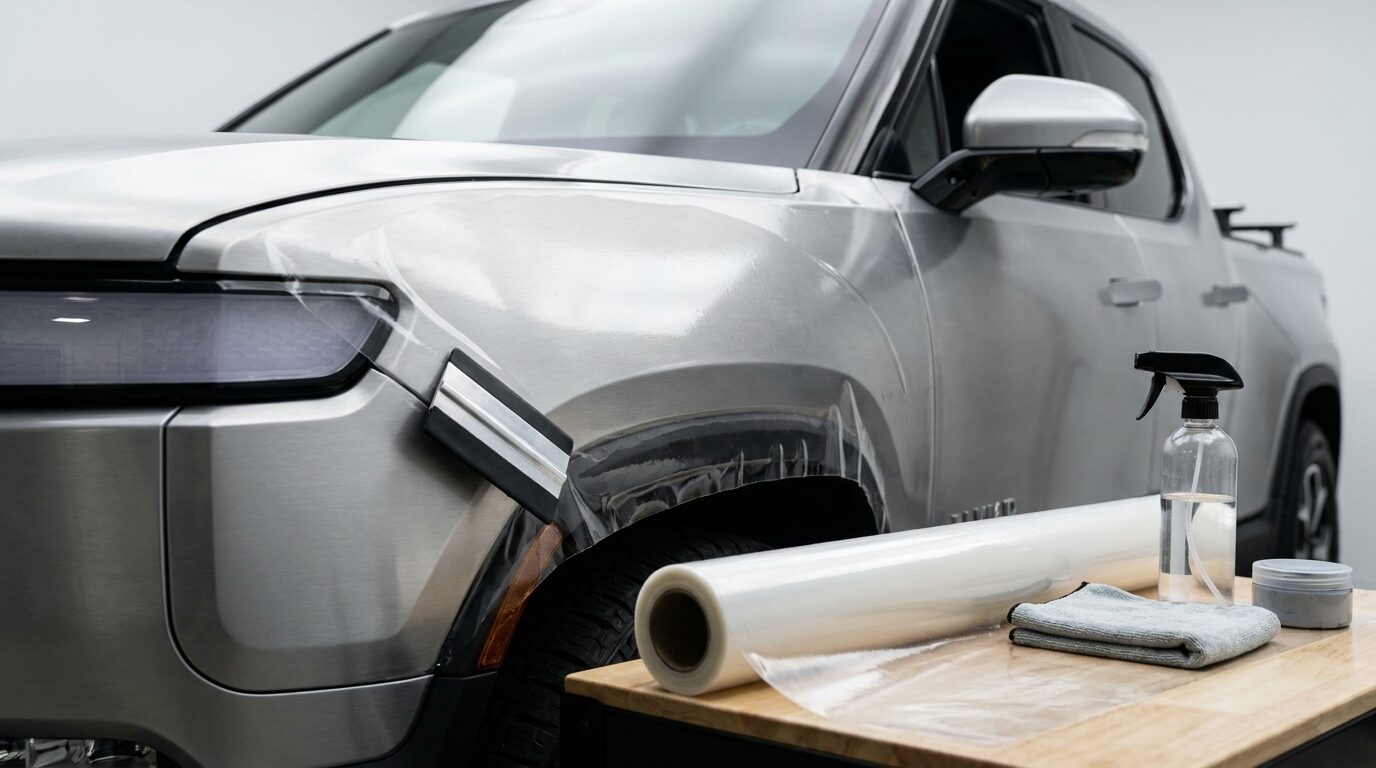
Paint protection film protects Tesla Cybertruck stainless steel panels by providing a physical polyurethane barrier against environmental fallout, but it does not alter the fundamental metallurgical properties of the metal underneath. When owners bring their electric trucks to our shop at 3433 SW Multnomah Blvd in Portland, OR, they often wonder how transparent urethane interacts with unpainted cold-rolled steel. Driving on local routes like I-5 or I-205 exposes vehicles to constant road debris, and while film absorbs stone impacts effectively, understanding its actual boundary layer performance prevents unrealistic expectations about what a wrap can achieve.
The Unique Nature of Cybertruck Stainless Steel
Tesla chose a cold-rolled austenitic stainless steel alloy for the Cybertruck exterior, departing entirely from traditional automotive stamping and painting processes. This bare metal surface lacks a standard clear coat, meaning that corrosion resistance relies on a passive chromium oxide layer that forms naturally when the metal meets oxygen. While this prevents deep structural rust, the material remains susceptible to surface staining, industrial fallout, and microscopic iron particles known as rail dust. These microscopic particles settle on the flat exterior planes and rust on contact, creating the illusion that the stainless steel itself is failing.
Applying a protective layer changes how these contaminants interact with the exterior shell. Global Films self healing TPU paint protection film, which measures roughly 6 mil in thickness and carries a 10 year warranty, creates a smooth sacrificial barrier over the microscopic peaks and valleys of the steel. Because the film seals the surface completely, airborne pollutants and brake dust land on the urethane rather than embedding directly into the metal pores. However, the underlying metal still responds to extreme heat and chemical exposure in the same way, meaning the film only isolates the exterior from direct contact.
Working with bare metal requires careful surface preparation before any film touches the truck. Installers must perform a chemical decontamination and clay bar treatment to lift embedded iron fallout, followed by a thorough isopropyl alcohol wipe down to remove residual oils. If any contaminant remains trapped beneath the urethane layer, it remains visible through the transparent film permanently. This careful prep work distinguishes a professional installation from a rushed job, ensuring the stainless steel stays clean underneath the protective shield.
What Paint Protection Film Can Do for Stainless Steel
The primary advantage of installing paint protection film on a Cybertruck is absolute defense against physical rock chips, gravel abrasions, and deep surface scratches. As noted by the Specialty Equipment Market Association, quality urethane films absorb kinetic energy and disperse impact force across a wider surface area. When a stray pebble flies off a truck on US-26, the film takes the hit, preventing the sharp edge of the stone from gouging or pitting the raw steel panels. This mechanical shielding is something sealants and coatings alone cannot replicate.
High grade TPU film features advanced self healing properties driven by heat. Minor scuff marks, branch brushes, and swirl marks that accumulate during daily driving vanish automatically when exposed to ambient sunlight or warm water. This keeps the large, flat stainless steel panels looking uniform without requiring abrasive polishing steps that could alter the directional grain of the factory metal. The film also provides strong UV resistance, stopping solar radiation from causing any unexpected oxidation shifts or discoloration on exposed areas.
Cleaning the exterior becomes significantly easier once the entire vehicle is wrapped in protective urethane. Rainwater from typical Willamette Valley storms carries dirt and organic matter that clings to raw metal, but it slides off the smooth, hydrophobic topcoat of modern film with minimal effort. Owners can maintain the finish simply by scheduling a regular hand wash service. Industry sources often emphasize that physical barriers reduce the frequency of deep detailing interventions, saving time and preserving the exterior finish over years of harsh seasonal weather.
What Paint Protection Film Cannot Do
Despite its impressive capabilities, paint protection film is not an impenetrable force field and has strict limitations regarding Cybertruck stainless steel. Film cannot prevent major denting from severe impacts, collisions, or heavy falling objects because urethane stretches and absorbs energy up to a point before tearing. If a heavy object strikes the panel with enough velocity, the underlying steel will deform, and the film will likely rupture along the impact zone, requiring both panel repair and film replacement.
Film also does not stop chemical etching if aggressive substances are left sitting on the surface for extended periods. While the urethane resists many mild acids and bird droppings better than bare metal, extremely corrosive agents can penetrate the topcoat if not washed away promptly. According to consumer guidance from the Federal Trade Commission, understanding product limitations prevents deceptive advertising expectations. Film slows down degradation and isolates the metal, but it does not render the vehicle completely invulnerable to chemical abuse or extreme neglect.
Another common misconception is that film eliminates the need for ongoing maintenance. While the wrapped panels are much easier to clean, road grime, tree sap, and hard water spots still accumulate on top of the film. Allowing mineral-heavy water to evaporate repeatedly on the surface will leave calcium deposits that etch into the film topcoat just as they would etch into paint. Regular washing and proper drying remain essential maintenance tasks for any wrapped vehicle.
Choosing Between Clear, Matte, and Color PPF Options
Cybertruck owners have unique styling choices when it comes to film selection, ranging from standard transparent gloss to satin finishes and full color changes. Clear protection film preserves the industrial, raw aesthetic of the factory stainless steel while adding a subtle sheen and solid physical defense. This option appeals to drivers who love the original look of the truck but want the assurance that comes with a self healing urethane barrier against road hazards and parking lot mishaps.
Matte or satin PPF transforms the reflective stainless steel into a smooth, low gloss surface that diffuses light entirely. This finish dramatically alters the visual presence of the vehicle, hiding fingerprints and smudges much more effectively than the standard bright metal finish. Because the Cybertruck features massive flat panels, a matte wrap provides a stealthy, futuristic appearance that stands out while retaining all the protective benefits of a 6 mil thick urethane layer.
Color PPF offers an alternative for owners who want to bypass the industrial steel look entirely while still securing the heavy-duty protection of polyurethane. Across the industry, a gloss full body PPF package typically runs $4,000 to $8,000 depending on the vehicle, and Custom Details quotes these per vehicle at the shop; the per-model ranges for the Cybertruck are on our Tesla PPF page. At Custom Details, we quote all custom PPF and color change packages in person at our Portland shop to ensure exact measurements and proper edge wrapping techniques are accounted for on every unique vehicle.
Integrating Ceramic Coatings for Maximum Defense
While paint protection film guards against physical impacts and stone chips, adding a ceramic coating on top of the film adds a second layer of environmental defense. Ceramic coatings, such as Feynlab ceramic coating formulations, bond chemically with the top layer of the film to create an ultra-slick, hydrophobic surface that repels water, road salt, and winter grime with remarkable efficiency. Feynlab options available at our shop include a 1 year entry coating, V3 offering 3 years of protection, and the premium Plus package lasting 5 years, along with a specialized Matte coating designed specifically for satin films.
Pairing film with a ceramic coating solves the problem of staining and stubborn mineral buildup. Unprotected stainless steel can develop stubborn water spots in wet climates, but a coated film surface sheds moisture instantly, leaving very little residue behind as it rains. This combination ensures that the vehicle stays cleaner for much longer periods between washes, reducing the physical effort required to maintain those enormous exterior panels.
The application process requires strict adherence to curing times and environmental controls inside the shop. After the film cures fully, the ceramic liquid is hand-applied in precise sections, leveled carefully, and allowed to cure under controlled conditions before exposure to outdoor elements. Industry leaders like Feynlab design these formulations specifically to enhance gloss and slickness without interfering with the underlying film structure, creating a synergistic defense system for modern electric trucks.
Professional Installation Realities and Shop Standards
Installing film on a Cybertruck presents distinct challenges due to the sharp exterior angles, massive flat surfaces, and tight panel tolerances engineered by Tesla. Unlike curved traditional sports cars, the straight lines and exact 90-degree creases of the truck leave zero room for alignment errors. A skilled installer must use specialized squeegees, precise tension control, and custom pattern plotting to ensure the film lays flat without lifting at the extreme corners or trapping air pockets beneath the urethane.
Edge wrapping is another critical factor that dictates the long-term durability of the installation. Professional shops tuck film edges cleanly behind panel seams where possible, preventing high-pressure garden hoses or automated car wash brushes from catching an exposed edge and peeling the material back. Cutting film directly on the vehicle surface is strictly avoided by experienced technicians who rely on pre-cut plotter patterns or specialized knifeless tape systems to protect the underlying metal from blade damage.
Bringing a vehicle to our shop at 3433 SW Multnomah Blvd in Portland, OR means working directly with technicians who understand the unique structural demands of electric vehicles. We handle all installations in a clean, controlled indoor environment to keep airborne dust and pollen out of the adhesive layer during application. Customers can schedule an in-person consultation to review film samples, discuss coverage options, and inspect previous vehicle projects before committing to a full protection plan.
The honest trade-off on a Cybertruck is this: film cannot make stainless steel impossible to scratch, and leaving it bare means learning to live with scuffs and fingerprints that no polish will remove. Between those two, Custom Details usually recommends clear or satin film on the doors, bed sides and front end, where hands, gravel and parking lots do the most damage, and skipping the roof and rear panels unless the truck sees real off-road use.
Frequently Asked Questions
Does the Cybertruck need paint protection film since it is made of stainless steel?
Stainless steel resists rust, but it still scratches, stains, and shows fingerprints easily, making film valuable for physical defense.
Can paint protection film hide existing scratches on stainless steel panels?
Light surface scuffs become less noticeable under clear or matte film, but deep gouges must be polished out before installation.
Will removing the protective film damage the stainless steel surface?
Professional grade TPU film removes cleanly without harming the metal when heated properly and pulled off at a shallow angle by an experienced technician.
How do I wash a Cybertruck after it has been wrapped in film?
Wash the vehicle by hand using a pH-neutral soap and soft microfiber mitt, avoiding abrasive scrubbers and harsh automated car washes.
Related service: Learn more about paint protection film in Portland, matte PPF in Portland and Tesla PPF packages at Custom Details, installed in-house at 3433 SW Multnomah Blvd, or request a quote and call (971) 400-1406.