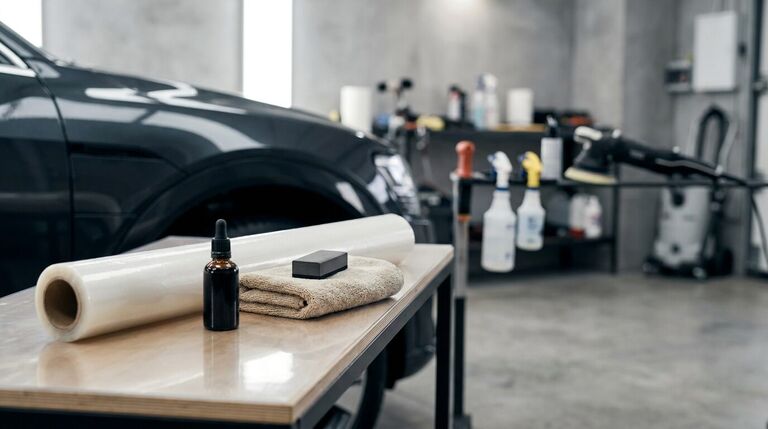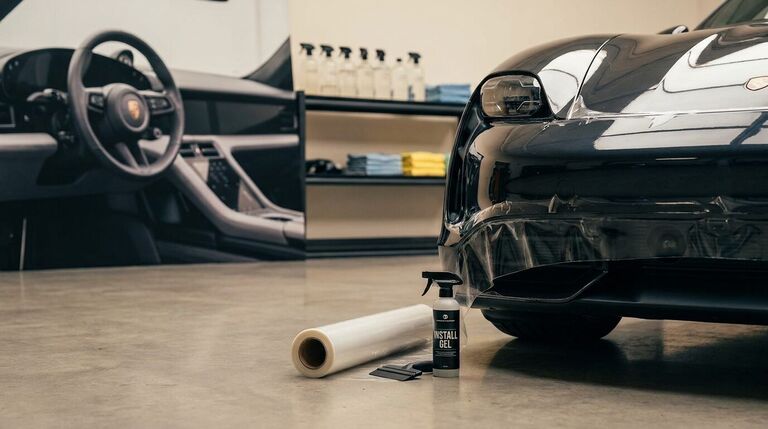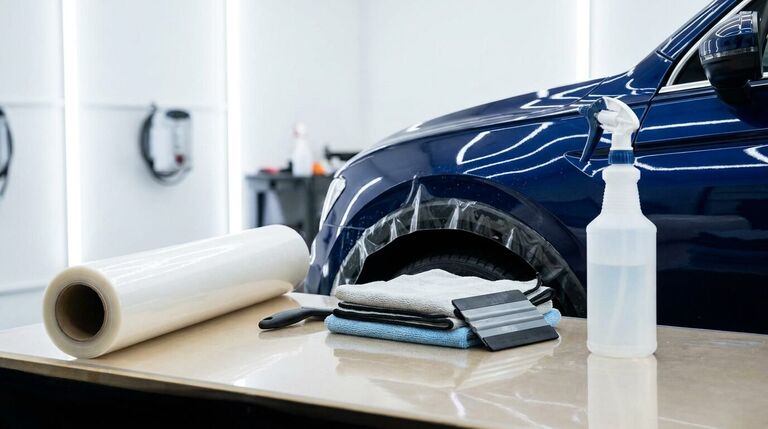

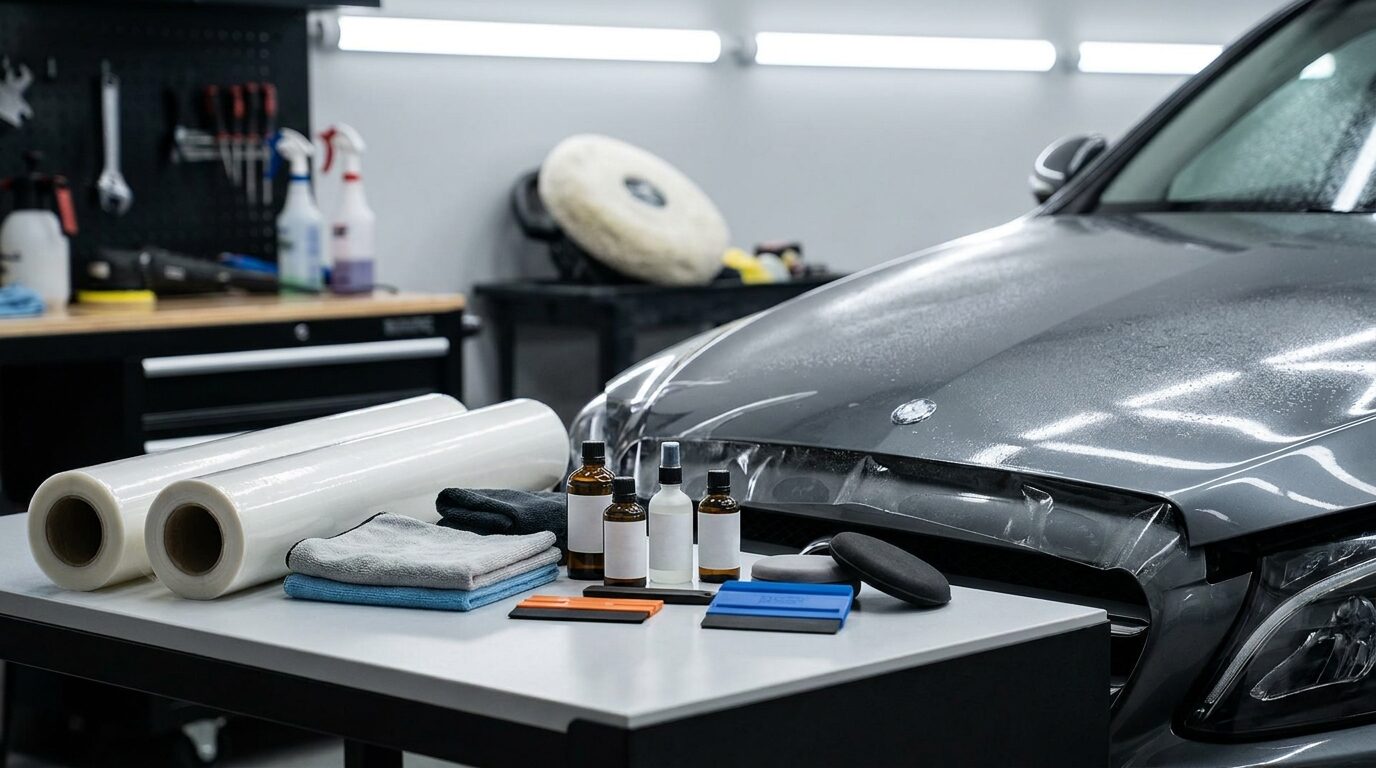
A dealer protection package and a dedicated shop install are different products that happen to share a name: the dealer sells a bundle of sprays, a film of unnamed brand and a shade of tint applied in a wash bay before delivery, and a dedicated shop sells named materials, hours of preparation and a warranty in writing. This article is the comparison, category by category. If you are at the finance desk right now and want the steps to take before you sign, our dealer add-ons checklist is the companion piece; this one explains why the two options end up so far apart in results.
When you purchase a new vehicle, the finance manager will usually offer an exterior and interior protection package before you sign the paperwork. These packages are marketed as a convenient way to protect your investment from day one, often rolling the cost directly into your monthly auto loan. However, dealerships are in the business of selling cars rather than mastering surface protection. The application process is typically rushed to keep inventory moving off the lot, which compromises the longevity and effectiveness of the products applied to your paint.
In contrast, dedicated protection facilities operate with a completely different mindset and workflow. Installers at specialty shops spend hours washing, decontaminating, and polishing the paint before a single millimeter of film or coating touches the car. According to the Specialty Equipment Market Association (SEMA), professional surface preparation is the single most critical factor in achieving proper product bonding and long term durability. When you bring your car to a dedicated shop, you are paying for careful craftsmanship rather than sheer speed and convenience.
The Reality of Dealership Application Standards
Dealership protection packages are generally applied by general detailers or porters who handle dozens of cars every week under tight time constraints. This high-volume environment leaves very little room for the careful prep work required for ceramic coatings or paint protection film. If the paint is not properly clayed, compounded, and wiped down with isopropyl alcohol, sealants and coatings will fail prematurely because they cannot bond to contaminated clear coat.
Dealership prep bays rarely feature the specialized lighting required to spot microscopic paint defects, swirling, or holograms. When a dealer applies a protective coating over uncorrected paint, they essentially lock those imperfections underneath the barrier for years. Dedicated shops use specialized LED lighting arrays to inspect every square inch of the vehicle, ensuring the surface is flawless before any protective layer is applied.
Another major drawback to dealership packages is the lack of transparency regarding the actual chemical formulations being used. Many dealerships outsource their protection products to private label brands that make vague claims about lifetime warranties without providing clear maintenance guidelines. If the product fails, working a warranty claim through a dealership often involves corporate red tape and finger pointing between the finance department and the manufacturer.
Material Quality and Brand Transparency
Dedicated shops are defined by their use of professional-grade materials that have proven track records in the automotive aftermarket. For instance, reputable shops rely on industry leaders like Feynlab for advanced ceramic coatings, offering structured durability options such as a 1 year entry coating, V3 at 3 years, Plus at 5 years, and specialized Matte coatings. Dealerships rarely offer this level of product variety or chemical transparency.
When it comes to physical barriers like paint protection film, dedicated shops utilize high-grade self-healing TPU paint protection films such as Global Films, which measure roughly 6 mil in thickness and come backed by full 10-year warranties. Dealership film packages often use thinner, generic vinyl or low-grade urethane films that yellow quickly under UV exposure, peel at the edges, and lack true self-healing top coats that eliminate minor wash scratches with ambient heat.
Transparency extends to window tinting as well, where dedicated shops offer clear distinctions between standard films and high-heat-rejecting ceramic IR films. Standard window tinting at specialized shops typically runs $99 to $279 depending on coverage, while advanced ceramic IR films run $159 to $599. Dealerships tend to apply a single, low-cost dyed film across all vehicles while charging top dollar for the convenience of having it done before delivery.
The Importance of Facility Environment
Applying paint protection film and ceramic coatings requires a controlled environment free of airborne dust, pollen, and drastic temperature fluctuations. Dedicated shops invest heavily in enclosed, climate-controlled bays equipped with proper ventilation and filtration systems. This sterile environment prevents dust specks from getting trapped underneath a layer of paint protection film or curing ceramic coating.
Dealership detail bays are notoriously busy, dusty, and drafty environments where cars are prepped right next to mechanical service stalls and high-traffic delivery areas. Airborne brake dust, shop grit, and exhaust fumes frequently settle on wet coatings or fresh film adhesive during the installation process. This results in permanent contamination trapped beneath the protective layer, ruining the optical clarity of the finish.
According to Consumer Reports, environmental control during the application of chemical barriers and films directly dictates whether the product will last its advertised lifespan. Without a dedicated, clean facility, even the highest quality ceramic coating can suffer from uneven curing and premature delamination.
Warranties and Ongoing Support
When you invest in vehicle protection, you want to know that the business standing behind the warranty will still be there if something goes wrong. Dealerships frequently experience high staff turnover in their detail and finance departments, making it difficult to track down the person who sold you the protection package when a warranty claim arises.
Dedicated shops build their entire business model on long-term client relationships and local reputation. If a ceramic coating high-spots or a section of paint protection film lifts at the edge, a dedicated shop will address the issue directly without corporate pushback. Specialty shops provide clear, actionable maintenance advice, such as recommending professional maintenance washes like a Hand Wash for $89 or an Interior Detail for $259 to keep your vehicle in top condition.
Local driving conditions also dictate how well a protection package performs over time. Vehicles in the Pacific Northwest face persistent moisture, winter road grit, and highway debris along routes like I-5, I-205, and US-26. Dedicated local shops understand these regional challenges and tailor their protection recommendations accordingly, whereas dealership packages are designed as generic, one-size-fits-all solutions that ignore local climate realities.
Financial Value and Return on Investment
Dealership protection packages are notorious for being heavily overpriced relative to the actual labor and material costs involved. Dealerships often use these packages as high-margin profit centers, bundling them into your auto loan so you pay interest on the protection products over several years. This significantly increases the true out-of-pocket cost of the add-on.
Dedicated shops provide transparent, itemized pricing for specific services like an Exterior Detail + Polish at $499 or an Engine Bay detail for $50. When you pay a specialty shop, every dollar goes directly toward premium materials like Feynlab ceramic coatings or Global Films protection products and the skilled labor required to install them properly. You are paying for expert craftsmanship rather than dealership overhead and finance department commissions.
Investing in dedicated shop services also preserves your vehicle's resale value far more effectively than a rushed dealer application. A clean, professionally installed film and coating package protects the factory paint from rock chips, UV damage, and chemical staining, ensuring the vehicle looks its best when it is time to sell or trade it in.
Line by Line: What the Dealer Sheet Sells and What a Shop Installs
Most dealer protection packages bundle four or five line items. Here is what each one usually is, and what the equivalent looks like from a dedicated shop.
- "Paint sealant" or "paint protection." On the dealer sheet this is a spray-on polymer sealant applied in the wash bay, good for a few months. The shop equivalent is a Feynlab ceramic coating, applied after correction, with a 1, 3 or 5 year term and written care instructions.
- "Clear mask" or "front end protection." Often a thin pre-cut film on the bumper and a hood strip, brand unnamed. The shop equivalent is Global Films 6 mil self healing urethane, cut for the car, edges wrapped, with a 10-year warranty.
- "Window tint." Usually a single dyed film at one shade, installed by a subcontractor. At a shop you choose between Global carbon film at $99 to $279 depending on coverage and ceramic IR film at $159 to $599, and the shade is matched to Oregon's limits.
- "Fabric and leather protection." A spray applied to seats that have never been cleaned. The shop equivalent is an Interior Detail at $259 that cleans and conditions the material first, with protectant last.
- "Nitrogen tires," "VIN etching," "key replacement." No shop equivalent, because these are not protection products.
The other line that never appears on the sheet is the interest. A package rolled into a six year loan is paid for six years; a shop invoice is paid once. When you compare, put the dealer package total plus its interest against the shop quote for the specific products you want, and compare warranties in writing rather than by the word "lifetime".
This week, pull out the buyer's order from your last car purchase and find the line for the protection package. Then find the product name, the warranty document and the maintenance schedule that came with it; most people cannot, because the package was a line item, not a product. Anything installed at Custom Details comes with the film or coating named, the manufacturer's warranty terms in writing and the care instructions the warranty depends on, which is the difference this comparison is really about.
Frequently Asked Questions
What is the difference between a dealer protection package and a shop install?
A dealer package is a bundle of short-lived sealants and unnamed film applied quickly before delivery, while a dedicated shop installs named film and coatings after hours of paint preparation, backed by a manufacturer warranty.
Can a dealership apply ceramic coatings correctly?
While some dealerships attempt ceramic coatings, their high-volume prep bays lack the controlled environments and detailed paint correction needed for proper bonding.
Why do dedicated shops provide better warranties?
Dedicated shops rely on direct manufacturer backing from brands like Feynlab and Global Films, combined with dedicated local customer service rather than dealership corporate red tape.
Related service: Learn more about paint protection film in Portland and ceramic coating in Portland at Custom Details, installed in-house at 3433 SW Multnomah Blvd, or request a quote and call (971) 400-1406.