
Nothing is truly scratch-proof, and any product claiming to make your vehicle entirely immune to damage relies on marketing exaggeration rather than chemical reality. When you bring your vehicle into our shop at 3433 SW Multnomah Blvd in Portland, OR, we frequently talk with car owners who wonder why their factory clear coat or aftermarket coating still picked up a swirl mark after a brush at the car wash. Understanding the real limits of modern automotive protection helps you invest wisely without falling for impossible guarantees.
The Limits of Factory Clear Coat
Factory automotive clear coat is surprisingly thin, measuring only about 1.5 to 2 mils thick on most modern vehicles. This microscopic layer acts as the primary shield against UV rays, bird droppings, and light abrasion from road dust. When manufacturers tout advanced clear coats, they refer to improved durability and chemical resistance rather than a surface that cannot be marked. Once a sharp object or a stray piece of gravel breaches that thin layer, the color coat beneath is immediately exposed to the elements.
Driving along I-5 or I-205 exposes this factory finish to a constant stream of airborne debris, construction grit, and winter road salt. Even routine washing with a slightly dirty microfiber towel can introduce micro-marring into a soft clear coat. According to SEMA, understanding substrate durability is essential for proper vehicle maintenance and longevity. Expecting raw paint to withstand physical abuse without consequence is a recipe for premature degradation and dullness.
Addressing these vulnerabilities requires understanding that paint is meant to be shielded, not left to fend for itself against aggressive environments. Willamette Valley rain brings acidic pollutants that settle on horizontal panels, softening the top layer and making it even more susceptible to scratching. Professional installers evaluate this baseline condition before applying any secondary protective layer to ensure the underlying paint is sound and properly prepped.
How Paint Protection Film Manages Impact
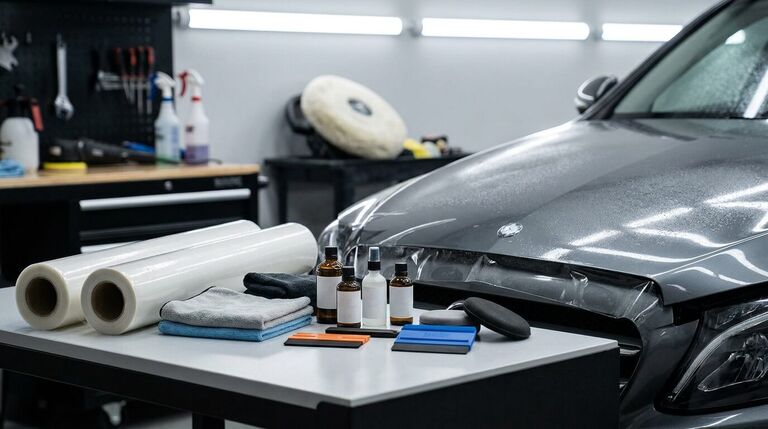
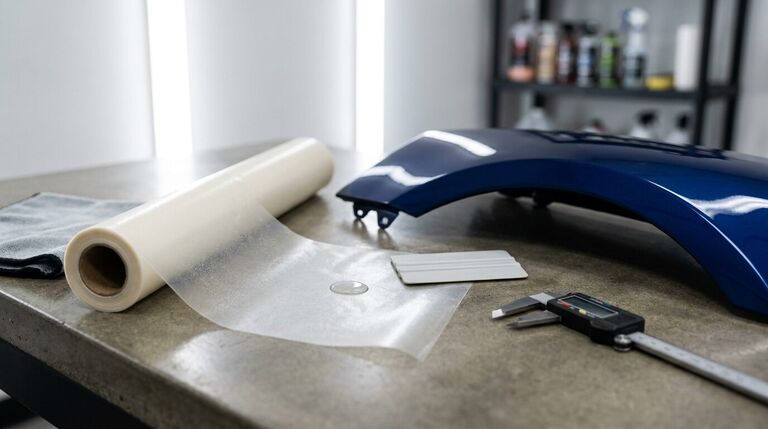
Paint protection film provides physical defense by acting as a sacrificial barrier over your vulnerable painted surfaces. Our shop relies on Global Films self-healing TPU, which measures roughly 6 mil in thickness and comes with a solid 10-year warranty. This thick urethane layer absorbs the kinetic energy of flying stones on US-26 before the impact can fracture the factory clear coat. When a rock hits the film, the material stretches and disperses the force.
The standout feature of quality thermoplastic urethane is its self-healing capability when exposed to ambient heat. Light surface swirls and minor scuffs from washing disappear as the top polymer layer flows back into its smooth state under the warmth of the sun. However, this does not make the material invincible. A deep slash from a sharp key or a severe tear from a high-speed projectile will cut completely through the film, requiring a panel replacement rather than a simple thermal recovery.
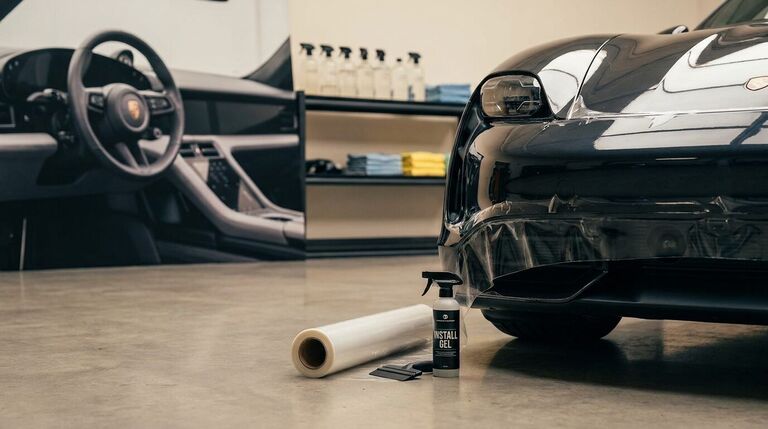
Across the industry, a gloss full front PPF package typically runs $1,500 to $2,500 depending on the vehicle, and Custom Details quotes these per vehicle at the shop. Protecting high-impact areas like the front bumper, hood, and mirrors stops everyday pitting dead in its tracks. To explore dedicated options for your vehicle, take a look at our paint protection film services designed to handle harsh local driving conditions.
What Ceramic Coatings Can and Cannot Do
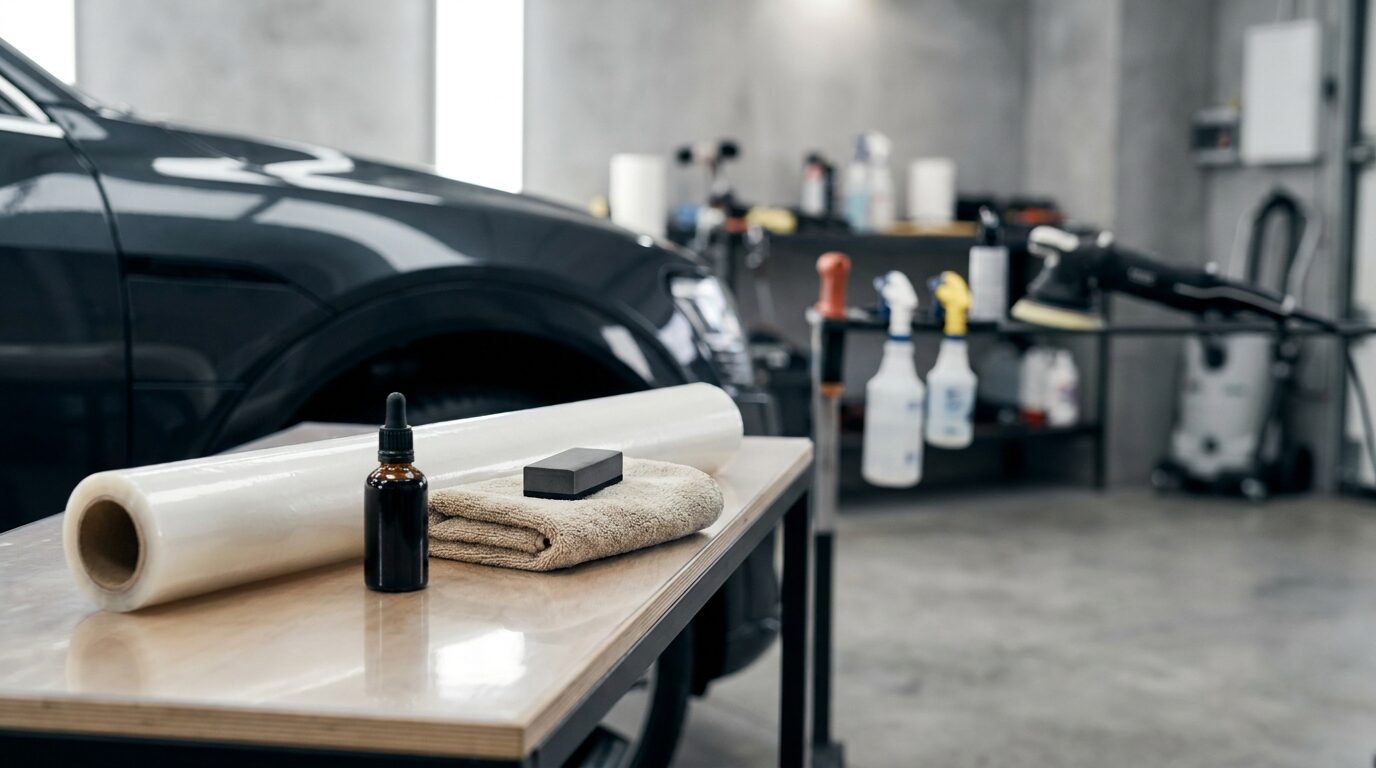
Ceramic coatings introduce a hard, chemically bonded quartz layer that enhances gloss and repels water effortlessly, but they do not stop physical scratches. Feynlab formulations create a slick surface that sheds mud, brake dust, and tree sap with ease, making routine maintenance much faster. However, a ceramic coating measures in at fractions of a mil, meaning it lacks the physical mass or elasticity to absorb a rock strike or prevent a fingernail scratch behind the door handle.
What a coating actually achieves is exceptional mar resistance against light washing friction and chemical staining. Bird droppings and bug splatters will not etch into your clear coat because the coating blocks the acidic compounds from reaching the paint. For vehicle owners choosing among various tiers, options range from a 1 year entry coating up to the Feynlab V3 at 3 years and the Plus at 5 years. We also offer a specialized Matte coating at roughly 3 years for satin finishes.
Choosing the right level of chemical defense depends on your parking situation and driving habits around Portland. To see how these liquid polymer shields compare in daily use, review our professional ceramic coating packages tailored to different longevity requirements. Combining a quality coating with proper wash techniques keeps your finish looking new without creating a false sense of physical invulnerability.
The Role of Window Film in Glass Protection
Glass is another area where scratch-proof claims frequently mislead vehicle owners into thinking their windows are bulletproof. Automotive glass is hard, but it is certainly not immune to wiper blade marring, sand abrasion, and deep gouges from debris caught in the mechanism. Window tint films add a layer of safety and thermal rejection, but standard and ceramic films can still be torn or scratched if sharp objects brush against them from the inside.
Quality films from Global Films and STEK provide exceptional clarity while blocking infrared heat and harmful UV radiation. Standard window tint runs $99 to $279 depending on the exact coverage needed, while advanced ceramic IR film runs $159 to $599. These films reinforce the structural integrity of the glass during an impact, holding shattered pieces together, but they are not armored against careless cargo loading.
Oregon DMV window tint rules dictate strict limits on visible light transmission for front side windows, so proper film selection must balance legal compliance with personal comfort. Installing high-grade tint protects your interior upholstery from fading while reducing cabin temperatures during summer months. Our technicians handle every installation with precision to ensure bubble-free adhesion and long-lasting optical clarity.
Detailing and Correction Realities
Surface correction through machine polishing removes microscopic layers of clear coat to level out existing scratches and swirl marks. Professional detailing restores a mirror finish, but every time paint is corrected, a fraction of the protective clear coat is permanently polished away. Hand washing at $89 or an exterior detail with polish priced at $499 restores gloss, but neither process makes the paint permanently resistant to future abrasion.
Interior surfaces face a different kind of wear, from muddy boots to accidental scuffs on door panels and center consoles. Our interior services, including a basic interior clean at $139 and a thorough interior detail at $259, clean and protect cabin surfaces without claiming to make leather or plastics indestructible. Adding an engine bay detail for $50 keeps under-hood components clean and free of accumulated grime that can degrade rubber and plastic hoses over time.
Maintaining a vehicle requires a balanced approach combining careful maintenance habits with quality protective installations. According to consumer guidance from the FTC, evaluating service claims carefully prevents disappointment and ensures you get real value for your money. Regular upkeep preserves both the aesthetic appeal and the resale value of your automobile.
How Maintenance Habits Impact Protection Lifespan
Even the highest quality protective film or ceramic coating will degrade prematurely if subjected to improper maintenance routines. Automated brush car washes are the single biggest enemy of automotive finishes, grinding trapped dirt and sand across your protected or unprotected paint. Hand washing using the two-bucket method with grit guards is the only reliable way to prevent micro-scratches from forming during routine cleaning sessions.
Using pH-neutral soaps and clean microfiber drying towels preserves the slick hydrophobic properties of your ceramic coating and prevents unnecessary friction on your paint protection film. Letting bird droppings bake on your hood during a hot summer afternoon will eventually test the limits of any protective layer, requiring prompt removal to avoid permanent etching. Proper aftercare ensures your investment performs as advertised throughout its expected lifespan.
Our team at Custom Details guides every client on proper wash protocols before they drive their vehicle back out onto Portland streets. Taking these simple maintenance steps preserves the clarity and smoothness of your finish for years to come. Professional protection gives your car a massive advantage against road hazards, but conscientious ownership remains the final line of defense.
When a customer asks Custom Details for something scratch proof, the installer's first move is to look at where the existing scratches are. Wash marks across the whole car point to technique and call for a coating; chips and gouges on the nose point to the road and call for film; deep scratches at door height point to a parking lot and call for honesty about what any product can do. Expect that walk-around before any recommendation.
Frequently Asked Questions
Can paint protection film prevent all scratches?
No film is completely scratch-proof, though high-quality TPU self-heals from light swirls and protects against rock chips.
Do ceramic coatings stop rock chips?
Ceramic coatings provide excellent chemical and UV resistance, but they are too thin to absorb the impact of flying road debris.
How do I remove light marks from my protected car?
Minor surface scuffs on paint protection film disappear with ambient heat, while deeper marks require professional evaluation at our shop.
Related service: Learn more about paint protection film in Portland, paint correction in Portland and ceramic coating in Portland at Custom Details, installed in-house at 3433 SW Multnomah Blvd, or request a quote and call (971) 400-1406.